

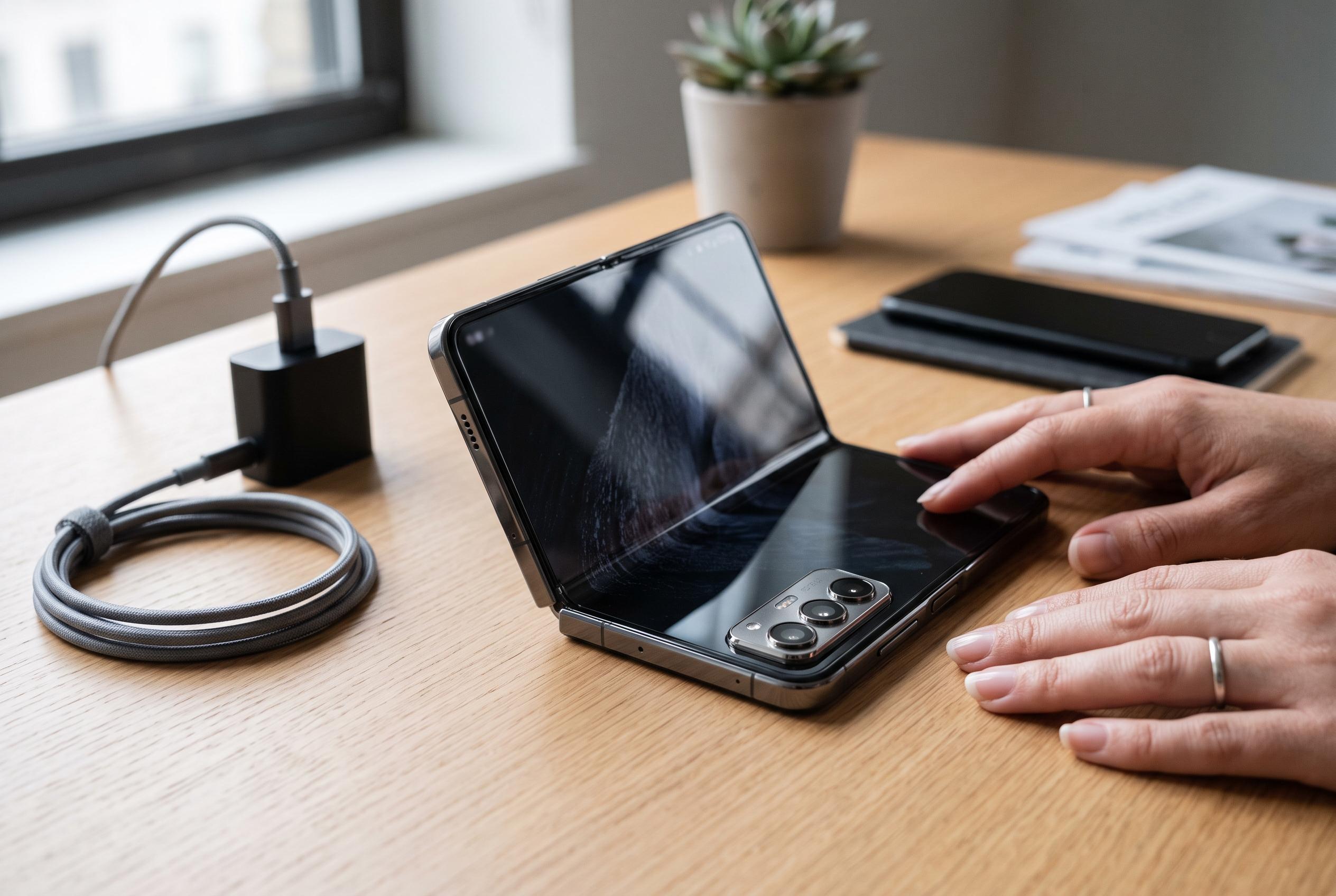

Google’s Pixel 11 offers a polished, camera-focused update with enhanced software and build quality, but its incremental improvements and higher price position it awkwardly against rivals with faster charging, better performance, and longer battery life.
Google’s standard Pixel 11 is, in essence, an exercise in restraint. The handset arrives as a relatively modest update to the Pixel 10, which itself was only a small step beyond its predecessor. In a year shaped by component pressure and a stronger emphasis on software and artificial intelligence, Google has clearly chosen not to force a dramatic redesign. The result is a phone that refines familiar strengths rather than redefining the formula, while also asking buyers to pay more, with the 128GB entry model gone and the starting price pushed up to the 256GB tier.
At first glance, the Pixel 11 remains very much a compact flagship. It uses a 6.3-inch OLED panel with a 1080 x 2424 resolution, 60Hz to 120Hz refresh support and Gorilla Glass Victus 2 protection, while the body retains the familiar flat-sided aluminium frame and glass front and rear. Google has also kept the device at IP68 water and dust resistance. In the hand, the phone feels slightly easier to live with than before, helped by a small reduction in weight and softened corners that make it sit more naturally in the palm. The trade-off is that the glossy surfaces still attract fingerprints, even if certain finishes hide them better than others.
The display is one of the stronger parts of the package, but not without caveats. Brightness is high enough to remain usable outdoors, and reviewers have generally praised the panel for clarity and responsiveness. Yet Google still does not offer LTPO technology on the standard model, so refresh-rate switching remains limited to broad steps rather than the finer adjustment available on more premium rivals. The always-on display is also more basic than on the Pro versions. Audio is competent rather than exceptional: stereo speakers deliver clear, forceful output at moderate levels, but compression and distortion begin to creep in when pushed harder.
Software remains one of the Pixel’s core selling points. The phone runs Android 17 and Google is promising seven years of operating system and security updates, alongside monthly security patches. That makes the device easy to recommend on longevity alone. The interface remains clean and fluid, but it also shows how slowly Google is changing the fundamentals. Much of the visible effort is now focused on AI-driven features and automated assistance rather than meaningful structural changes to the launcher or wider interface. According to reviewer complaints, even the search bar on the home screen remains difficult to remove, which will frustrate users who prefer more control over the default layout.
Performance is where the Pixel 11 is most likely to divide opinion. It is powered by the Tensor G6, paired with 12GB of RAM, and Google claims gains in speed and efficiency, but third-party reviews suggest the chip still trails the fastest rivals in sustained heavy workloads. In everyday use the phone is smooth enough, but gaming exposes its limits. The French review described severe frame-rate drops in Fortnite and rapid heat build-up in Genshin Impact, with the battery draining quickly under pressure. Notebookcheck reached a similar conclusion, noting that while photography and general use are strong, the Tensor platform remains behind competing flagship processors in demanding scenarios.
Battery life is adequate rather than class-leading. Google’s quoted figure is roughly 30 hours, and the 4,985mAh cell is paired with 30W wired charging and faster 25W wireless charging over Qi2. Those are respectable numbers, but not especially ambitious for the second half of the 2020s. Charging still lags behind many Android rivals, and the phone can feel warm during prolonged use or gaming. For light to moderate users, it should still comfortably last a day, but buyers expecting exceptional endurance will find little here to change their minds.
The cameras remain the area where the Pixel 11 makes its strongest case. The rear system combines a 48-megapixel main camera, a 13-megapixel ultra-wide and a 10.8-megapixel telephoto lens with 5x optical zoom. Google has also pushed its software tools, including Magic Capture, Camera Looks and a wider set of editing and portrait features. In daylight, image processing remains highly capable, with good detail, convincing skin tones and balanced colour. At night, however, artefacts, flare and noise are more visible than one would expect at this price. That suggests Google’s computational photography still matters enormously, but the hardware gains themselves are less dramatic than the marketing implies.
For existing Pixel 10 owners, the case for upgrading looks weak. The Pixel 11 is not a bad phone; far from it. It is polished, compact, well supported and very capable at still photography. But it is also an expensive incremental revision in a segment where rivals are moving faster on charging, raw performance and battery life. That leaves the Pixel 11 in an awkward position: attractive to buyers coming from older devices, less compelling for anyone already holding last year’s model, and difficult to justify on hardware alone at the new starting price.
Disclaimer: This content is intended for informational purposes only. Readers are advised to exercise their own judgement, conduct due diligence, or consult a qualified expert before acting on any information provided.



