
San Francisco-based start-up Volantis raises $88 million to develop optical connections that significantly increase memory bandwidth for AI inference, targeting models with over 20 trillion parameters by 2027.
Volantis has raised $88 million in a Series A round as it seeks to tackle one of the most persistent bottlenecks in artificial intelligence: the gap between rapidly improving compute and comparatively slow memory access. According to the company, the new funding brings total capital raised to $97 million and will support work on its photonic approach to AI inference, the stage at which a trained model answers user prompts.
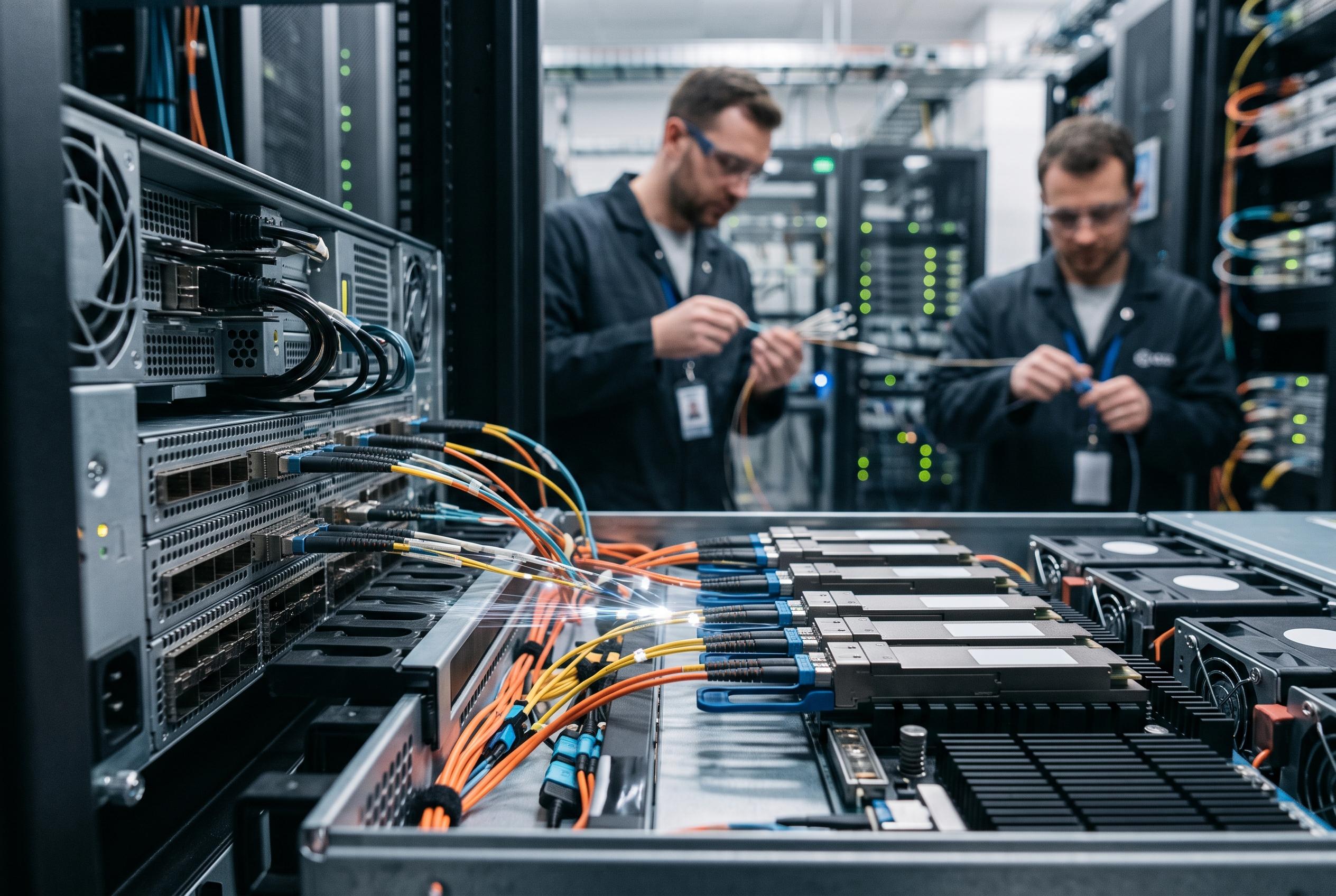
The San Francisco-based semiconductor start-up is building hardware that replaces part of the electrical link between processors and memory with optical connections. Its system relies on a custom micro-VCSEL, or vertical-cavity surface-emitting laser, which sends light directly from the chip surface. Volantis says this could let a GPU connect to as many as 220 memory chips, far more than the roughly eight chips common in conventional configurations, while avoiding major changes to packaging or manufacturing.
The company’s first platform, called A-1, is being designed for very large models and high-throughput inference. Volantis says the system is targeted at models with more than 20 trillion parameters, up to 10,000 tokens per second per user, around 10 terabytes of memory capacity and 240 terabytes per second of bandwidth. The company plans to deliver integrated inference engines to customers by 2027.
Lachy Groom and Abstract Ventures co-led the round, with participation from John Doerr, VXI Capital, Triatomic, Susa Ventures and angel investors including Dwarkesh Patel, Naveen Rao and Sholto Douglas, according to reports from Unite.ai, PR Newswire and SiliconANGLE. Volantis also said the business is drawing on experience from engineers who previously worked at NVIDIA, AMD, Broadcom and Ayar Labs. The bet is narrower than a direct assault on the major chipmakers: Volantis is arguing that memory access, rather than raw processing power, is now the main constraint on the next wave of AI inference.
Disclaimer: This content is intended for informational purposes only. Readers are advised to exercise their own judgement, conduct due diligence, or consult a qualified expert before acting on any information provided.