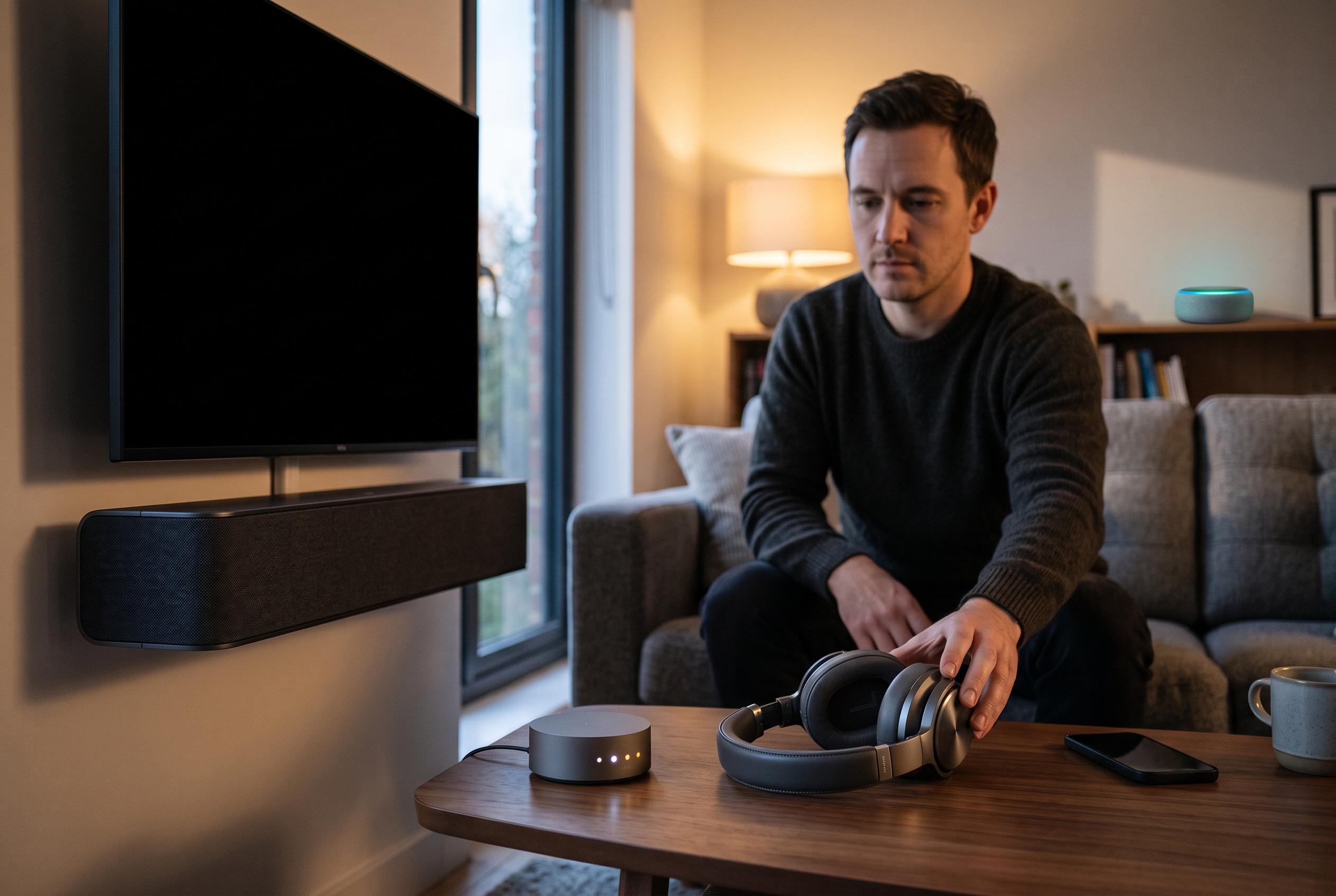

Sonos has launched a major software overhaul, introducing Sonos 27 which brings enhanced artificial intelligence features, a revamped ecosystem, and two new premium products, the Beam Ultra soundbar and Ace Ultra headphones, marking a strategic shift towards a more open and modular home-audio platform.
Sonos has used a major software reset to recast itself as a broader home-audio platform, unveiling Sonos 27 alongside two new premium products, the Beam Ultra soundbar and Ace Ultra headphones. The company says the new operating system is intended to make its ecosystem more open and more adaptable, with a stronger emphasis on artificial intelligence, cross-device coordination and a simpler app experience. Sonos also said the update is designed to let users choose how they interact with their system, rather than forcing them into a single assistant or control model.
A central change is the introduction of Sonos 27voice, the company’s own voice assistant, and Sonos 27mcp, a control layer that lets external AI assistants connect to Sonos hardware. Sonos says that includes OpenAI’s ChatGPT, which can be used to request music playback throughout the home from a phone or computer without leaving the conversation. The company is also previewing Sonos Custom Agents, a feature that would allow users to create their own agents with different models, voices and personalities, underscoring a deliberate move towards a more modular AI framework. Sonos describes this as a shift away from the idea that one assistant should manage every task.
The software platform also introduces Sonos Fabric, which the company says lets products detect one another and respond to their surroundings. That capability underpins two new functions now being rolled out in early access or preview form: headphone linking, which lets the Sonos Ace Ultra hand off audio from nearby speakers to the headphones and back again, and portable surrounds, which can automatically turn supported portable speakers into rear channels when they are moved into the right position. Sonos has paired the new system with a redesigned app, which the company says was shaped with community input and is meant to make navigation and control more intuitive.
On the hardware side, the Beam Ultra is positioned as a compact but more capable alternative to larger home-theatre bars. Sonos says it uses nine custom drivers, including two up-firing units, to deliver 7.1.2 Dolby Atmos sound. The design also adds a revised centre channel for clearer dialogue, plus four levels of AI Speech Enhancement and a Night Sound mode for quieter listening. The bar can be expanded with a Sonos Sub or rear speakers, and the new portable surrounds feature means it can also work with selected portable Sonos devices as rear channels. Sonos says the Beam Ultra is intended to sit at the centre of a wider home-cinema system, rather than as a standalone product.
The Ace Ultra is Sonos’s latest over-ear headphone and the first built on its new Headphone Engine 2 platform. Sonos says the headphones include a 40mm driver, adaptive active noise cancellation using ten microphones, and battery life of up to 35 hours with noise cancellation switched on. The larger goal is tighter integration with the rest of the Sonos ecosystem: a single button press can move audio from the home system to the headphones, and another can send it back, without requiring the user to keep a phone nearby. According to Sonos, both products have been tuned with input from its Soundboard group of industry figures, while the company continues to lean on room calibration tools such as Trueplay and TrueCinema to tailor playback to the listening space.
Disclaimer: This content is intended for informational purposes only. Readers are advised to exercise their own judgement, conduct due diligence, or consult a qualified expert before acting on any information provided.