

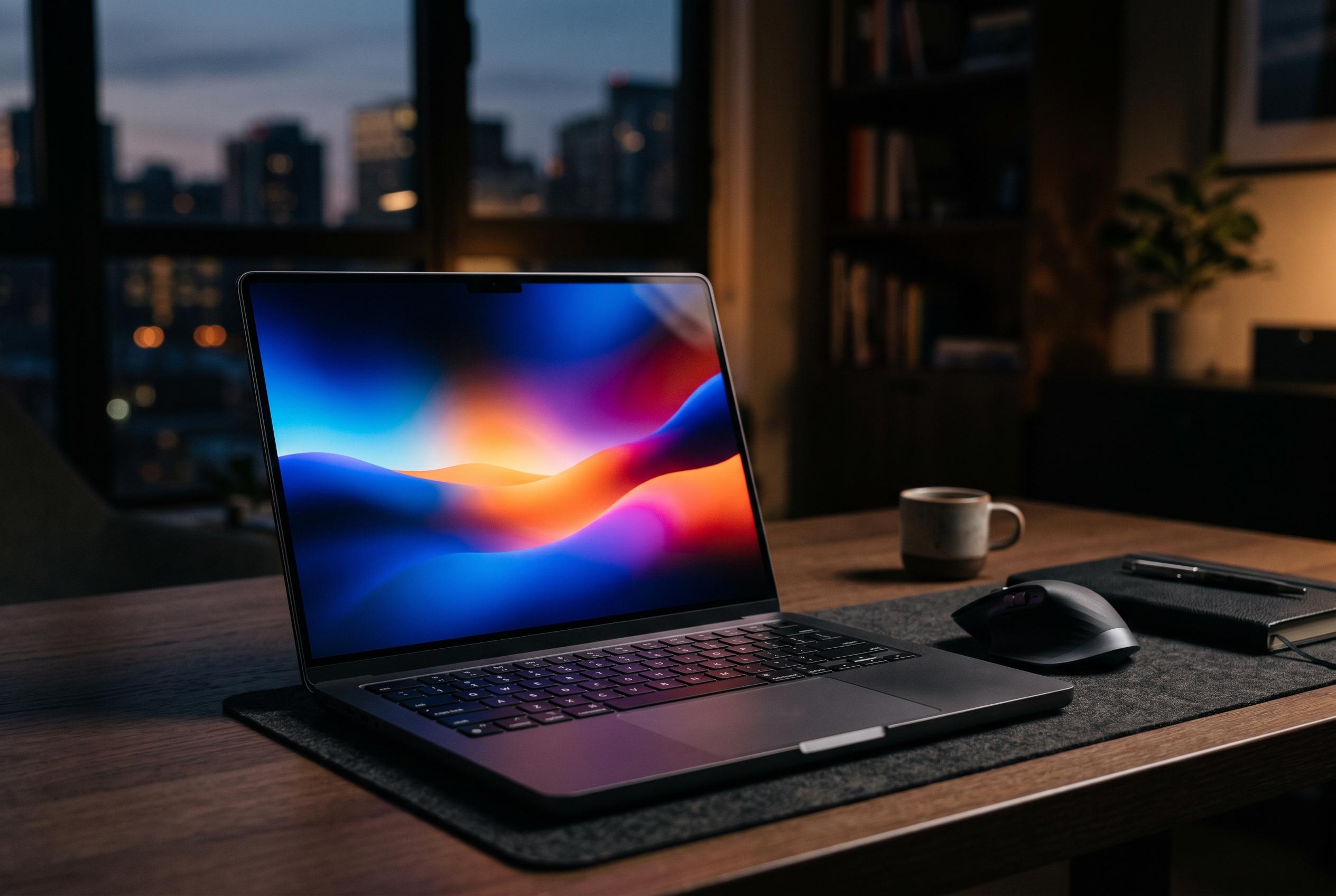

OLED notebook panel shipments are forecast to jump 50% in 2026, driven by Apple’s expected next-generation MacBook Pro and rising demand for premium AI PCs.
Apple’s next MacBook Pro is expected to play a central role in a broader shift towards higher-end notebook screens, as Counterpoint Research forecasts a sharp rise in OLED panel shipments in 2026. The market researcher says advanced notebook display shipments should grow by 11% next year even as the wider notebook display market is expected to contract by 3%, underlining how demand is concentrating in premium devices rather than the sector as a whole. Counterpoint also expects OLED notebook panels to expand by 50% in 2026, with the technology taking a much larger share of the advanced segment.
The expected catalyst is Apple’s adoption of OLED in the next-generation MacBook Pro, which has been widely rumoured to arrive with a redesigned chassis and touchscreen display. Counterpoint says that alongside Apple’s move, demand for premium AI PCs should also support growth in OLED notebooks. The company’s forecast points to a major shift in the balance between OLED and MiniLED, with OLED projected to account for 75% of advanced notebook display shipments in 2026, up from 56% in 2025, while MiniLED is expected to fall from 44% to 25%.
The report places that momentum in a wider industry context. Counterpoint’s Q2 2026 OLED shipment data showed notebook OLED panel shipments rising 18% quarter on quarter and 27% year on year, a sign that the category has already been gaining traction beyond smartphones and televisions. At the same time, the firm has warned that the overall OLED market faces uneven conditions, with global panel shipments projected to edge down 2% in 2026 because of weaker smartphone demand and flat TV sales. In that environment, IT products such as notebooks are becoming the main growth engine for OLED suppliers.
Counterpoint argues that the technical case for OLED in notebooks is strengthening as manufacturers improve panel design and production. It points to tandem OLED architectures, which use two OLED layers to boost brightness, efficiency and longevity, as a key enabler for premium laptops. Apple already uses tandem OLED in the iPad Pro, and the researcher expects a similar two-stack approach in the upcoming 14-inch and 16-inch MacBook Pro models. Looking further ahead, Counterpoint forecasts OLED notebook shipments to grow at a compound annual rate of 26% between 2024 and 2030, with revenue rising even faster at 35% a year over the same period.
Disclaimer: This content is intended for informational purposes only. Readers are advised to exercise their own judgement, conduct due diligence, or consult a qualified expert before acting on any information provided.



