

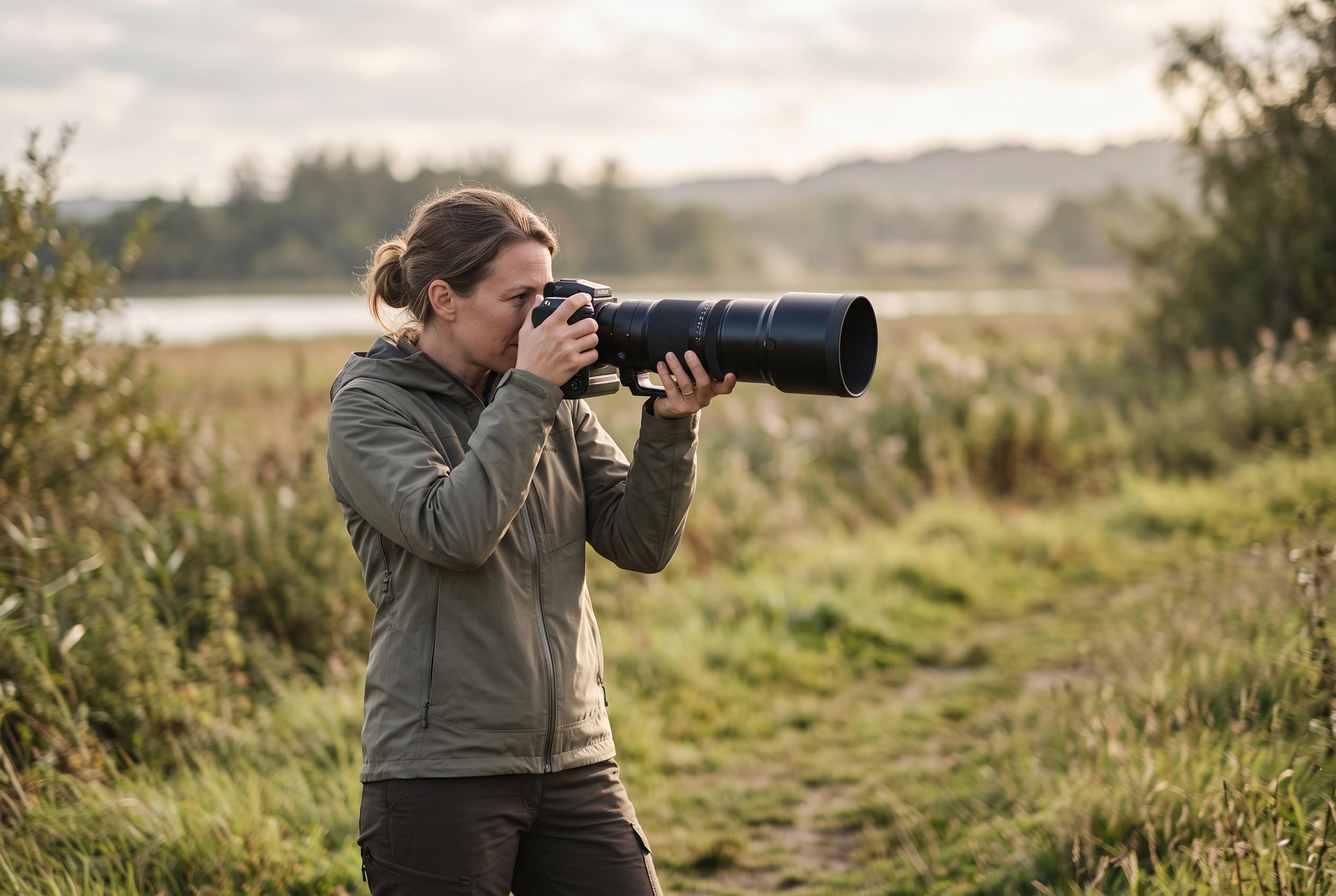

Fujifilm’s XF 400mm f/4.5 gives X-mount photographers a stabilised 600mm-equivalent lens without the weight and price of full-frame super-telephoto glass, though heat haze remains a bigger threat than sharpness.
Fujifilm’s XF 400mm f/4.5 R LM OIS WR is built around a simple pitch: give X-mount users serious super-telephoto reach without the mass, cost or strain that usually come with it. In practical terms, it delivers a 600mm-equivalent angle of view in a lens that weighs 1,245g and is priced at about $3,199, placing it far below the full-frame 600mm f/4 class that can cost four times as much and tip the scales at around 3kg. That positioning matters most for wildlife and field sports, where distance, mobility and reaction time often matter as much as pure optical speed.
In his hands-on assessment for Fstoppers, Luca Petralia argues that the lens is impressively manageable in the field, even on long walks. He says he carried it for a three-mile hike without noticing the weight and shot every frame handheld. Petralia also notes that, although f/4.5 is the native aperture, the depth of field behaves more like that of an f/6.3 lens on full frame, which is a useful reminder that the X system’s APS-C crop is part of the equation. His verdict is that the lens is sharp wide open, with only a modest improvement when stopped down, and that the background blur remains smooth rather than abrupt.
The lens also fits neatly into Fujifilm’s broader super-telephoto strategy. DPReview said the 400mm prime sits alongside the XF 200mm f/2 and XF 500mm f/5.6, filling out a range that gives X-mount users a more complete wildlife and sports toolkit. Fujifilm’s official product page also stresses portability and reduced physical burden, while third-party specification listings confirm a 21-element optical design, full weather sealing, a fluorine-coated front element, 95mm filters and optical stabilisation rated for up to 5.5 stops. The lens accepts Fujifilm’s 1.4x and 2x teleconverters, extending its reach further when conditions justify it.
Petralia’s caution is that extra focal length is not a cure for bad conditions. At these distances, he says, heat haze can do more damage to image quality than autofocus or lens sharpness, which means early morning light, cooler air and physically closer positioning often deliver better results than simply adding magnification. He also praises the lens’ practical controls, including the focus limiter, stabilisation switch, preset function and four programmable buttons, though he would prefer firmer clicks on the aperture ring. His wider point is that Fujifilm has built a lens that makes long-lens work less punishing without pretending that physics has changed.
Disclaimer: This content is intended for informational purposes only. Readers are advised to exercise their own judgement, conduct due diligence, or consult a qualified expert before acting on any information provided.



