

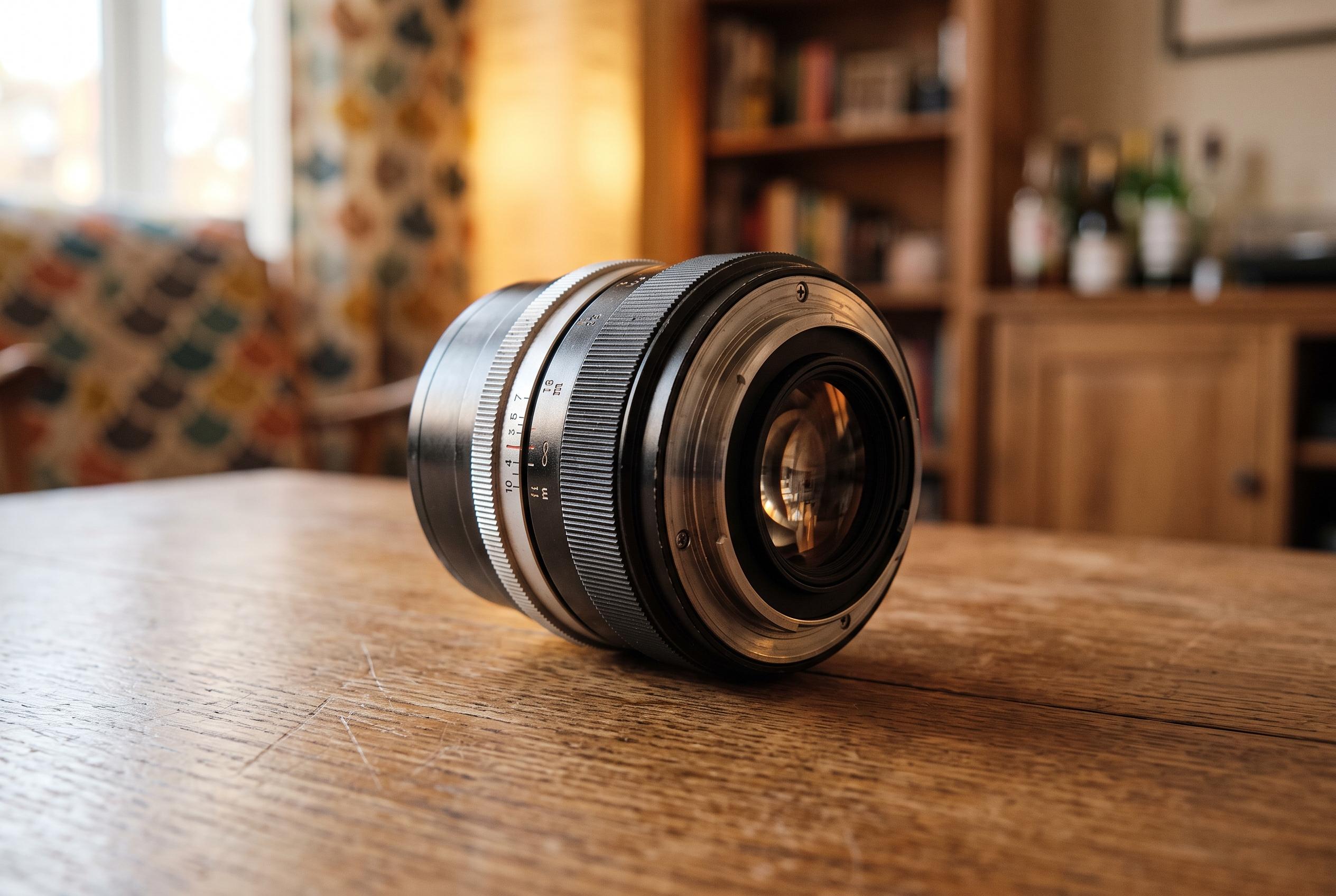

The budget 50mm f/1.4 delivers vintage-style flare and glow, but its signature bokeh effect is hard to reproduce and reports of a failing sample raise concerns over build quality.
Pergear’s 50mm f/1.4 is an inexpensive manual-focus prime that aims to sell character rather than clinical perfection, but the claims around its “fish-scale” bokeh do not appear to hold up in real-world use. In practice, the lens seems to deliver the sort of vintage rendering that some photographers actively seek: soft bloom, muted colour, pronounced flare and a general absence of the sterile look often associated with modern optics. The problem is that the headline optical effect Pergear promotes is difficult to reproduce in normal shooting, and the more convincing description is that of a classic, slightly onion-style blur pattern rather than a distinct fish-scale signature.
Build quality is where the lens raises the strongest concerns. The review sample described by The Phoblographer was made from metal and felt suitably old-school in hand, but the first copy reportedly fell apart during use, prompting a replacement unit. That is a serious issue for any lens, however low the asking price. Pergear’s own material presents the optic as a compact, all-metal design with a clicked aperture ring, 12-blade diaphragm, multi-layer coatings and compatibility with Sony E, Nikon Z, Canon RF and L-mount bodies. It is also pitched as a budget option at about $129, which helps explain why the lens may appeal to photographers willing to trade refinement for cost and character.
Optically, there is a clear split between users who value personality and those who want consistency. The Phoblographer found the lens most effective when used wide open, where the rendering had a soft, pleasing quality and flare could become part of the image rather than a defect. That view broadly aligns with other assessments of Pergear’s 50mm f/1.4, including a French-language review that noted strong chromatic aberration, flare sensitivity and softer corners at wider apertures, while still acknowledging a vintage-like output. By contrast, a separate professional review gave the lens a very low score, citing focus shift, weak flare resistance and notable aberrations, although it still credited the compact metal construction and lightweight form.
That mix of praise and criticism suggests a lens with a clear target audience. It is not a general-purpose 50mm for photographers seeking the highest sharpness, the cleanest correction or dependable weather sealing. It is better understood as a stylistic tool for those who want flare, glow and a less polished image signature, particularly on retro-styled cameras. The Nikon Zf pairing mentioned in The Phoblographer’s review is a good example of that appeal: the lens’s manual operation, clicked aperture and physical design suit a body that encourages hands-on shooting.
The wider context matters too. In the 50mm segment, many established lenses are judged on smooth bokeh and balanced rendering, with DPReview’s older assessment of Nikon’s 50mm f/1.4G praising its blurred backgrounds as non-distracting and well controlled. Pergear is clearly pursuing a different proposition: low price, mechanical simplicity and a deliberately characterful image. The result may interest photographers who prefer texture to technical polish, but the marketing around fish-scale bokeh appears overstated, and the build concerns mean buyers should approach it with caution.
Disclaimer: This content is intended for informational purposes only. Readers are advised to exercise their own judgement, conduct due diligence, or consult a qualified expert before acting on any information provided.



