

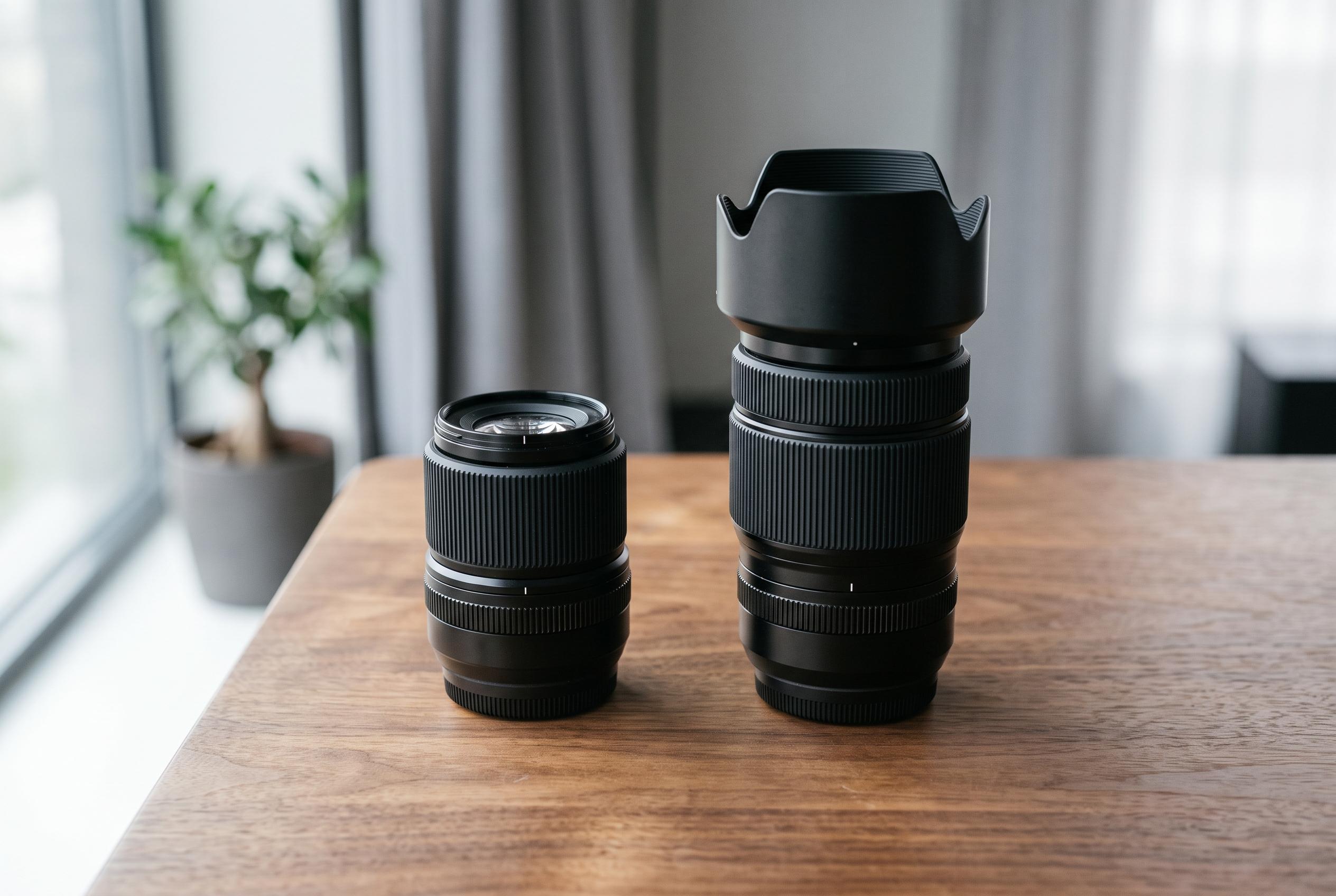

The Voyager 24-50mm f/2.8 delivers similar sharpness to Sony’s established FE 24-50mm f/2.8 G, while adding an internal zoom and a substantially lower price.
Thypoch’s Voyager 24-50mm f/2.8 is making an ambitious entrance into a crowded part of the market: the compact full-frame standard zoom. In Matt Irwin’s comparison for Fstoppers, the lens is pitched directly against Sony’s FE 24-50mm f/2.8 G, a model that has become a reference point for photographers who want speed, small size and native autofocus in one package. That matters because the Thypoch arrives at roughly half the price of the Sony, at $649 versus $1,198 at B&H, while promising a similar specification on paper. According to Thypoch, the Voyager is the company’s first full-frame autofocus zoom for Sony E-mount cameras, with a constant f/2.8 aperture and internal zoom design.
Irwin’s side-by-side testing suggests the challenge is less about matching the headline features than about matching the experience. He notes that the two lenses share the practical details buyers now expect, including AF/MF switches, function buttons and supplied hoods. The Sony has the advantage of a clicked or declicked aperture ring, but it extends as it zooms, while the Thypoch keeps the same physical length throughout the range. Even so, Irwin says the Thypoch feels better in the hand, and with the hoods removed the pair end up at almost the same height. Thypoch says the lens weighs 432g, which helps explain why it is being presented as a travel-friendly option for documentary, reportage and street work.
On image quality, the differences appear smaller than the price gap might suggest. Irwin checked framing at both 24mm and 50mm and found the fields of view so close that the comparison remained fair. Sharpness was described as very tight, with the Sony looking fractionally crisper on fine detail in the top-left corner and on objects in the foreground, while the Thypoch edged ahead on background buildings and windows. His conclusion was that the gap amounted to “a hair”, and that it was only visible when both files were viewed at high magnification. He also said that, in Super 35 video crop, there was nothing obvious in the viewfinder to separate them.
That is significant because autofocus zooms remain a tougher engineering problem than manual-focus lenses, especially for younger lens brands that built their reputation on primes. Thypoch’s move into this category shows how quickly some Chinese manufacturers have moved up the curve in recent years, and the Voyager’s internal zoom is more than a convenience feature. For video users, a lens that does not change length keeps the balance point steady on a gimbal and avoids the need to rebalance between shots. It also reduces the pumping of air through the barrel as the focal length changes. Irwin notes that a Z-mount version is planned, and that could be especially relevant because Nikon’s own option in this range, the NIKKOR Z 24-50mm f/4-6.3, is slower and more clearly positioned as a kit lens.
The main area where the two lenses seem to diverge most is rendering rather than resolution. Irwin’s autofocus tests, shot on Sony a7 V and a1 II bodies with matched settings, were designed to examine focus tracking, breathing and the way each lens handled movement from background to subject and back again. He also compared out-of-focus highlights, where he saw one lens shape the bokeh differently from the other. That suggests the Voyager is not simply a cheaper imitation of Sony’s zoom, but a distinct optical design aimed at users who care as much about handling and video balance as they do about raw sharpness. Thypoch’s own material reinforces that positioning, with the company highlighting a 10-blade aperture, aspherical and high-refractive elements, and weather sealing as part of the package.
Disclaimer: This content is intended for informational purposes only. Readers are advised to exercise their own judgement, conduct due diligence, or consult a qualified expert before acting on any information provided.



