

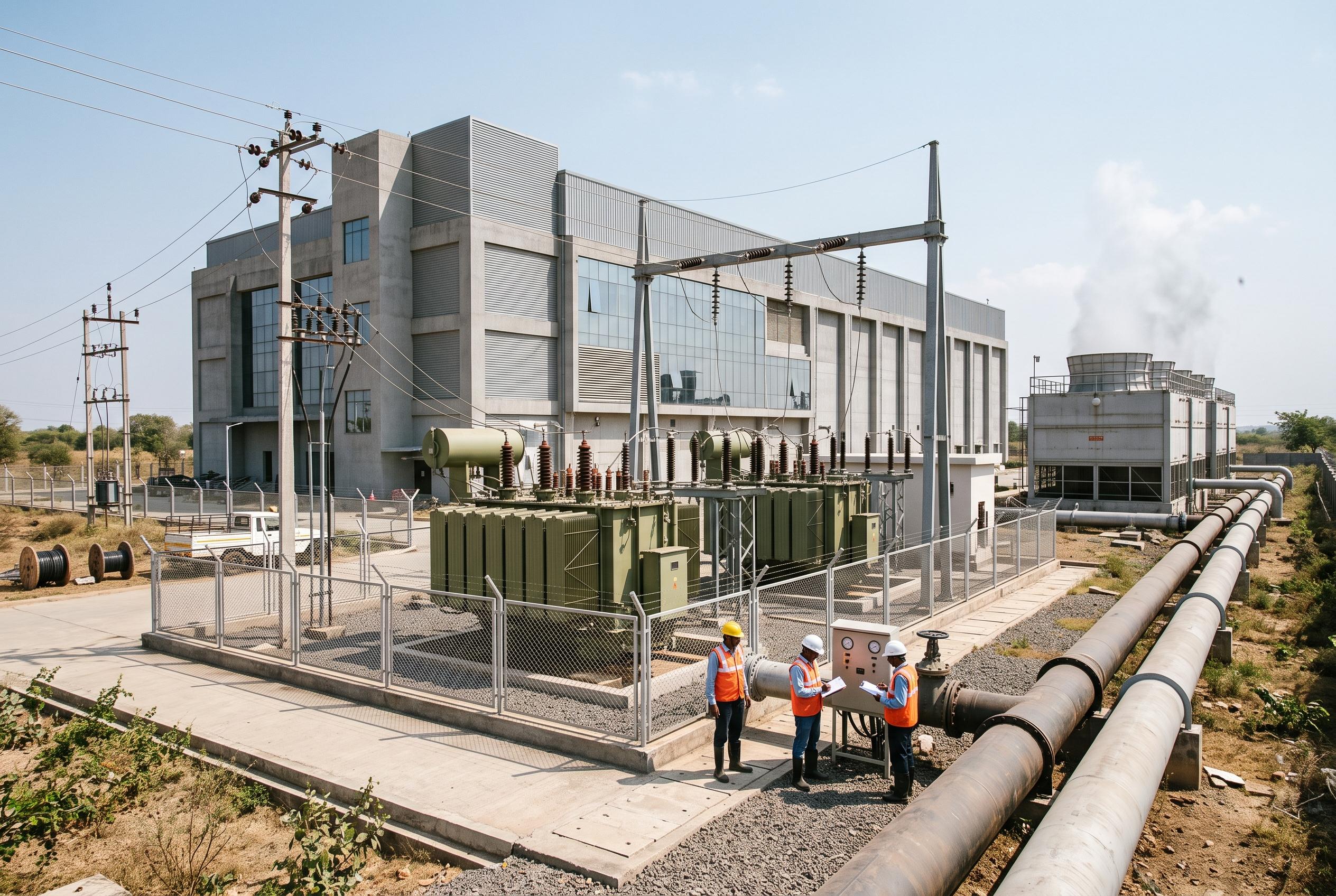

A NITI Aayog and Deloitte India framework calls for data-centre projects to be judged on verified access to power, water and infrastructure, as rapid expansion fuels competition and local opposition.
India’s push to expand data centre capacity is entering a more exacting phase, with NITI Aayog and Deloitte India urging states to base approvals on verified access to power, water and supporting infrastructure rather than on investment promises alone. The framework, released on Wednesday, argues that data centres should be treated as strategic infrastructure and assessed against the public resources they consume, the economic returns they generate and the strain they place on local systems.
The guidance comes as the sector scales up quickly. According to a February study by the Council on Energy, Environment and Water, India had 271 data centres in January 2026, while the Union government said installed capacity had reached about 1.57 gigawatts by August 2026. Industry estimates cited by The Hindu suggest capacity could rise to between 4.5GW and 6.5GW by 2030, with growth being driven by artificial intelligence workloads, digital consumption and data-localisation requirements.
That expansion is already reshaping regional competition. Maharashtra and Tamil Nadu are among the frontrunners, while Gujarat and Uttar Pradesh have set ambitious targets. Andhra Pradesh is seeking to turn Visakhapatnam into an AI infrastructure hub, and Odisha, Telangana and Madhya Pradesh are also courting investment. Yet the rush has prompted local resistance in several places, including protests in Thane over a proposed Amazon facility and objections in Andhra Pradesh to Google’s planned project near Visakhapatnam, where critics have raised water and ecological concerns.
The framework proposes a wider planning model in which states assess entire campuses and infrastructure corridors rather than individual projects in isolation. It recommends 20-to-30-year seasonal studies of water availability, protection for existing users and a requirement that developers pay for grid assets built specifically for their own operations. It also says incentives should be linked to measurable outcomes such as employment, renewable power use, efficiency and local sourcing, while a central audit mechanism led by the Ministry of Electronics and Information Technology would oversee the system. The presentation does not say whether the recommendations have been formally adopted or whether they will be binding.
Disclaimer: This content is intended for informational purposes only. Readers are advised to exercise their own judgement, conduct due diligence, or consult a qualified expert before acting on any information provided.



