

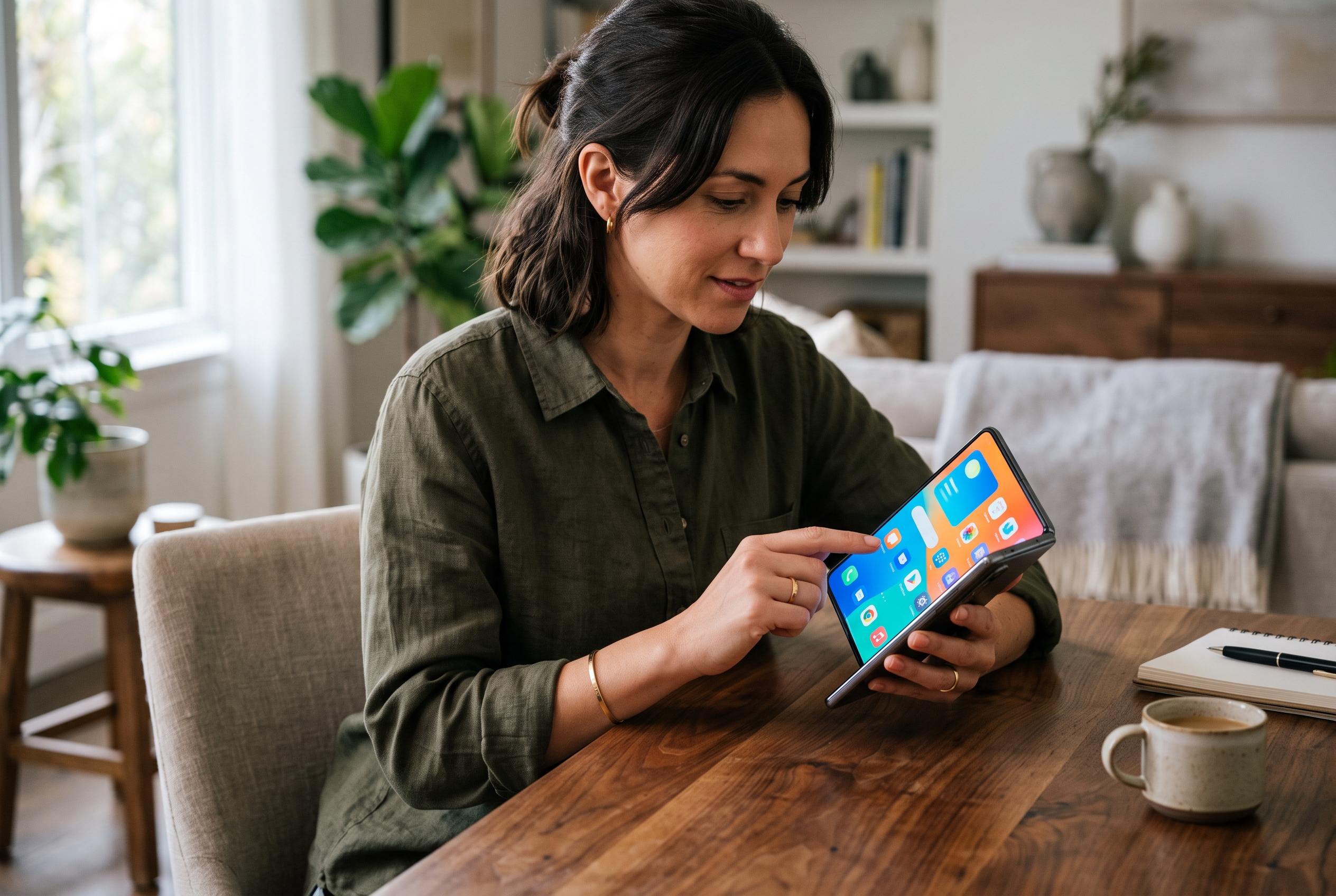

Apple’s first foldable iPhone pairs a 7.6-inch display with robust hardware and foldable-focused software, but its high price comes with compromises including no telephoto camera, Face ID or Action button.
Apple’s foldable iPhone Duo is designed to solve a familiar problem for premium phone buyers: how to carry a device that behaves more like a small tablet when open, without giving up the pocketable form of a handset. According to Apple’s published specifications and launch coverage, the device pairs a 5.4-inch outer display with a 7.6-inch inner screen, placing productivity and media viewing at the centre of its appeal. That larger panel is the main reason to consider it at all: it makes reading, multitasking and video consumption notably easier than on a standard iPhone.
The trade-offs are equally clear. Coverage of the Duo’s launch notes that Apple has omitted a telephoto camera, so users who care about optical zoom will not get the reach offered by some conventional flagship phones. The device also uses Touch ID in the side button rather than Face ID, and it does not include the Action button found on recent iPhone models. For many users, that will matter less than the folding form factor; for others, especially those who rely heavily on facial authentication or fast camera shortcuts, it will be a meaningful downgrade.
Apple appears to have focused heavily on durability and thermal control, two areas that have often separated successful foldables from disappointing ones. The Duo is rated IP68 for water and dust resistance, uses a titanium frame and Ceramic Shield protection, and employs a custom hinge built from more than 100 precision components. Tom’s Guide reports that Apple also added a specialised cooling arrangement inside the hinge, combining a vapour chamber with a flexible graphite pipe to spread heat more effectively across the two halves of the device. In practical terms, that should help the phone sustain performance for longer periods, particularly during gaming, video editing and other demanding tasks.
The displays are a major part of the value proposition. Apple says both panels support ProMotion at up to 120Hz, HDR, True Tone and wide colour, while the inner screen uses a nano-texture finish intended to reduce glare and make the crease less obvious. Tom’s Guide notes that the finish may slightly reduce vibrancy, but it is meant to improve day-to-day readability and make the fold less distracting in normal use. That is important, because the central crease remains one of the defining compromises of any foldable phone. The effect is not usually a deal-breaker, but it can become visible depending on lighting and viewing angle.
Software support is another reason the Duo may feel more polished than earlier foldable attempts from rivals. Tom’s Guide says iOS 27 has been adapted for the form factor, with split-screen multitasking, adaptive modes and a redesigned status bar. Apple also appears to have built in features such as Duo Preview and Smart Take for photography, reflecting the company’s usual emphasis on integrated hardware and software. That combination should matter most to people who want a large canvas for email, documents, messaging and media without carrying both a phone and a tablet.
Price remains the most obvious barrier. Reports on the launch place the starting price at about $2,000, with storage rising as high as 2TB on Apple’s specification page. That makes the Duo a costly proposition before accessories, protection plans or repairs are even considered. It is also worth noting that foldables tend to carry higher ownership costs over time, especially when the inner display is involved. For buyers who expect heavy use, AppleCare looks sensible rather than optional, because the economics of repairing a folding screen are rarely forgiving.
The result is a device with a clearly defined audience. It makes the most sense for readers, frequent travellers, mobile workers and anyone who values a larger display more than camera flexibility. It is less compelling for buyers who prioritise optical zoom, the most advanced biometric unlocking, or the lowest possible purchase price. In that sense, the iPhone Duo is not trying to replace every iPhone. It is a premium niche product for users prepared to pay for a more versatile screen, while accepting the compromises that come with foldable hardware.
Disclaimer: This content is intended for informational purposes only. Readers are advised to exercise their own judgement, conduct due diligence, or consult a qualified expert before acting on any information provided.



