

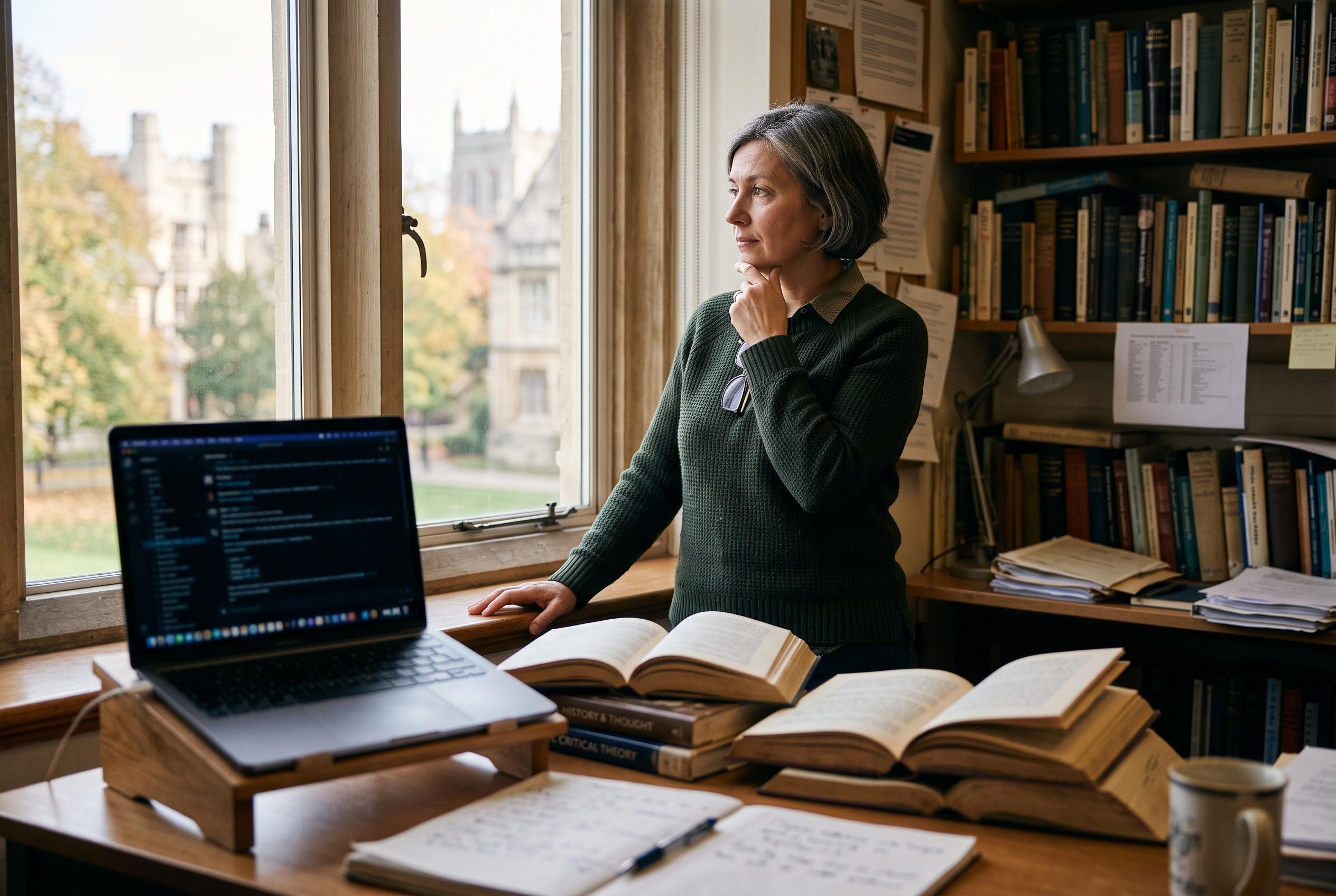

Eric So’s new book argues that relying on AI for easy answers may weaken memory, judgement and the productive struggle needed for lasting understanding.
MIT professor Eric So has argued that the spread of artificial intelligence is doing more than changing how work gets done: it is reshaping how people think. In a new book, “The Collision: What AI Does to Us”, published this month by W.W. Norton, the Sloan Distinguished Professor of Global Economics and Behavioural Science at MIT Sloan warns that heavy dependence on AI can weaken the mental effort needed to build durable understanding. The book frames AI as a useful tool in some settings, but also as a technology that can erode judgement, memory and independent reasoning when it becomes a substitute for thought. According to MIT News, So says the evidence points to better learning when people wrestle with difficult material, make mistakes, and keep revising their approach.
The book draws on research from academia and industry, including work from AI firms themselves. MIT News reported that So cites an Anthropic study in which about half of college-student prompts were low-effort requests for straightforward answers, a pattern he presents as evidence of what he calls “AI gravity” , the pull towards convenience even when that convenience has hidden costs. Google Books’ description of the book also says So argues that excessive reliance may produce cognitive atrophy, leaving users less able to develop and retain essential thinking skills.
So’s central concern is not limited to individual habits. In his interview with MIT News, he said institutions are increasingly rewarding AI use, whether in the workplace or in academia, which can turn adoption into a condition for advancement rather than a deliberate choice. That, he argues, creates a feedback loop: as people use AI more often, they practise core skills less frequently, making themselves even more dependent on the technology. A related summary on Bookstores.com describes the book as contrasting people who use AI to sharpen their thinking with those who use it instead of thinking.
The wider academic debate is moving in the same direction. An SSRN paper on cognitive atrophy in the age of artificial intelligence describes how algorithmic dependency can weaken critical thinking through cognitive offloading, automation bias and the loss of productive struggle. A separate review in Computers in Human Behaviour Reports argues that rapid AI adoption is raising concerns about over-reliance, including effects on learning, decision-making, professional competence and overall well-being. Taken together, those studies support the broader case So is making: that ease of access can carry long-term cognitive trade-offs.
So’s response is not to reject AI, but to use it more deliberately. MIT News reported that he recommends embracing difficulty, valuing one’s ability to work without AI, reinvesting time saved into meaningful activities, and treating AI as a tutor rather than an answer machine. Kirkus Reviews similarly describes the book as a guide to using the technology without surrendering mental independence. The result is a cautious but practical argument: AI can extend human capability, but only if users preserve the effort that makes learning and judgement possible in the first place.
Disclaimer: This content is intended for informational purposes only. Readers are advised to exercise their own judgement, conduct due diligence, or consult a qualified expert before acting on any information provided.



