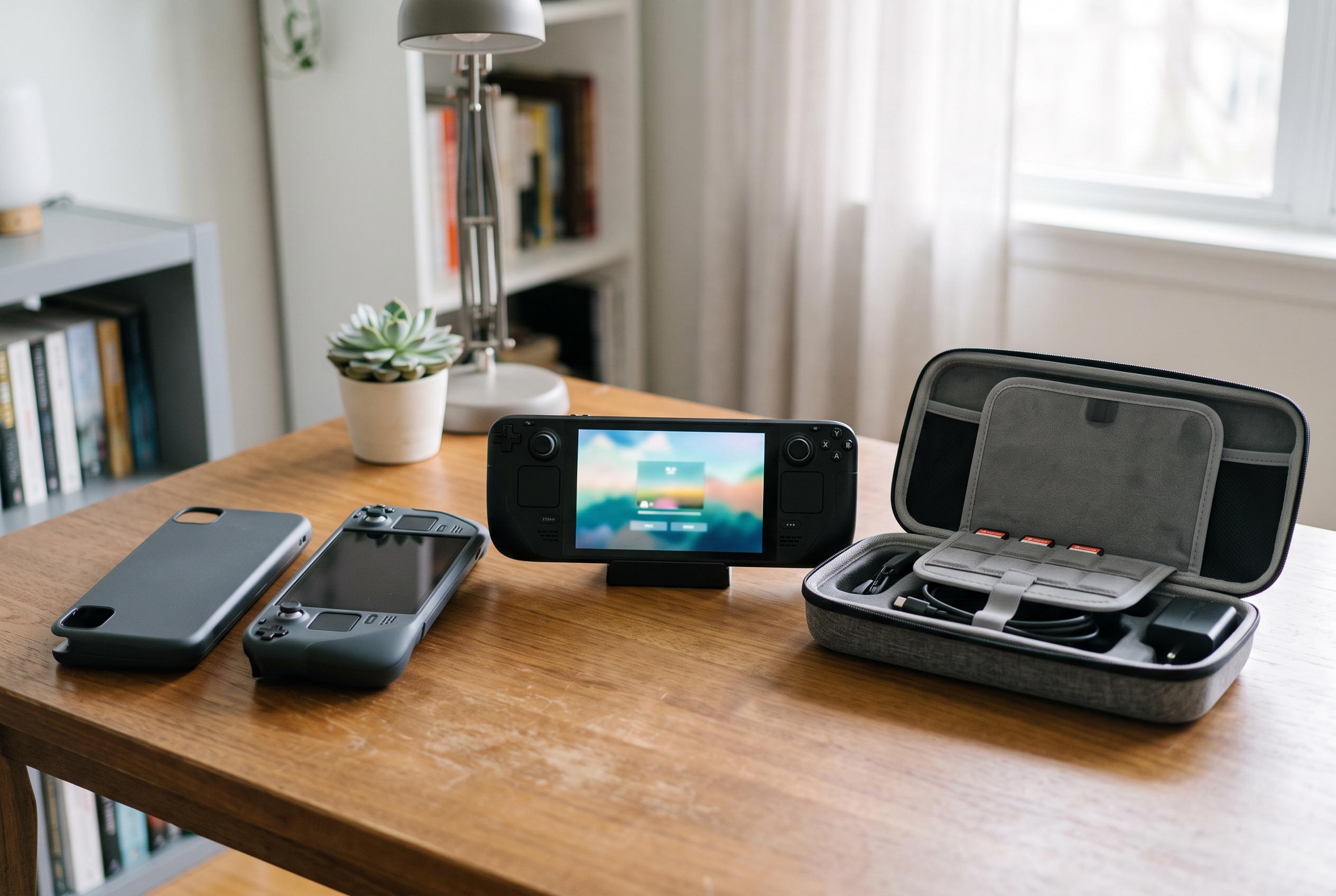

Slim shells keep daily carrying simple, while dockable and larger travel cases trade extra bulk for easier access to accessories and stronger protection.
Choosing a Nintendo Switch 2 case is less about finding a single “best” option than matching the right balance of protection, size and convenience to how the console is used. The cases highlighted in the reviewed guide point to three clear buying priorities: slim designs for daily carriage, dockable shells for people who move between handheld and TV play, and larger travel cases for users who want room for cables, cards and other accessories. That trade-off shapes almost every worthwhile choice.
Among the lighter options, the PowerA Slim Case stands out for its compact form and restrained layout. Reviews describe a hard-shell exterior with a soft-lined interior, a moulded cradle for the console, space for up to 10 game cards and an integrated stand that doubles as screen protection when folded away. Its appeal is obvious for commuters and anyone who carries the system in a bag, but the design deliberately avoids extra pockets, which keeps the case thin while limiting what else can be packed alongside the console.
That absence of accessory storage is not necessarily a weakness. GamesRadar+ argued that omitting a pouch reduces the risk of overfilling the case and putting pressure on the screen, while also keeping zips and other hardware away from the device itself. Other coverage from Materiel Gamer and iTechGuides reaches a similar conclusion, treating the PowerA Slim Case as a practical everyday option rather than a full travel organiser. It is the sort of case that favours simplicity and portability over all-purpose utility.
At the opposite end of the spectrum are larger travel cases such as the Game Traveler Deluxe and the Nacon Protection Case XL, both of which are aimed at users who want more than basic shell protection. TechRadar noted that the Nacon case can accommodate the console, dock, cables and at least one accessory, with a durable, scratch-resistant exterior and room for games as well. That makes it attractive for longer trips or shared family setups, although the same bulk that improves storage can make it less discreet to carry and less elegant in day-to-day use.
The broader lesson from the current Switch 2 case market is that features are tightly linked to compromises. Dockable cases are useful for players who switch constantly between handheld and docked play, but they tend to add size. Slim cases are easier to live with every day, but they usually sacrifice accessory space and sometimes grip. Heavier-duty models improve peace of mind during travel, yet they can be less comfortable in a backpack. For most buyers, the best choice will come down to whether the priority is all-in-one portability, fast access or maximum protection.
Disclaimer: This content is intended for informational purposes only. Readers are advised to exercise their own judgement, conduct due diligence, or consult a qualified expert before acting on any information provided.