

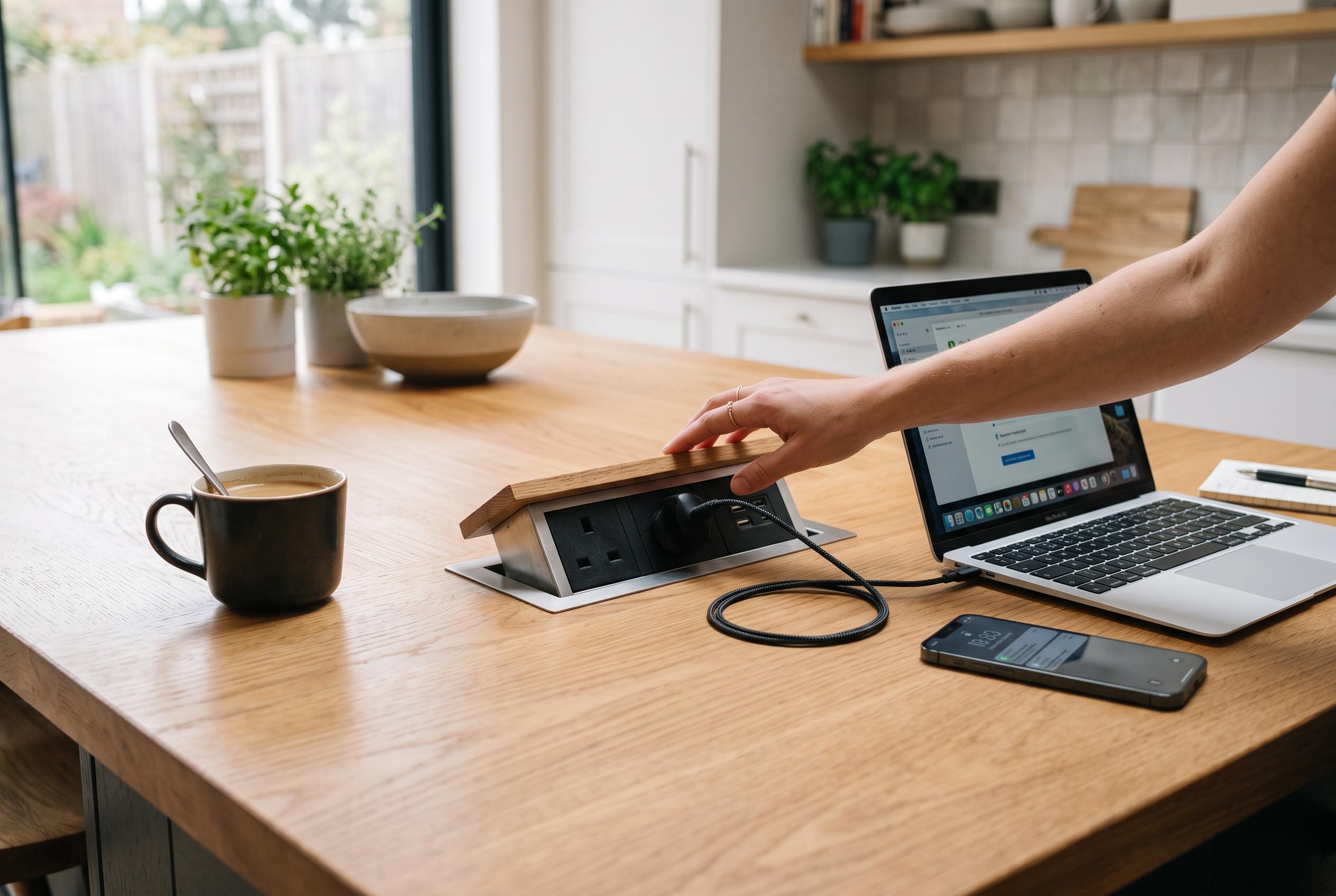

Retractable power units are turning worktops, kitchen islands and meeting tables into discreet connection hubs, but installation depth, charging output and moisture protection remain crucial.
Built-in power modules are steadily replacing the familiar wall socket in kitchens, offices and meeting spaces, as designers look for neater ways to combine mains power, charging and data connections in furniture. Instead of leaving plugs and adapters visible, these units are fitted into worktops, islands and desks, turning connection points into part of the surface itself.
The appeal is practical as much as visual. Retractable and flip-up designs keep outlets hidden until they are needed, while fixed units remain permanently accessible. EVOline describes its Port range as a solution that disappears into the worktop when not in use and rises with a press of the lid. Retail specifications for the Port model show a 102 mm mounting hole, a 3-metre power cable and support for worktops up to 50 mm thick, which helps explain why such systems are often chosen during the design stage rather than retrofitted later.
USB-C has made these modules more useful for day-to-day charging, but the connector alone is not the key factor. The important detail is the power output of the module itself. For a laptop-friendly bar counter or desk, product guidance cited by Ukrainian furniture and fit-out retailers recommends USB-C Power Delivery of at least 30W to 45W. That distinction matters because a port can physically fit a cable while still charging too slowly for heavier devices. When more than one gadget is connected, total available power may also be shared between outputs.
Many of the newer units now combine power sockets with data ports as well. EVOline sells versions with USB-A, USB-C, RJ45 Ethernet, HDMI and audio modules in the same housing, while other catalogues list combinations such as two mains outlets alongside USB ports. That flexibility makes the systems suitable for different environments: a kitchen island may need only power and charging, whereas a conference table may also require a monitor feed and a wired network connection. LIVOLO-branded solutions are marketed in a similar way, with HDMI and LAN ports placed alongside power sockets for desks and meeting areas.
There are, however, installation limits that matter as much as functionality. Because the mechanism sits beneath the surface, the furniture must have enough internal space for the body of the unit, its movement and the cable route. Thickness and material of the worktop also affect compatibility. For kitchens, moisture protection is another consideration: Electro-Market advises choosing products with at least IP44 protection and matching the load to the appliances that will be connected. In practice, the best choice is the one that fits the cabinet layout, the available depth under the surface and the exact mix of devices that will be used there.
Disclaimer: This content is intended for informational purposes only. Readers are advised to exercise their own judgement, conduct due diligence, or consult a qualified expert before acting on any information provided.



