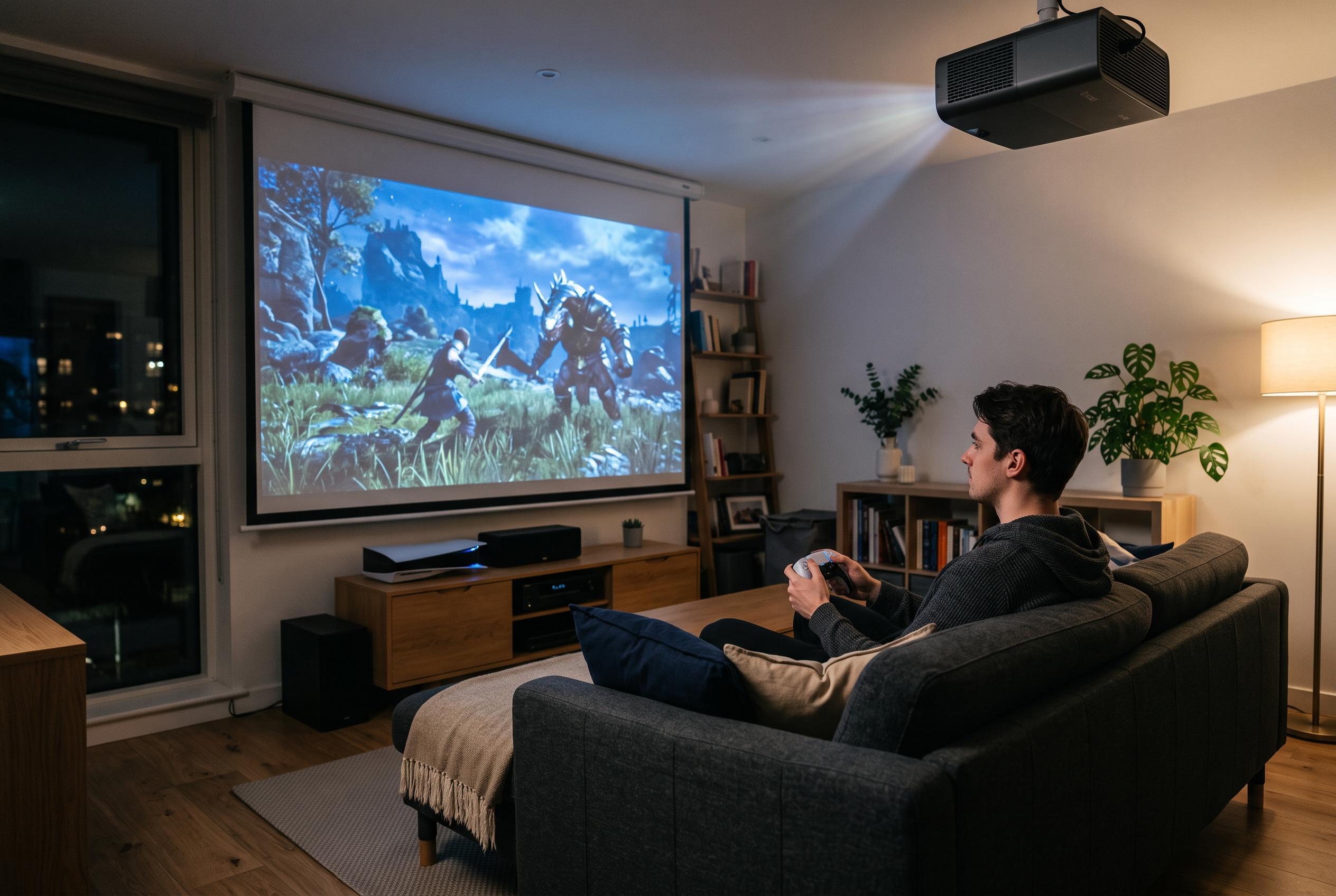

A new comparison spanning compact and luxury models shows that brightness, input lag and room conditions matter as much as resolution when choosing a gaming projector.
Gaming projectors now span a far wider range than many buyers expect, and the latest comparative test makes that clear. PC Games Hardware says the field stretches from the compact TCL Playcube to the premium XGimi Titan Noir Max, with the main evaluation points being brightness, image quality, input lag and price. That matters because projectors are not judged on resolution alone: in real use, they also depend heavily on placement, fan noise and how much ambient light the room admits. According to the publication, the move from compact models to more ambitious machines also shifts the emphasis towards stronger light output and more stable gaming performance.
That distinction is important for players trying to choose between a television, a monitor and a projector. As PC Games Hardware notes, projectors tend to lose contrast quickly when room lighting rises, and darker sections of the image can wash out long before the picture seems obviously dim. Industry buying guides make similar points. TechRadar’s projector guide highlights the value of brightness and accurate colour for home cinema use, while gaming-focused round-ups from Projector Verdict and AIX Projector consistently place low latency, 4K support and high refresh rates near the top of the list for console and PC buyers. The practical lesson is that gaming projectors are a compromise product: the best models can be highly capable, but only if the room and budget are suited to them.
Among the models discussed across the various guides, the BenQ X3100i repeatedly appears as a benchmark gaming choice, with praise for its low input lag and 240Hz support. Other frequently cited options include the ViewSonic PX749-4K and the Optoma UHD38x, both positioned as alternatives for buyers seeking responsive play without moving into flagship pricing. TechRadar also singles out the Epson QL7000 for very bright rooms, while the Hisense PX3-Pro is presented as a strong ultra-short-throw option with vivid colour and Dolby Vision support. These recommendations underline how fragmented the market has become: no single projector is best for every player, because room layout, brightness requirements and gaming priorities vary so widely.
At the top end, the XGimi Titan Noir Max shows how far the category has moved into luxury territory. PC Gamer’s review describes it as a $5,999 projector with impressive brightness, sharp imaging and gaming-friendly performance, including 4K at 60Hz and 1080p at 240Hz with very low latency. That places it far beyond the reach of most buyers, but it also sets the ceiling for what modern gaming projectors can deliver. For readers weighing value rather than absolute performance, the more useful question is not which projector is technically best, but which one offers the most balanced mix of brightness, speed and price for the room it will actually be used in.
Disclaimer: This content is intended for informational purposes only. Readers are advised to exercise their own judgement, conduct due diligence, or consult a qualified expert before acting on any information provided.