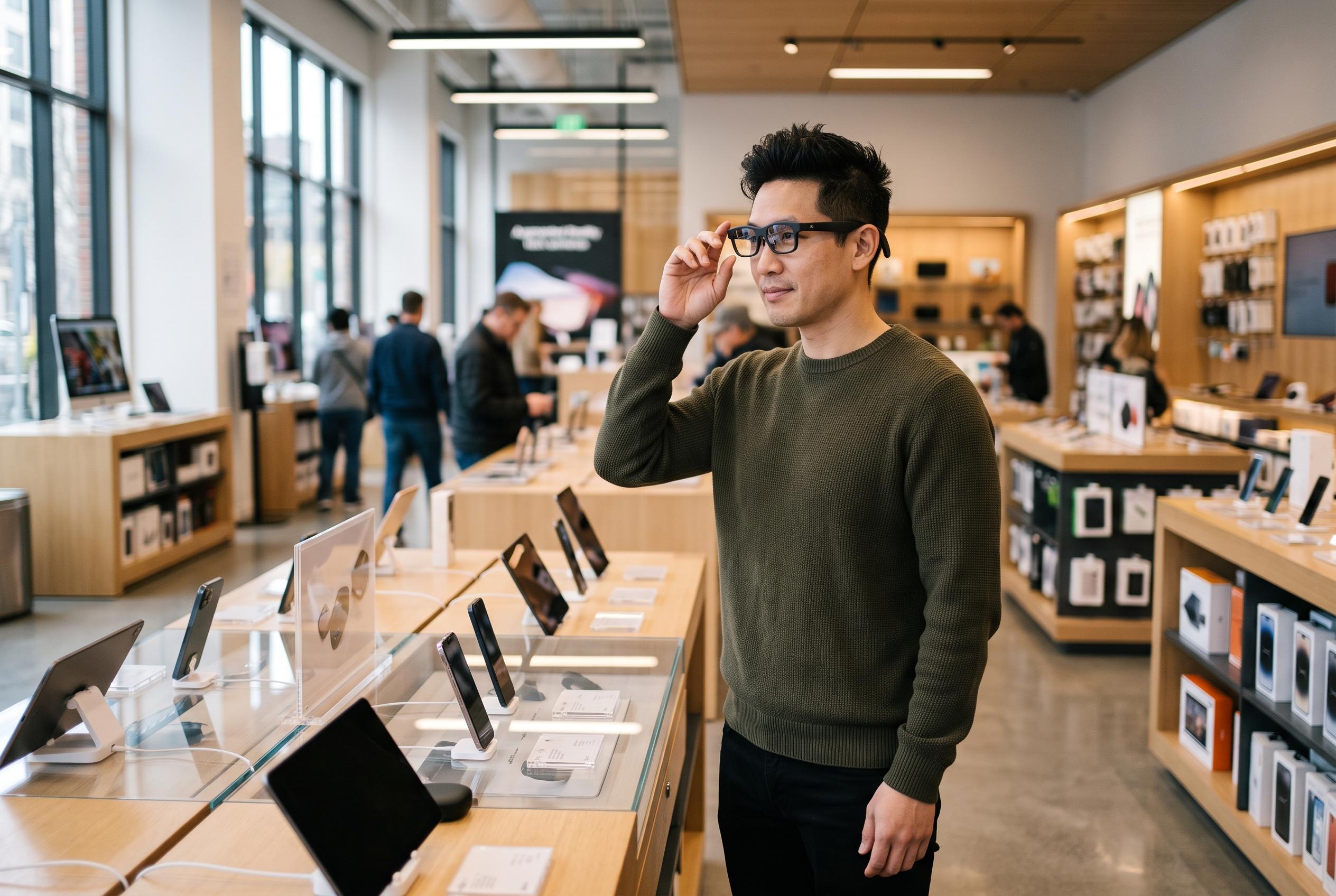

Policy support, 15% purchase subsidies and stronger domestic component production are accelerating China’s smart glasses market, with AR models and lighter designs gaining ground.
China’s smart glasses market is being pulled forward by a combination of policy support, consumer subsidies and a faster-moving domestic supply chain, according to DIGITIMES. The report says the country continued to push the category from the centre down to provincial and city level in 2026, with officials in Beijing, Shandong, Jiangsu, Shanghai, Zhejiang, Guangdong, Shenzhen and Suzhou all introducing measures that favour development of the sector. Those efforts are centred on core components such as dedicated chips, microdisplays and optical parts, suggesting that the government sees smart glasses not merely as a consumer gadget but as part of a wider industrial technology push.
The policy backdrop has been reinforced by demand-side incentives. In the first eight months of 2026, China’s consumer market shifted towards smarter and higher-quality products, and sales of smart glasses on major platforms rose by 120% year on year, according to Chinese official reporting. The Ministry of Commerce has also listed smart glasses among the digital and smart products eligible for national subsidies, with purchases qualifying for support worth 15% of the sale price, subject to a cap of 500 yuan per item. Separate guidelines issued in June by the Ministry of Commerce and seven other departments set out 17 measures intended to deepen the use of artificial intelligence in consumption, widen smart-product uptake and create new spending scenarios.
DIGITIMES says that the domestic industry has responded with a clear emphasis on augmented-reality capability rather than simple camera-and-audio devices. Chinese AI glasses brands have concentrated on products with AR display functions, which accounted for 52% of models launched by August 2026. The average weight of Chinese AI glasses launched in that period was 38.1 grams, making them about 30% lighter than the 54.4-gram average for US models released over the same span. The report attributes much of that progress to local sourcing of microdisplays and waveguide systems, which has helped Chinese brands make incremental gains in both display quality and wearability.
The industrial geography of the sector also appears to align closely with the policy map. DIGITIMES says Guangdong, Beijing, Shanghai, Zhejiang and Jiangsu account for more than 80% of China’s smart glasses vendors, which matches the areas that have been most active in setting policy. That overlap may make it easier for authorities and companies to co-ordinate on supply chains, standards and product development. Broader industry coverage from 2026 suggests the market is also becoming more commercially serious, with brands such as XREAL, Rokid, RayNeo and INMO pushing new products and preparing for capital-market listings, while the category benefits from trade-in and subsidy programmes that have brought smart glasses into China’s mainstream consumer policy framework.
Disclaimer: This content is intended for informational purposes only. Readers are advised to exercise their own judgement, conduct due diligence, or consult a qualified expert before acting on any information provided.