

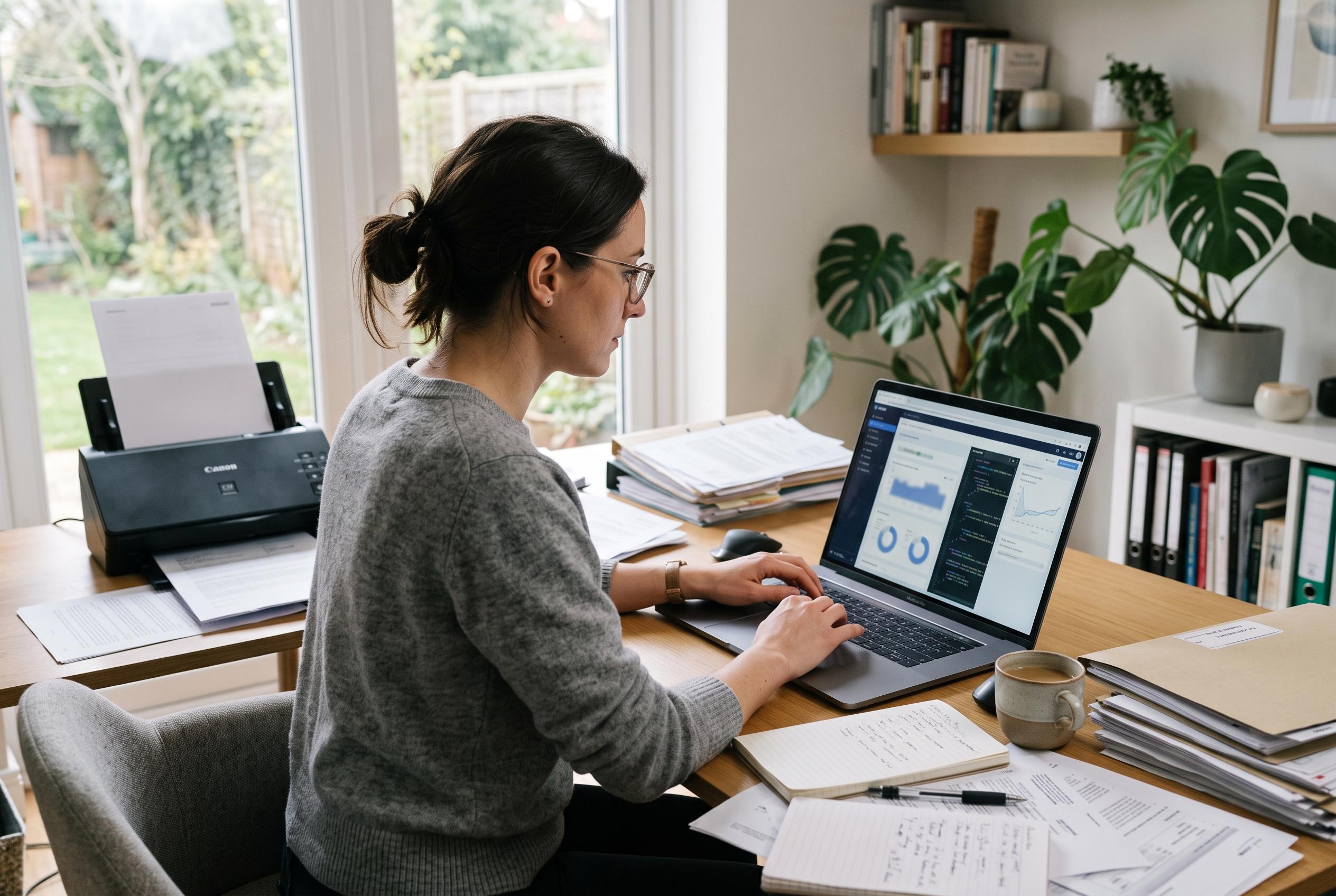

Version 0.1.63 makes HilbertRaum more resilient for document-heavy work, adding OCR for scanned PDF pages, one-click retries and checksum-verified recovery for damaged AI runtimes.
HilbertRaum’s version 0.1.63 is a modest release on paper, but it sharpens the parts of the product that matter most to people using local AI for serious work: reliability, document handling and recovery when something goes wrong. The desktop assistant is designed to run entirely on a user’s own machine, with local chat, document question-answering, translation, image understanding, voice transcription and encrypted workspace storage, according to the project’s own documentation and third-party reviews. That same offline design also makes portability a key part of its appeal, allowing the application, models and workspace to be carried on an external drive.
One of the most practical additions is a simple retry control for failed answers. If a model crashes, runs out of memory or stops mid-response, users can send the same prompt again without re-entering it or cluttering the conversation with duplicates. For anyone relying on local models, that matters because intermittent failures are a normal part of running AI workloads on consumer hardware. The update also makes it easier to install the real AI engine even if a demonstration model is already active, which reduces friction during first-time setup.
The release also gives scanned PDFs far better treatment. Previously, mixed documents could be indexed for their digital text while image-only pages, such as signatures or attachment scans, were overlooked. HilbertRaum can now identify pages without readable text and apply OCR to those pages from the document menu, leaving existing searchable text intact. It also gives clearer feedback when recognition is likely to struggle because the page is blurred, skewed, handwritten or in an unsupported language. Existing documents imported before the update may need to be indexed again so the application can detect their scanned sections.
Another important change is the way HilbertRaum handles short documents. When a file is small enough, the application now passes the full document to the model rather than relying only on a limited selection of retrieved passages. That should improve answers for letters, notices and similar material where the relevant details may be spread across more than one section. The software also flags when an answer appears to cover the whole document, extending earlier work on summaries, page-level citations and more accurate handling of totals. These are useful refinements for document-heavy workflows, but they do not remove the need to verify calculations and source passages manually.
Maintenance of the bundled AI runtime has also been simplified. If engine files are missing or damaged, the application can offer a fresh, checksum-verified reinstall from within the model screen instead of forcing users to hunt through folders and repair the installation by hand. It can also detect when the runtime is out of date, download an updated copy in the background and replace the files after briefly pausing the models. The release notes indicate that compatibility checks are preserved, so a newer engine is not automatically downgraded. The CPU fallback build is updated at the same time, which helps keep behaviour consistent across different hardware configurations.
HilbertRaum has also tightened its platform guidance. Linux users now get clearer instructions for making an AppImage executable, launching it and dealing with systems that no longer include FUSE 2 by default. The requirements for Windows and Linux are set out more explicitly as well, including Microsoft’s Visual C++ runtime for some Windows installations. Beneath those visible changes, the project has also trimmed unused packages from the answer-formatting stack, a small housekeeping step that should help keep the application lean without altering how responses are presented.
Taken together, the release reflects the direction local AI tools are now taking. Their value no longer depends only on model quality, but on how well they manage document ingestion, recovery, installation and evidence handling. Reviews of HilbertRaum and comparable offline document assistants suggest that portability, privacy and cited answers remain central to their appeal, especially for users working with contracts, invoices, reports and scanned correspondence. The latest update does not redefine the product, but it does make the existing workflow more dependable, which is often what matters most in an offline assistant.
Disclaimer: This content is intended for informational purposes only. Readers are advised to exercise their own judgement, conduct due diligence, or consult a qualified expert before acting on any information provided.



