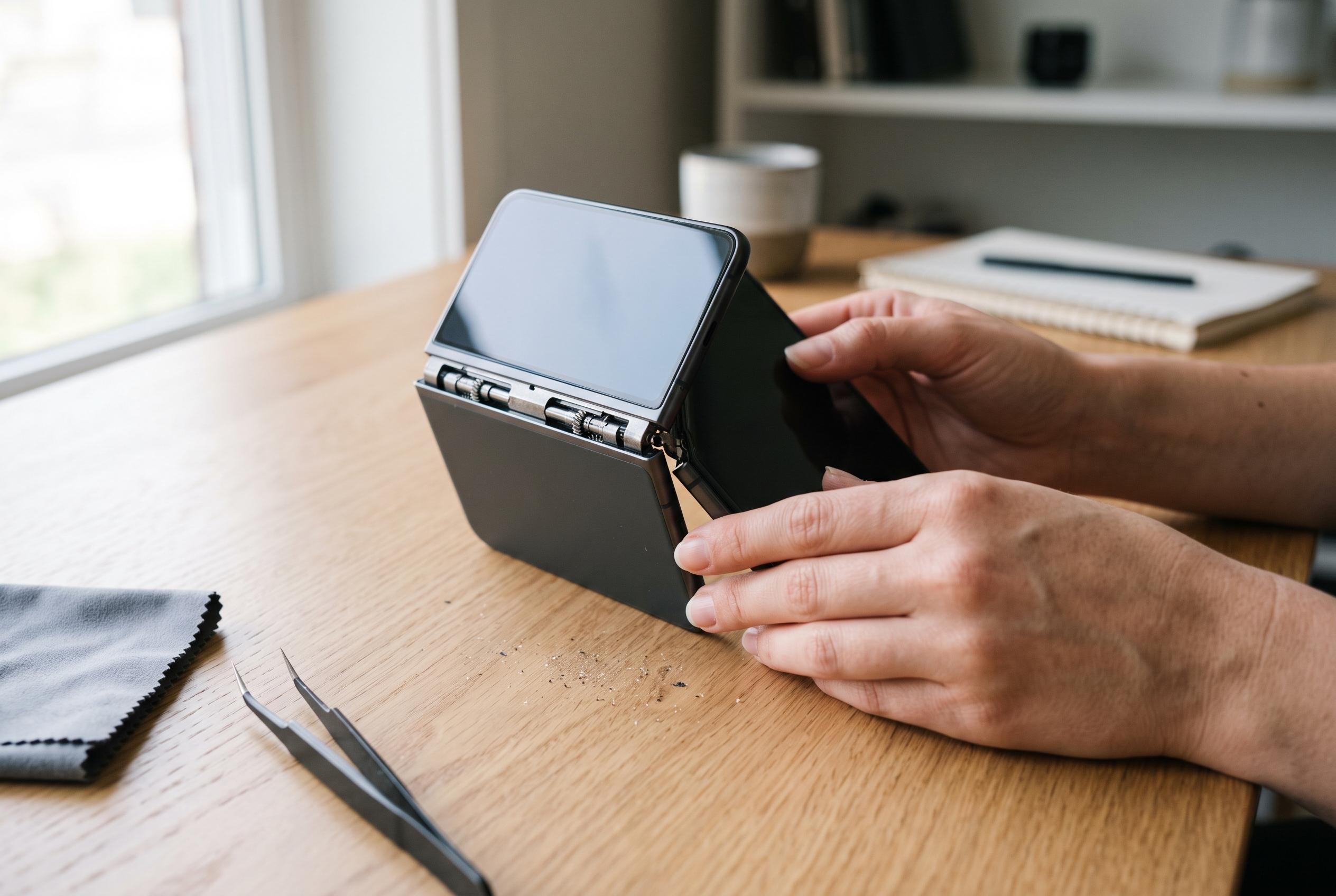

From removing the inner screen protector to trapping grit in the hinge, seemingly harmless habits can cause costly damage to a foldable handset.
Foldable smartphones promise a tablet-sized screen in a pocketable form, but their design also makes them less forgiving than conventional handsets. The inner display, hinge and folding seam are built to work together under constant movement, which means everyday habits that are harmless on a slab phone can cause damage here. Manufacturers have improved durability markedly, yet the basic rule remains unchanged: a foldable should be handled with care, not treated like standard glass. According to IT-Business, the central risks are concentrated around the display, the hinge and cleaning practices, and those warnings are echoed by other foldable-care guides that stress caution around pressure, debris and servicing.
One of the most important precautions is to leave the factory-fitted inner screen protector in place. Several guides note that this layer is part of the device’s display system, not a disposable film, and removing it can cause faults that require professional repair. The same logic applies when a device shows blisters, cracks, lifting edges or clouding in the protective layer: users should seek service rather than attempting a home replacement. Strong impacts also remain a serious hazard, as foldable panels can show black spots, coloured lines or other signs of internal damage after being struck.
Pressure is another recurring weakness. The fold line is particularly sensitive, so pressing hard along the crease, poking the panel with a finger or using an unsuitable stylus can all create avoidable wear. The same applies to opening the device improperly. Rather than levering the halves apart with a finger, users are advised to unfold the handset in one smooth motion with both hands. That may sound obvious, but it matters because the hinge is doing complex mechanical work every time the phone opens and closes. Forcing it against resistance is precisely the sort of mistake that can shorten the life of the mechanism.
Foreign objects are just as problematic. Foldables close with very little clearance between the two halves, so cards, keys, sand grains and similar debris can press into the display or interfere with the folding path. Several of the cited guides advise checking the device before folding it shut and making sure nothing is trapped inside, and that advice is especially relevant in everyday use, where a pocket, desk or beach bag can quickly introduce grit. The same caution applies to the hinge, which is vulnerable to contamination even on models with some level of ingress protection. IP ratings can help, but they do not make the device immune to fine particles.
Cleaning also demands restraint. The inner screen should be wiped only with a soft, lint-free microfibre cloth, with minimal pressure and no abrasive material such as kitchen roll or paper tissues. Household cleaners, including glass cleaner, should be avoided unless the manufacturer explicitly allows them, and users should not scrape away marks with a fingernail. The broader message from the guidance is straightforward: a foldable can be highly practical, but only if it is handled as a precision device with a delicate moving display, not as a rugged everyday slab phone.
Disclaimer: This content is intended for informational purposes only. Readers are advised to exercise their own judgement, conduct due diligence, or consult a qualified expert before acting on any information provided.