

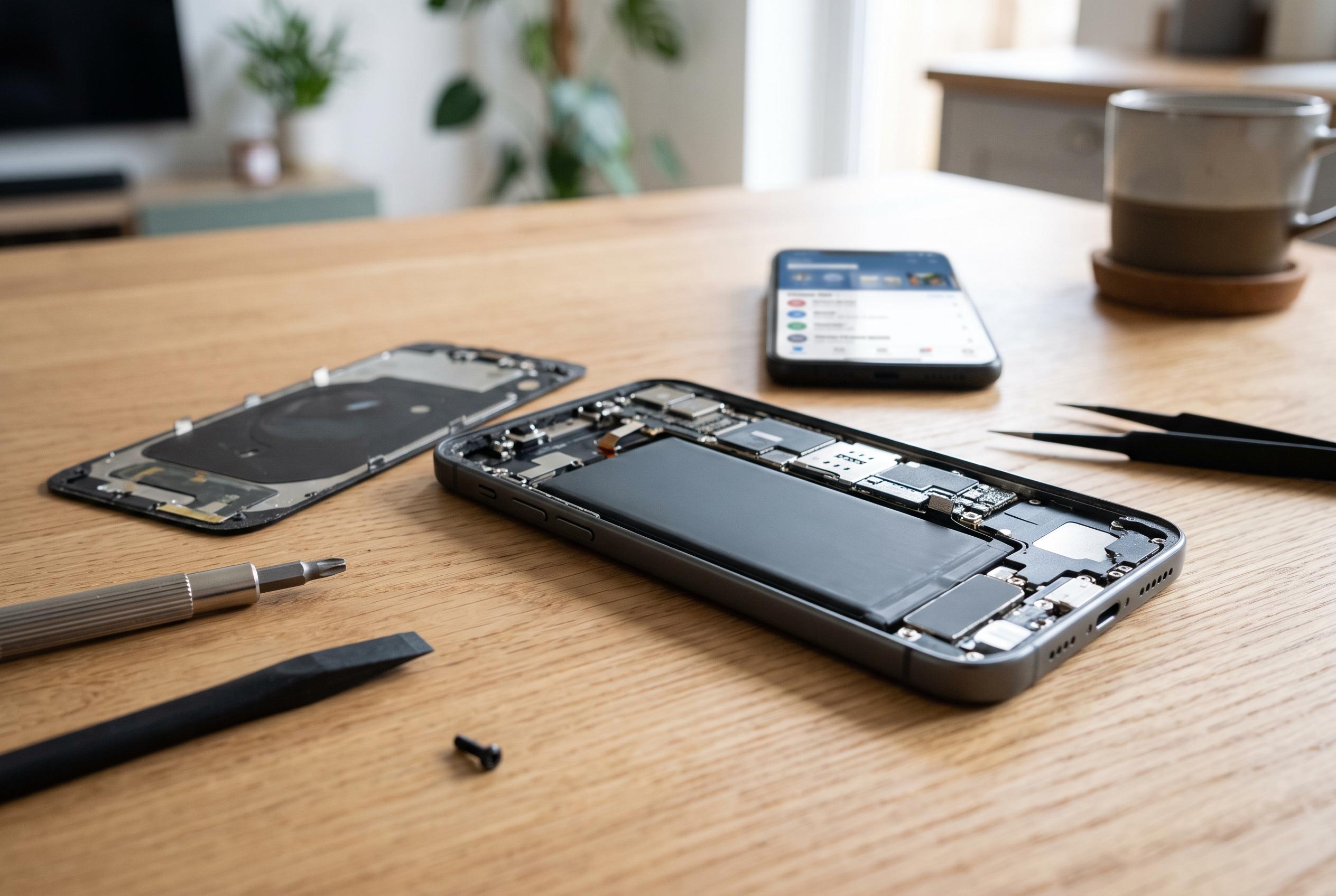

As flagship prices rise, official battery replacements are giving owners of otherwise capable older phones a cheaper way to extend their devices’ useful lives.
For owners of older smartphones, the sharp rise in new-device prices is changing the repair calculation. Rather than upgrading immediately, many users are finding that a battery replacement can restore day-to-day usability at a fraction of the cost of a new flagship. That is especially true when the phone is otherwise performing well, storage is still manageable, and the only serious weakness is reduced battery life.
The logic is simple: when a manufacturer raises the price of a new model by a substantial margin, an official battery swap becomes an easier decision to justify. Apple’s repair pages set out battery service options for iPhone owners, while Xiaomi’s support terms show that the company also continues to offer after-sales replacement services and, on some models, special programmes tied to hardware faults. In practical terms, that means owners have a clearer route to keeping existing devices in service rather than replacing them at the first sign of ageing.
Xiaomi has also experimented with a more ambitious approach on selected models. Coverage of its official battery upgrade service for the Xiaomi 13 series says the handset can receive a higher-capacity cell rather than a like-for-like replacement, with the battery capacity rising from 4,500mAh to 4,850mAh. Reported pricing puts the upgrade at 189 yuan, including parts and labour, which makes the service more than a maintenance exercise: it is effectively a modest endurance boost for a phone already in circulation.
That matters because the best time to repair is not when a handset is dead, but when it is still otherwise useful. A well-chosen battery replacement can eliminate the most visible symptom of ageing: the need to charge repeatedly through the day. For many users, that is the difference between a phone that feels obsolete and one that can comfortably remain the main device for another year or two. Apple’s support materials also point users towards official service channels and warranty guidance, reinforcing the case for using sanctioned repairs where possible.
There are, however, clear limits. A new battery will not fix a cracked screen, a faulty charging port or underlying board-level problems. In those cases, the economics can quickly turn against repair, particularly if several faults appear at once. Device makers also frame some battery-related service as conditional: Xiaomi’s VIP terms for the 17 series, for example, describe replacement-instead-of-repair coverage only in specific circumstances and within a defined time window after purchase.
The broader point is that the used phone in a drawer may now represent better value than a newly launched premium model, provided its limitations are narrow. A healthy screen, enough storage and decent software support can make a battery swap a rational decision rather than a compromise. For owners of ageing but still capable phones, the cheapest upgrade in 2026 may be the one that stays in the device they already have.
Disclaimer: This content is intended for informational purposes only. Readers are advised to exercise their own judgement, conduct due diligence, or consult a qualified expert before acting on any information provided.



