

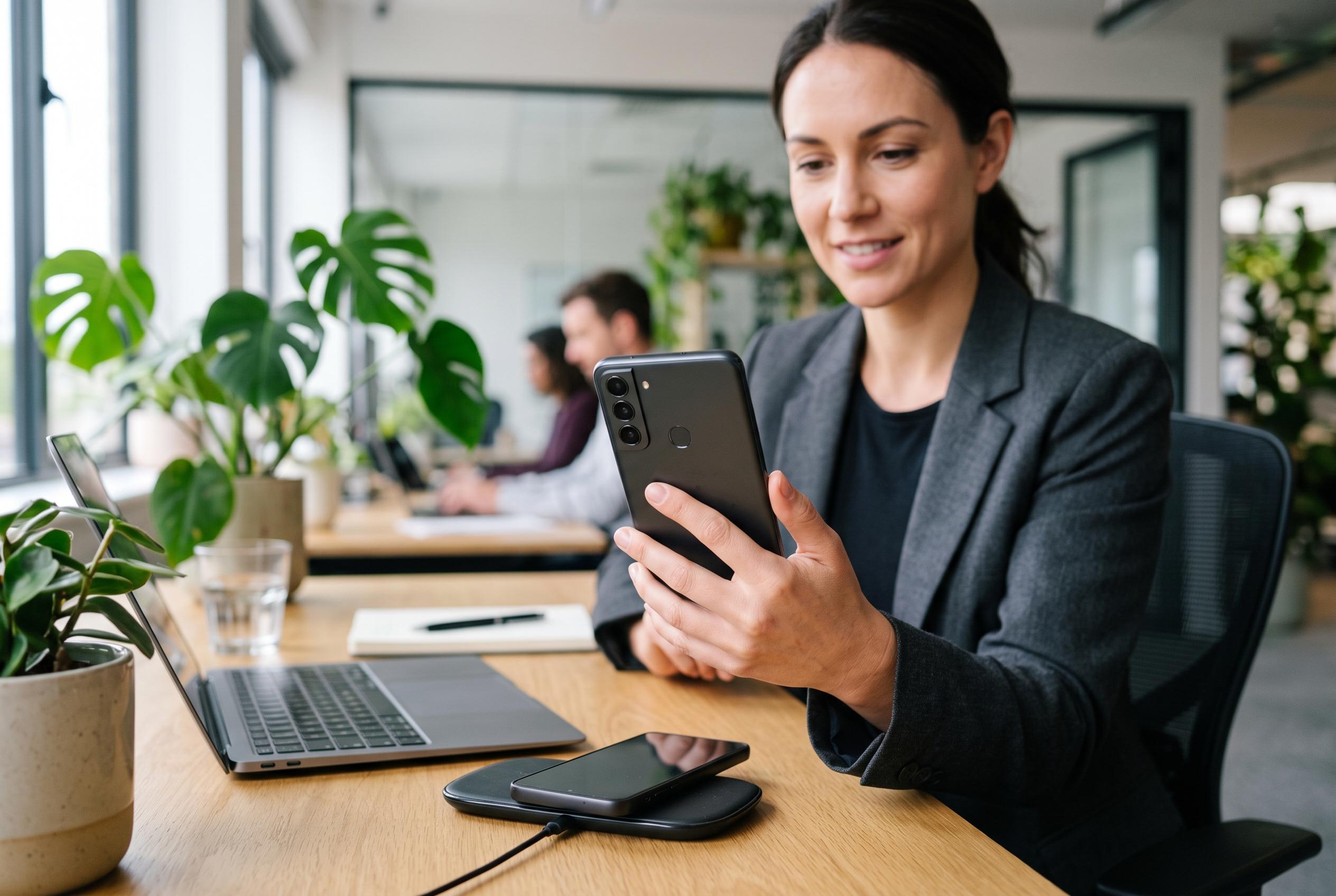

Premium handsets are evolving into mobile workstations, with security, long-term support and endurance joining performance as key priorities for professional fleets.
Premium smartphones are now being treated less as luxury handsets and more as mobile workstations. According to the ZDNet France selection, the priorities for professional fleets in 2026 are no longer limited to raw speed: integration with business systems, data security and battery life have become the main criteria, alongside display quality and device longevity. That shift reflects a wider reality for executives, sales teams and field specialists who increasingly expect a handset to handle collaboration, document work and secure communications without relying on a laptop.
At the top of the Android side, Samsung’s Galaxy S25 Ultra remains positioned as the all-round business flagship. ZDNet France highlights its titanium build, 6.9-inch screen, S Pen support and seven years of operating system and security updates, which together make it a strong option for organisations that want a long replacement cycle and a familiar productivity workflow. The site also points to its strong brightness, Wi-Fi 7 support and more than a full day of battery life as practical advantages for mobile workers.
The newer Galaxy S26 Ultra appears to push the same formula further, but with a sharper focus on privacy. Reviews from SamMobile, PhoneArena, TechRadar, TechAdvisor, Tom’s Guide and What Hi-Fi? all describe a hardware-based Privacy Display designed to reduce visual hacking in public spaces, along with a 6.9-inch LTPO panel, a 2,600 cd/m² peak brightness level, 60W charging and a battery life quoted at more than 26 hours under mixed use. Those reviews also say Samsung is maintaining seven years of major updates and security patches, which will matter to IT teams planning for compliance and device lifecycle management.
Apple’s iPhone 17 Pro Max is presented as the clearest iOS alternative for senior executives who want laptop-class performance in a pocketable form. ZDNet France says the A19 Pro chip, 12GB of RAM and up to 2TB of storage allow it to cope with demanding SaaS tools, virtualisation and 4K editing, while the near-30-hour battery life and Apple Business Manager support make it attractive for zero-touch deployment in larger fleets. The same article places it in the role of a mobile command centre rather than a general-purpose consumer phone.
For users who need the same platform in a smaller, more manageable body, the iPhone 17 Pro is framed as the better-balanced choice. ZDNet France notes its 6.3-inch display, lighter 206g weight and vapour chamber cooling, which are meant to preserve performance under sustained load. The front camera’s Centre Stage framing is also geared towards video calls, underlining how closely business handset design is now tied to hybrid work and remote collaboration.
The most specialised choice in the list is Oppo’s Find X9 Ultra, which ZDNet France describes as a premium tool for experts who work in the field and depend on imaging and endurance. Its 7,050mAh silicon-carbon battery and 100W charging are aimed at two-day missions away from mains power, while the dual 200-megapixel camera system is pitched as a replacement for dedicated inspection hardware in sectors such as construction, surveying and insurance assessment.
Taken together, the selection suggests that the premium business phone market in 2026 is splitting into distinct roles. Samsung’s Ultra models are being positioned for Android fleets that care about long support windows and, in the case of the S26 Ultra, stronger privacy controls. Apple is targeting executives and mobile teams that want a tightly managed iOS environment with strong performance and battery life. Oppo, by contrast, is serving a narrower but important niche: professionals who need high-end imaging and exceptional autonomy more than broad corporate standardisation.
Disclaimer: This content is intended for informational purposes only. Readers are advised to exercise their own judgement, conduct due diligence, or consult a qualified expert before acting on any information provided.



