

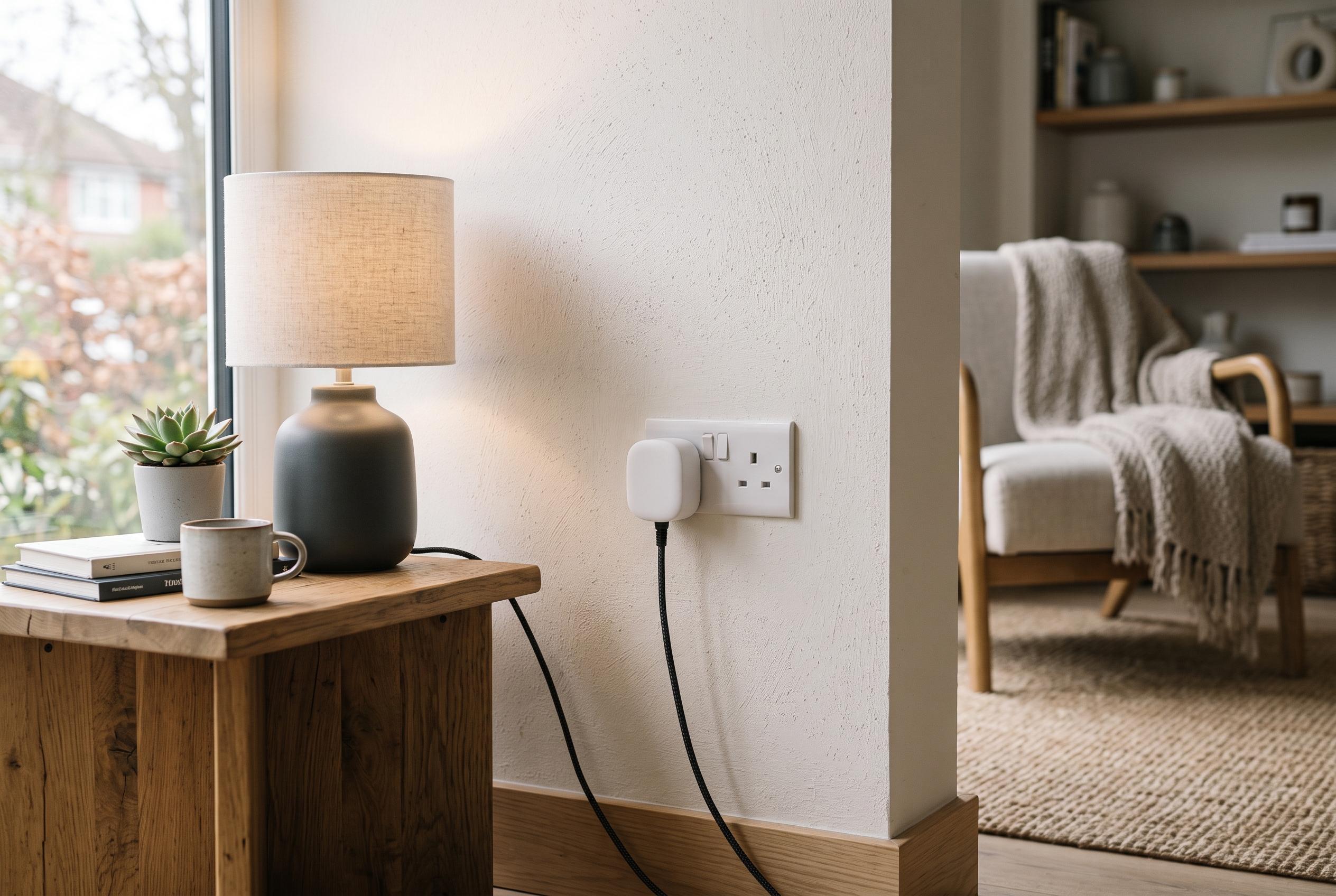

The compact 16 A plug combines detailed power tracking, broad smart-home compatibility and support for demanding appliances, making it a strong all-round choice.
A good smart plug can do far more than switch an appliance on and off. It can expose hidden energy use, automate routine tasks and make older devices behave more like connected equipment. That is why the TP-Link Tapo P115 stands out in Xataka’s selection: it combines compact dimensions with a 16 A rating, which makes it suitable for demanding loads without blocking adjacent sockets in a strip or multi-plug adaptor. The same review also points to the plug’s detailed energy monitoring, with live power readings and longer-term usage charts available through the Tapo app.
The P115’s small cylindrical body is one of its main practical advantages. In cramped installations, physical size matters as much as electrical specification, especially when several plugs share the same row. By supporting up to 3,680 W, the model is positioned well above entry-level smart plugs intended only for lamps or small chargers. Xataka presents it as the most balanced option for users who want both control and measurement, rather than a basic remote switch.
Its strongest selling point is power tracking. According to the SmartHomeDeck review, the P115 reports current wattage, voltage, current draw and cumulative kilowatt-hours, with accuracy close to established measurements. That is useful not only for spotting energy-hungry appliances, but also for understanding how devices behave over time, including day-to-day and monthly consumption patterns. The Tapo application has also improved, with live graphs and custom thresholds that make the plug more useful for monitoring than many cheaper alternatives.
Compatibility is another reason the device has attracted attention. The review says it works with Amazon Alexa and Google Assistant, and also supports Apple HomeKit through Matter, alongside Home Assistant integration. That wider ecosystem support matters because the smart home market is increasingly fragmented, and users often want one device to fit several platforms without relying on awkward workarounds. In practice, that makes the P115 more future-proof than a plug tied too closely to a single app or voice assistant.
Even so, Xataka’s wider guide makes clear that the right smart plug depends on the use case. A cheaper Tapo P100 remains a sensible choice for simple automation where energy metering is unnecessary. The SONOFF S61s is better suited to exposed areas because of its IP44 resistance to splashes, while Meross’s Matter model is aimed at users who want native integration with major platforms and, in its special variant, bidirectional monitoring for balcony solar setups. Meross’s standard 16 A plug and ANTELA’s twin pack appeal to buyers who prioritise load capacity and price, while Philips Hue remains the premium choice for anyone already invested in the Hue ecosystem and Zigbee network.
For most households, though, the Tapo P115 is the most rounded recommendation because it avoids the compromises of budget-only plugs while remaining physically compact and technically capable. It is not the cheapest option, and Xataka notes that it does not natively target every ecosystem in the same way as Matter-first rivals, but it offers a strong mix of power handling, consumption tracking and everyday usability. For readers wanting one smart plug that can handle serious appliances and provide meaningful energy data, it is the clearest all-rounder in the field.
Disclaimer: This content is intended for informational purposes only. Readers are advised to exercise their own judgement, conduct due diligence, or consult a qualified expert before acting on any information provided.



