

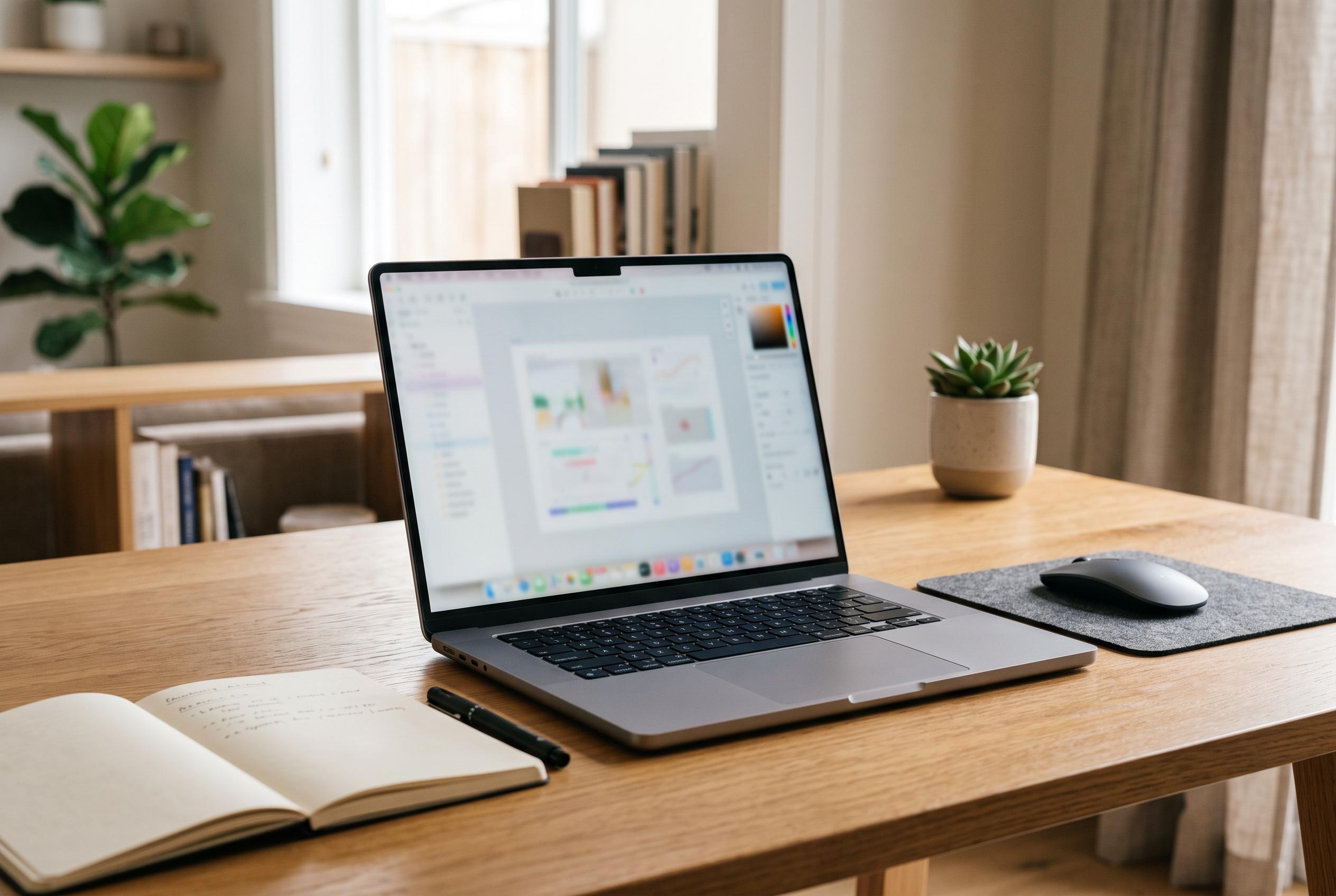

Microsoft’s premium Surface Laptop Ultra delivers strong graphics and creative performance in a more portable, power-conscious package than conventional workstation laptops, but its high price and limited memory hold back its AI ambitions.
Microsoft’s Surface Laptop Ultra is shaping up as a very unusual kind of premium machine: one that aims to combine the portability of a thin-and-light notebook with the graphics muscle and local AI ambition usually associated with bulkier creator laptops and gaming rigs. PCWorld’s review suggests that, taken as a whole, the device is more convincing as a compact workstation than as a conventional laptop replacement, even if its pricing remains difficult to justify for many buyers.
In testing, the laptop was judged against other high-end systems, including an updated Acer Nitro V with AMD’s Ryzen AI 7 450 and RTX 5060 graphics, an MSI Raider with an Intel Core i9-14900HX and RTX 4090, and Asus’s ROG Strix with a Core Ultra 9 275HX and RTX 5090. The aim was to compare overall CPU performance, creative workloads, gaming, and local AI tasks, using benchmarks such as Cinebench 2024, Adobe Photoshop and Premiere, Cyberpunk 2077, Procyon text-generation tests and ComfyUI-based text-to-video runs. According to PCWorld, the Surface Laptop Ultra was tested in its default configuration and again at maximum power, reflecting the machine’s emphasis on adjustable performance rather than a single fixed mode.
The most striking result came in Photoshop, where the Surface Laptop Ultra finished last at baseline but moved to the front once performance settings were raised. PCWorld described the finding as surprising, though it noted that the benchmark is somewhat temperamental. Premiere was less dramatic, but still respectable, with the Surface holding its own in video-export testing. Tom’s Hardware’s separate review reached a similar broad conclusion, saying the machine is strong in multi-core and graphics-heavy work, but less impressive in single-threaded tasks, which can affect everyday responsiveness. PCWorld’s own review also pointed to an excellent screen, solid build quality and good power efficiency, although it added that the webcam is merely average and the device feels heavier than expected.
Gaming and AI workloads are where Microsoft’s new platform begins to look more distinctive. In Cyberpunk 2077 at 1080p on Ultra settings, the Surface Laptop Ultra was competent rather than class-leading, but Nvidia’s DLSS frame generation transformed the result, pushing frame rates well past the baseline. Windows Central likewise reported strong graphics behaviour from the RTX Spark platform, describing it as close to a discrete RTX 4070 in some creative and gaming scenarios. PCWorld’s review also found that local AI use is promising but bounded by memory constraints: the laptop can run small language models and agentic tools, but larger models quickly expose the limits of available RAM and shared memory architecture. Tom’s Hardware made the same point, arguing that higher-memory configurations would suit AI work better.
Power use was another major theme. PCWorld measured a clear spread between the laptops it tested, with the MSI Raider drawing by far the most power, the Asus system also running high, and the Surface Laptop Ultra landing in a much lower band. Microsoft has said the Surface Laptop Ultra’s RTX Spark variant carries a 110W thermal design power, which helps explain its balance of performance and efficiency. That does not make it frugal in absolute terms, but it does make it materially easier to cool and carry than the more aggressive gaming systems used for comparison.
The broader question is whether that balance justifies the asking price. PCWorld noted that the review sample came in at about $3,699, which places it in a category where buyers can find formidable alternatives, especially if local AI is not a priority. Yet the magazine also argued that the Surface Laptop Ultra offers something different: a relatively light, compact and power-conscious Windows machine that can do serious creative work, handle demanding graphics, and run some AI workloads on-device. Tom’s Hardware and Windows Central both framed the platform similarly, as a high-end workstation with real strengths in graphics and inference, but one that still needs more memory headroom and better single-core performance to fully satisfy professional users.
Disclaimer: This content is intended for informational purposes only. Readers are advised to exercise their own judgement, conduct due diligence, or consult a qualified expert before acting on any information provided.



