

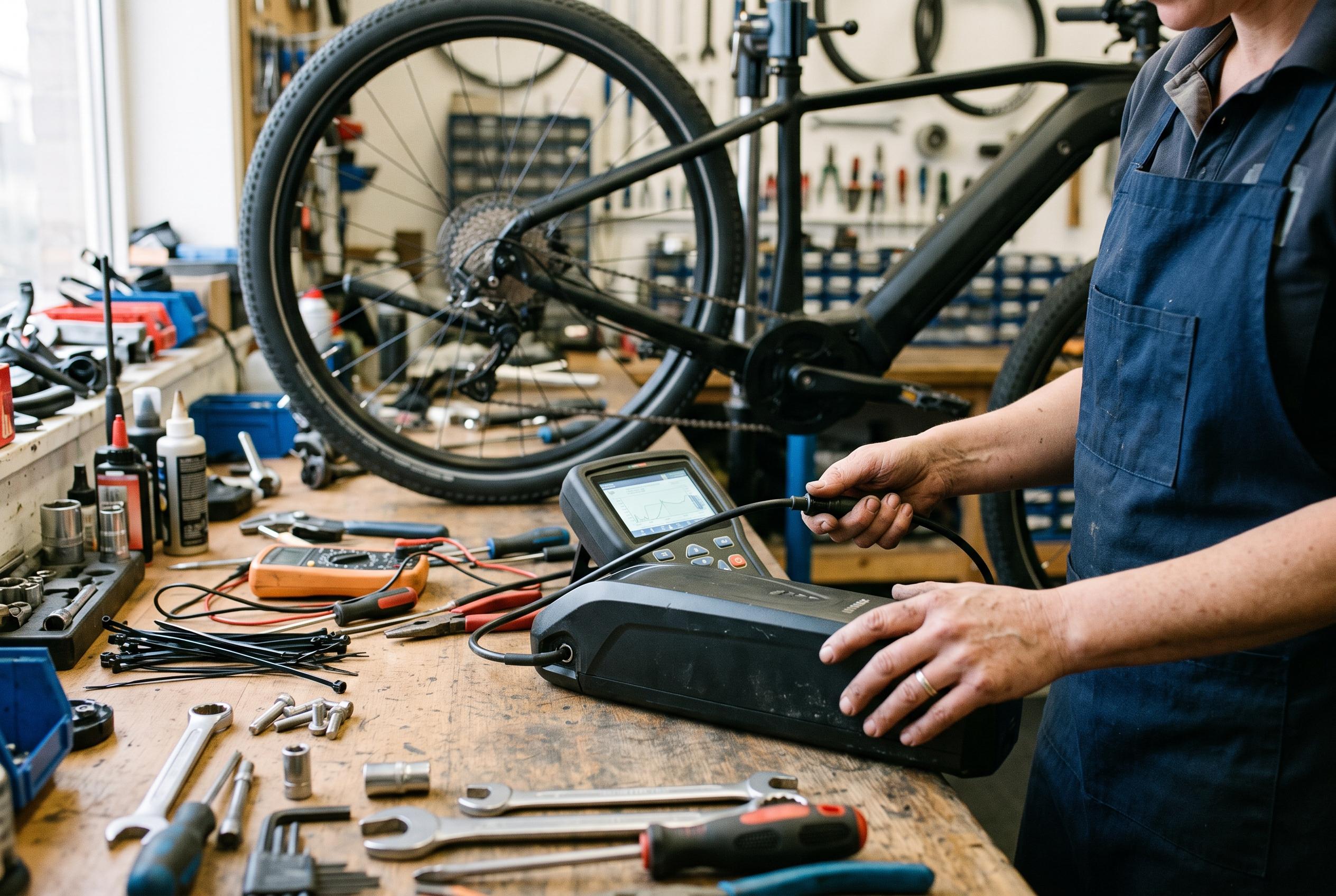

A protective lockout can leave an e-bike battery apparently dead, but riders should try external checks first and never bypass the BMS or force-charge a damaged pack.
Resetting an e-bike battery’s Battery Management System, or BMS, is often a matter of reviving a protective lockout rather than repairing a fault. In practical terms, the BMS is the battery’s electronic safeguard: it watches voltage, current and temperature, then disconnects the pack if it sees over-current, deep discharge, a short circuit or thermal stress. Guides from eBikeRepairCo and eBikeCodes both stress that this kind of reset can restore a pack that has gone into sleep mode, but it will not cure damaged cells, corroded connectors or failed electronics.
The symptoms are usually familiar to riders. A battery may show normal voltage on a meter yet refuse to power the bike, the charger may remain green instead of switching to active charging, or the motor may cut out as soon as demand rises on a hill or under hard acceleration. Some packs also behave erratically after long storage, with reduced range, poor charge acceptance or abrupt shutdowns. According to repair guides from eBikeRepairCo, iscooterglobal.co.uk and generic diagnostic advice from ebikecodes.com, those signs point first to a protective trip, but they can also indicate a failing pack or a bad cell group.
The safest first step is always the least invasive one. Most guidance recommends starting with the original charger, plugged into the wall before it is connected to the battery, to see whether the pack will accept a wake-up pulse. If the battery has a power or fuel-gauge button, holding it down for several seconds can drain residual charge from the control electronics and clear a temporary latch. Some batteries also include a recessed reset pinhole or a key switch that can be cycled to reinitialise the system. These steps are widely used because they can wake a sleeping BMS without opening the enclosure.
If the battery still appears dead, the next check is physical, not technical. A careful inspection of the casing, connectors and external fuse can reveal obvious faults that mimic a locked BMS. Several diagnostic guides note that some batteries hide automotive-style blade fuses under rubber caps or near the charge port, and a blown fuse will prevent the pack from delivering output even if the cells themselves are healthy. A multimeter can then help distinguish a genuine BMS lockout from a deeper failure: if the charge port shows pack voltage but the discharge port reads nothing, the protection circuit or its output stage may have tripped.
Safety matters here because lithium-ion batteries can fail violently if they are mishandled. Tom’s Guide recently reported that experts now place far more emphasis on certified batteries, safe charging habits and proper storage, especially after a rise in fire incidents linked to poor-quality cells and chargers. The same advice applies when a battery will not reset: do not bypass the BMS, do not jump-start the pack with an improvised power source, and do not continue to charge a battery that is swollen, hot, wet or damaged. If the pack has been deeply discharged, manufacturers and repair specialists alike warn that forced recovery can be hazardous.
A reset can revive a pack that has merely locked itself out, but it cannot restore lost capacity. If a battery has aged, developed severe imbalance or suffered a cell collapse, the problem will return as soon as the bike is asked to deliver real current. That is why diagnostic guides increasingly recommend separating software-like faults from hardware failure. If the charger wake-up works, the pack may simply need a full balance charge. If it fails repeatedly, the issue is more likely to be a worn battery, a damaged BMS board or a pack that needs professional testing.
There is also a warranty issue. Opening a battery case, especially one with tamper-evident seals or welded construction, can invalidate coverage immediately. Repair sources advise exhausting all external methods before considering disassembly, and that is sound advice. Where possible, riders should keep the battery off the bike for a short period, try the charger wake-up sequence, check the external fuse and use a meter to confirm voltages before assuming the BMS itself has failed. If the pack remains unresponsive after those checks, professional service is the safer route.
Disclaimer: This content is intended for informational purposes only. Readers are advised to exercise their own judgement, conduct due diligence, or consult a qualified expert before acting on any information provided.



