

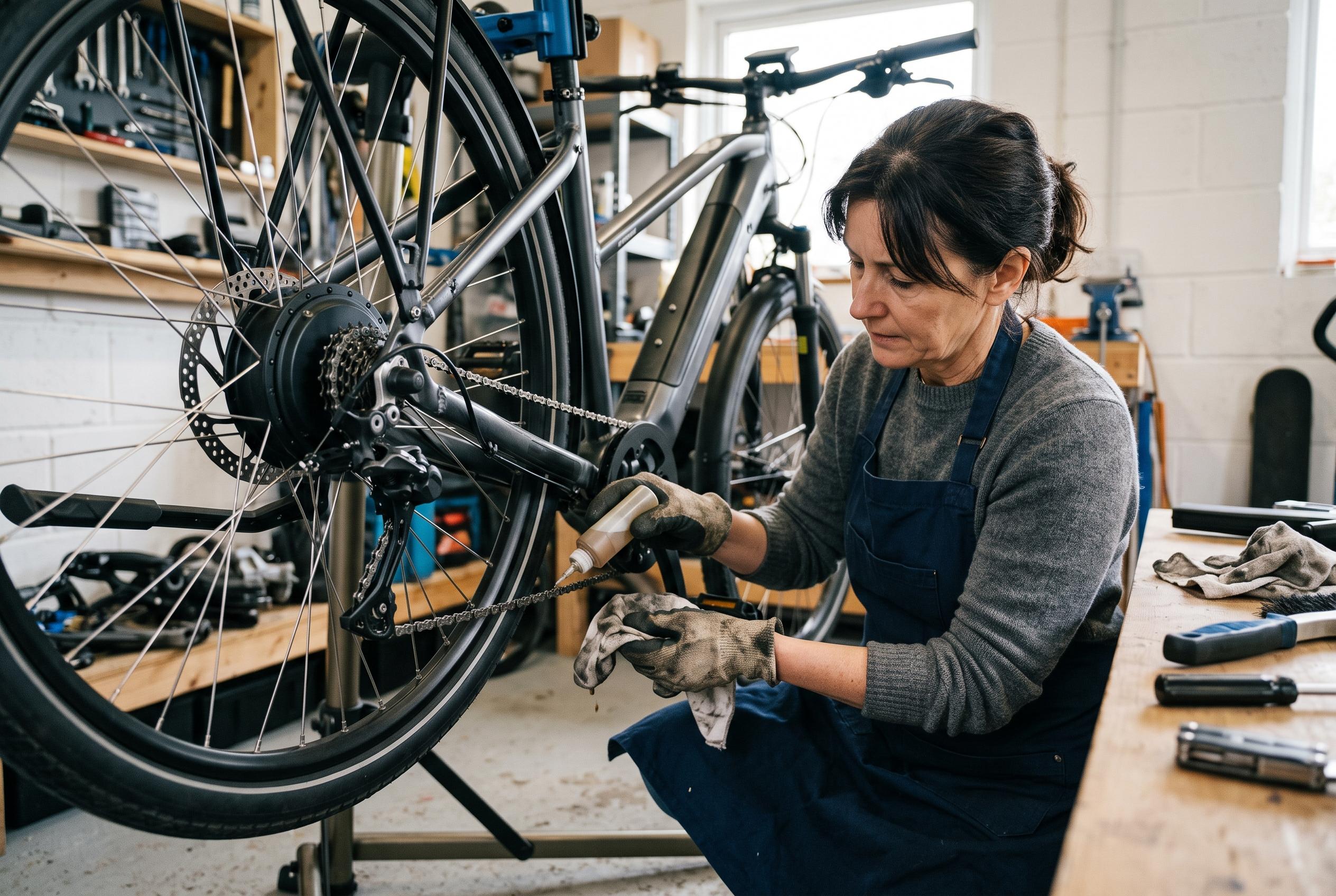

Regular cleaning and lubrication can extend an e-bike drivetrain’s life, but riders must keep products away from brake surfaces and electrical components.
Regular chain care remains one of the simplest ways to keep an e-bike running smoothly. Kasen Bikes says a clean, correctly lubricated chain helps the drivetrain shift more cleanly and reduces abrasive wear from dirt and grit. The basic routine does not require removing the chain, but it does demand care around the brakes, battery contacts and other electrical components.
Timing matters more than mileage alone. Kasen says riders should inspect the chain frequently, particularly after wet, dusty or muddy journeys, and sooner still after rain or road salt. Signs that cleaning is overdue include a dark film, gritty residue, rust spots or a dry squeak. Independent maintenance guides from REI and Bike24 make the same point: regular cleaning and lubrication are routine preventive work, not optional cosmetic upkeep.
The process itself is straightforward but needs discipline. Kasen recommends switching the bike off, removing the battery where possible, and supporting the bike securely before working on the drivetrain. The chain should be wiped and degreased with bicycle-specific products, then dried fully before lubricant is applied to the rollers in small amounts. Excess oil should be removed from the outside of the chain, because residue on the surface attracts fresh grime. REI and Gazelle both caution against spraying water or cleaner towards sensitive parts, and Gazelle specifically warns against using high-pressure cleaners that can damage bearings.
Choosing the right lubricant is also important. Cycling Weekly’s 2026 lubricant review notes that wet lubricants are better suited to damp conditions, while dry lubricants are more appropriate in dusty weather but may need more frequent reapplication after rain. Kasen adds that penetrating oil is not a substitute for proper chain lubricant. For riders who service their own bikes, that distinction matters: a product that seems convenient can leave the drivetrain underprotected or overly dirty if it is used in the wrong conditions.
A final inspection should follow every clean. Kasen advises checking for stiff links, abnormal skipping and any contamination on the rotors or brake pads before riding again. If cleaner or lubricant reaches the braking surfaces, the bike should not be used until the brakes have been inspected and serviced, and contaminated pads may need replacing. If the chain still skips after cleaning, the fault may lie elsewhere in the drivetrain, including wear, cable adjustment or damaged components. Kasen notes that part compatibility must be checked carefully before ordering replacements, because matching the number of speeds alone does not guarantee fit.
Disclaimer: This content is intended for informational purposes only. Readers are advised to exercise their own judgement, conduct due diligence, or consult a qualified expert before acting on any information provided.



