

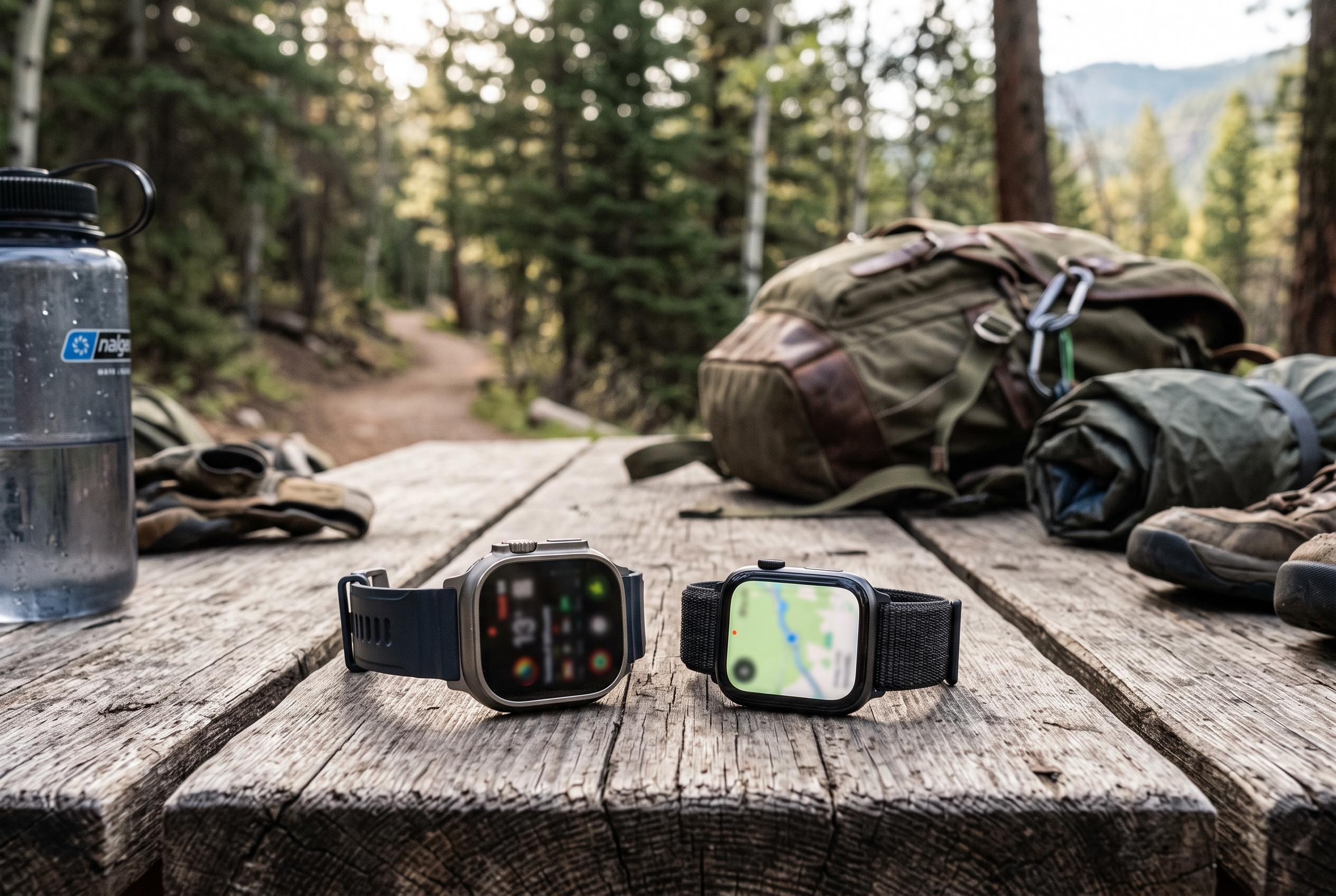

The rugged rivals deliver similarly accurate health tracking, but Garmin retains a decisive edge in battery life and native sports tools while Apple offers the more versatile smartwatch experience.
For outdoor users choosing between Apple’s Watch Ultra 4 and Garmin’s Fenix 9 Pro, the decision is less about which is better in the abstract and more about which strengths matter most. Both are premium rugged smartwatches with cellular and satellite connectivity, and both are designed to keep users connected and safe when they are beyond reliable mobile coverage. In hands-on testing across trail running, cycling, road running, hiking, indoor rowing and golf, the differences came down to battery endurance, training guidance, app support and a few distinctive hardware features. According to ZDNET’s review, each watch excels in a different kind of use case, which is why the choice is not straightforward.
Battery life remains the clearest dividing line. The Apple Watch Ultra 4 now stretches to roughly three days in typical use, which is a meaningful step forward, but Garmin still operates in a different category altogether. The Fenix 9 Pro is built for days and, in some modes, weeks between charges, making it particularly appealing to travellers, endurance athletes and anyone who simply does not want to pack a charger for every trip. Tom’s Guide also frames battery as one of the most important contrasts in the pair, alongside their display, connectivity and feature sets.
Garmin’s biggest advantage lies in its native training and activity tools. The Fenix 9 Pro offers built-in coaching suggestions and daily workout recommendations, which can be customised for training days, hard sessions and pace adjustments based on gradient. It also includes specialised tracking for activities such as golf, skiing and fishing without requiring third-party software. For cyclists, hikers and trail runners, Garmin’s on-device navigation and larger display make a practical difference. Tom’s Guide and SpecPair both emphasise that Garmin’s integrated approach is a major reason serious outdoor users continue to favour the brand.
Apple, by contrast, relies more heavily on its wider app ecosystem. The Ultra 4 does not match Garmin for native sport-specific tools, but it benefits from the breadth and polish of the App Store. That makes it easier to add functions for golf, skiing, fishing, productivity, travel and communication. For people who want a watch that behaves more like a compact extension of the iPhone, that flexibility is a real advantage. ZDNET’s reviewer also argues that Apple’s smartwatch experience is stronger when the device is used for more than exercise alone.
Another major point of difference is the built-in torch on the Garmin. What might sound like a minor extra has become, in practice, a feature with genuine value. ZDNET says the author uses it every day, and Garmin has extended it beyond a simple white light by adding red and green options, plus a cadence mode for runners in low light. The feature has become one of the clearest examples of Garmin designing for outdoor utility first. Tom’s Guide has separately highlighted this sort of practical hardware advantage as one of the things Apple should adopt if it wants to close the gap.
Health tracking and intelligence features are now much closer than they once were. According to ZDNET, Apple’s updated Health experience has become far easier to read and act on, with clearer sections for sleep, readiness, fitness, heart health and longevity. The watch also benefits from Apple’s newer hardware and a more ambitious approach to voice and AI features, including natural-language interaction and deeper Siri integration. Garmin’s own intelligence tools remain more limited, and its phone-assistant functions are described as slower and less capable. TechRadar’s hands-on testing also suggests that both watches deliver strong sensor accuracy, with heart-rate readings closely matching an electrical chest strap during a run, which should reassure buyers that either model can handle serious fitness tracking.
In the end, the two watches serve different priorities. Garmin is the stronger choice for users who want maximum battery life, rich native outdoor tools and the most self-sufficient sports platform. Apple is the better option for those who want a more versatile smartwatch with a larger app ecosystem, a simpler health overview and deeper phone-like functionality on the wrist. The reviewer at ZDNET concludes that Garmin still sets the standard for endurance and outdoor practicality, but Apple continues to narrow the gap with a smarter, more capable all-round package. For many buyers, the real answer may be that both are excellent, just for different kinds of adventure.
Disclaimer: This content is intended for informational purposes only. Readers are advised to exercise their own judgement, conduct due diligence, or consult a qualified expert before acting on any information provided.



