

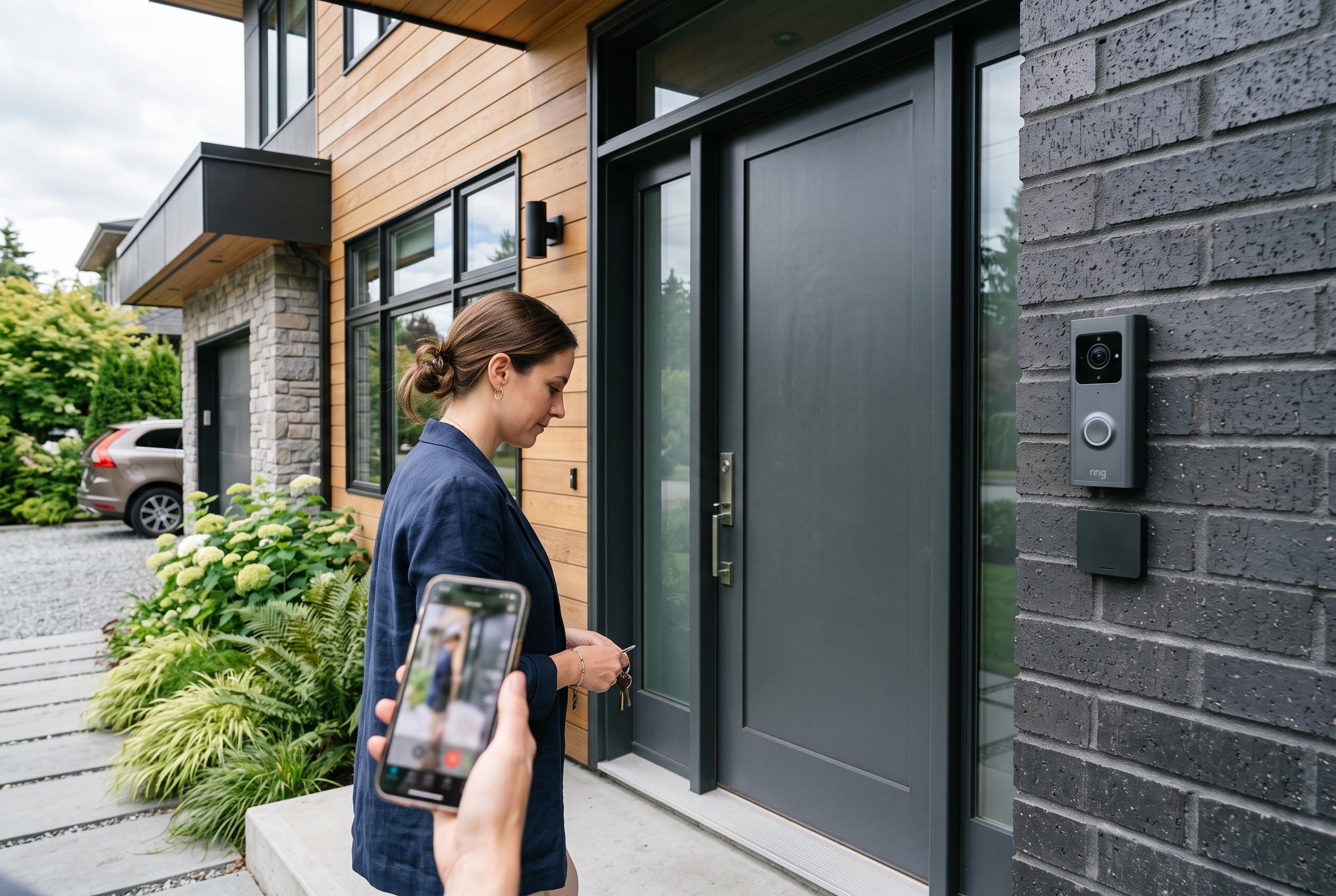

New models from TP-Link and Eufy show how video doorbells are packing in sharper footage and smarter detection while keeping recordings, and recurring costs, under the owner’s control.
Avoiding recurring fees has become harder as connected home devices increasingly push users towards cloud plans and paid extras. Video doorbells are a clear example: many models still work without a subscription, but buyers have to look carefully at whether recordings are stored locally rather than locked behind a monthly service. That distinction matters for both cost and privacy, because local storage lets footage stay on the device or a home network instead of being sent to a vendor’s servers.
Consumer Reports recently reviewed nine video doorbells that do not require a subscription, including devices from Eufy, Night Owl, TP-Link and Wyze. Its testing focused on practical factors such as video quality, motion detection and installation, while also noting that local recording can remove ongoing charges. Separate buying guides from SafeHomeLab and SecureHomeGear point to the same pattern: the strongest subscription-free options tend to rely on microSD cards or built-in memory, giving users access to core functions without forcing them into cloud billing.
That basic model is still evolving. According to T3, TP-Link’s latest Tapo doorbell, the Doorbell Pro D260, adds 4K video, a 180-degree field of view and radar-assisted AI detection, while still avoiding subscription fees. The device supports battery or hardwired power, is rated IP66 for weather resistance and can store footage locally on a microSD card of up to 512GB. T3 said it also supports full-colour night vision, two-way audio with voice masking and detection for people, animals, vehicles and parcels, all of which are designed to reduce false alerts.
Other recent launches show how subscription-free designs are spreading into more specialised products. TechRadar reported that Eufy’s E10 Window Camera is built for indoor use on glass, with 2.5K video, adjustable tilt, anti-reflection stickers and local storage via microSD, again without a subscription requirement. It also works with Alexa and Google and supports both 2.4GHz and 5GHz Wi-Fi. For buyers comparing devices, the common thread is straightforward: the best value now often comes from brands that keep essential features local, rather than making monthly payments part of the ownership cost.
Disclaimer: This content is intended for informational purposes only. Readers are advised to exercise their own judgement, conduct due diligence, or consult a qualified expert before acting on any information provided.



