

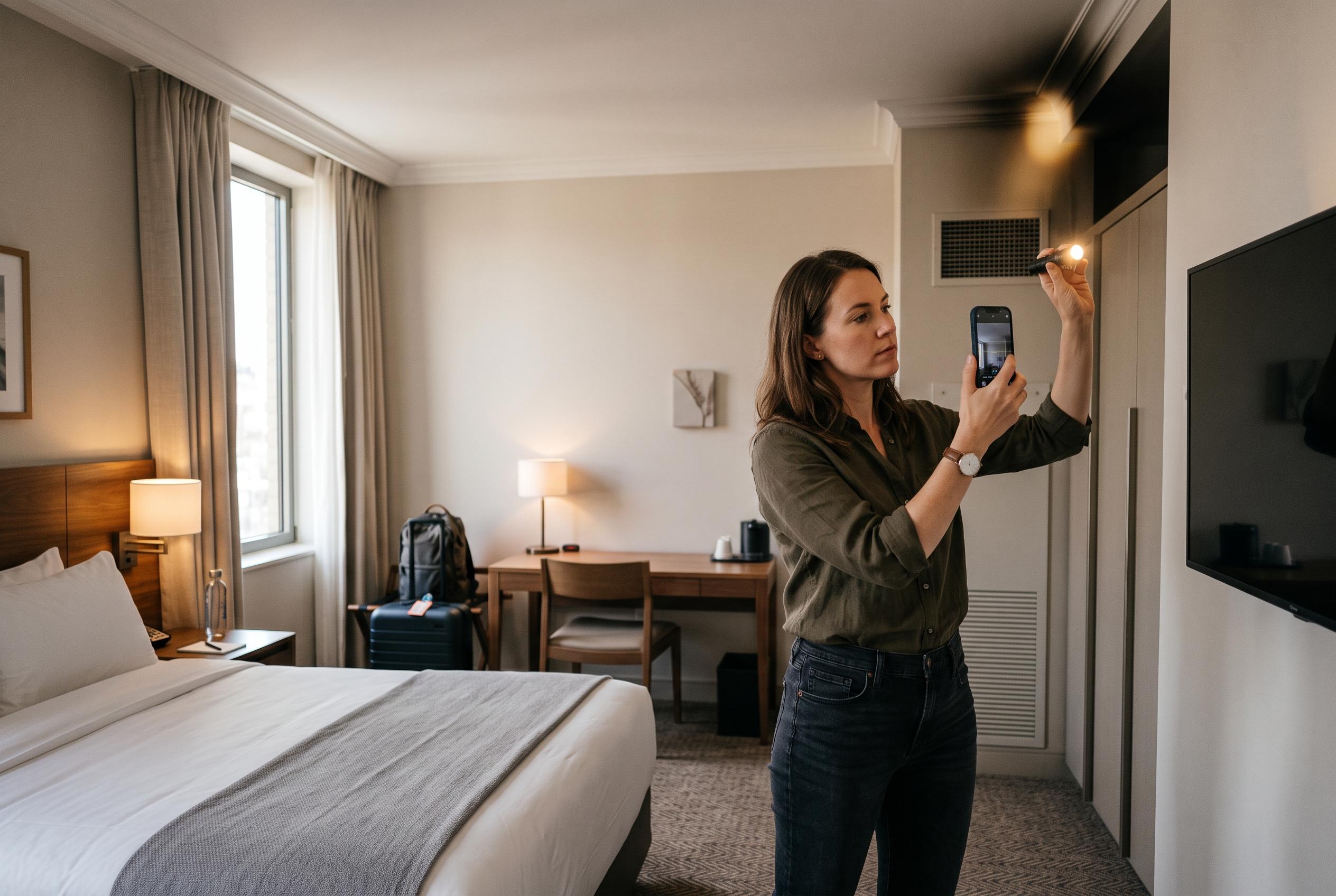

A visual sweep, torch test and phone-camera check can help holidaymakers spot concealed surveillance devices in hotel rooms and short-term rentals.
Holidaymakers who want to protect their privacy should consider checking for hidden cameras as soon as they enter a hotel room or short-term rental. The risk is not limited to low-cost accommodation. As BGR notes, spy cameras have become small enough to be concealed inside ordinary-looking objects such as USB chargers and smoke detectors, which makes a simple visual sweep a sensible first step.
The most effective first check is a careful inspection of the room for anything unusual, especially in areas where a camera would be most useful, such as bathrooms, bedrooms and wardrobes. Guides from FindHiddenCameras.com, Senseradar, EverydayTech and other privacy-focused sites all recommend looking for tiny pinholes, oddly placed electronics or objects that appear out of place. Using a phone’s magnifier function or camera zoom can make these details easier to see, and taking a photograph can help with closer inspection later.
If anything looks suspicious, the next step is to darken the room, close the curtains and use the phone’s torch. According to BGR and EverydayTech, moving the light slowly across suspected objects may reveal a camera lens because glass can reflect a bright pinpoint of light. The same method is widely recommended elsewhere because it is simple, requires no specialist kit and can expose lenses that are invisible under normal room lighting.
A second check involves opening the phone camera with the room still dark and looking for infrared light. BGR says some hidden cameras emit infrared for night vision, which may appear as bright points on a phone screen even when they are not visible to the naked eye. Several guides, including those from Gloomba and Times of India, also suggest scanning the room’s Wi-Fi network for unfamiliar devices, although they note that this method has limits because not every camera will appear on the network. For that reason, the safest approach is to combine several checks rather than relying on one test alone, and to contact the property manager or authorities if a suspicious device is discovered.
Disclaimer: This content is intended for informational purposes only. Readers are advised to exercise their own judgement, conduct due diligence, or consult a qualified expert before acting on any information provided.



