

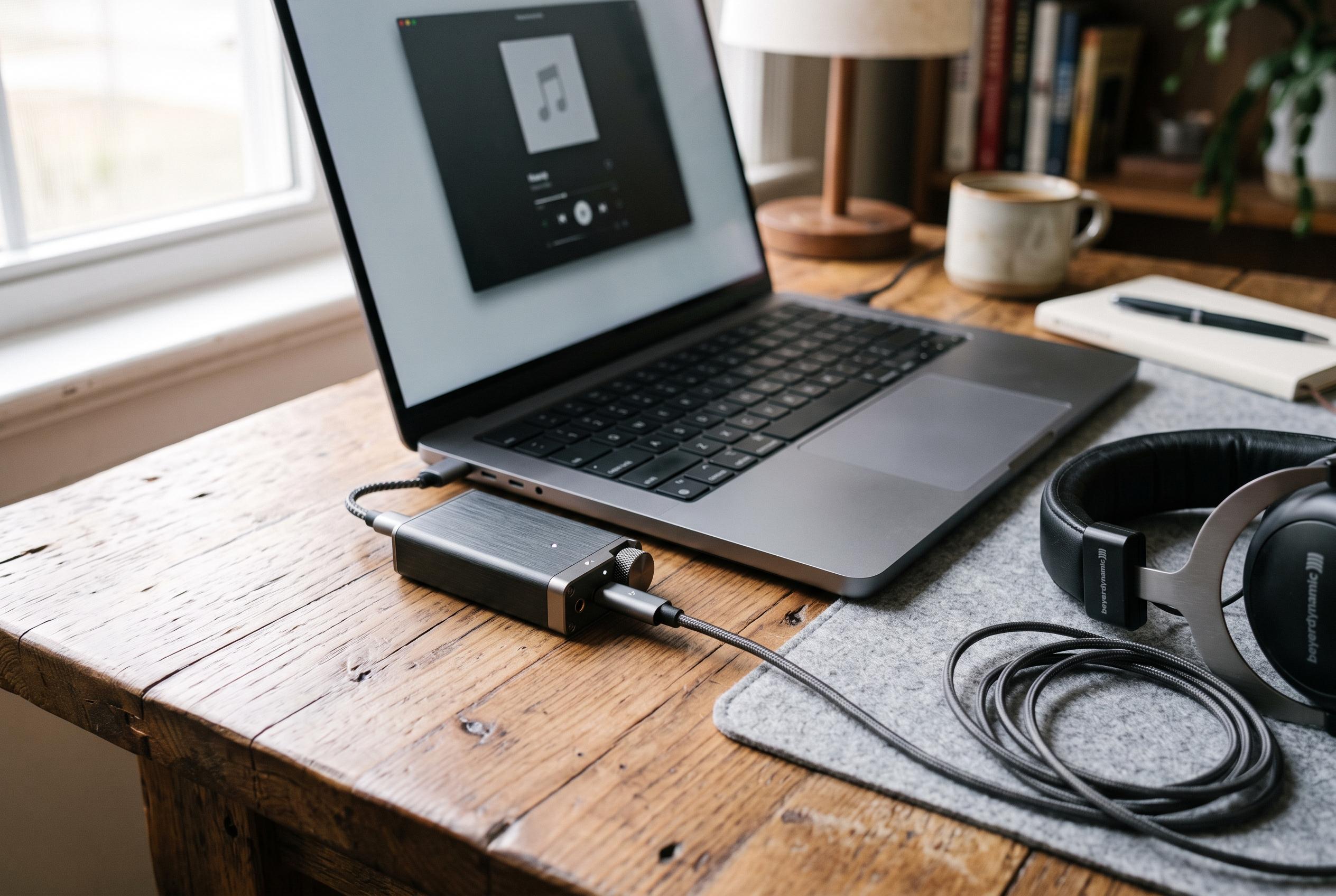

AudioQuest’s DragonFly Copper adds a new ESS Sabre DAC, higher output and lower power consumption to its compact USB design, delivering a convincing laptop audio upgrade while retaining broad device compatibility.
AudioQuest’s DragonFly Copper arrives as a familiar idea with a sharper edge: a tiny USB DAC and headphone amplifier that is intended to lift laptop and mobile audio into more convincing hi-fi territory. What Hi-Fi? says the device keeps the compact, stick-like shape that made the original DragonFly memorable, while the new copper finish marks the latest revision in a line that has already built a strong reputation for simplicity and ease of use. At £229 in the UK and $250 in the US, it sits below the old Cobalt launch price and enters a market crowded with portable alternatives, from budget USB dongles to more expensive rivals such as the Chord Mojo 2.
The key update is inside. According to What Hi-Fi?, the Copper uses a new 32-bit ESS Sabre conversion stage, revised parts and materials, and a copper-plated casing that is meant to assist with radio-frequency noise dissipation. AudioQuest claims the changes double output power versus earlier DragonFly models while cutting power consumption by about a quarter. The trade-off is that the Copper remains limited to USB Audio Class 1, which caps native playback at 24-bit/96kHz. It will accept 24-bit/192kHz files, but it will not process them at full native resolution. That decision is deliberate, AudioQuest says, because the company prioritised broad compatibility across devices rather than chasing higher sample rates and the extra noise they can introduce in such a small chassis.
In use, the appeal is straightforward. What Hi-Fi? found the Copper immediately more dynamic and spacious than a standard laptop headphone socket, with firmer timing, better image placement and a clearer sense of instrumental texture. Fleetwood Mac’s “The Chain” was described as taut and propulsive, while Agnes Obel’s “The Curse” gained extra atmosphere, detail and separation. The review also says the Copper handles a wide spread of material well, from hi-res FLAC and CD-ripped WAV files to compressed MP3s, and that it remains composed with both dense rock recordings and orchestral music. A separate measurement review cited by AudioQuest also reported strong channel balance and lower distortion than earlier DragonFly models, which supports the impression of a cleaner, more resolved presentation.
The Copper is not universally perfect. Its performance is strongest from a laptop, where it can draw enough power to sound more forceful and subtle than it does from a smartphone. It also cannot match rivals that support native 192kHz playback or DSD, and the finish is prone to fingerprints. Even so, What Hi-Fi? places it among the best DACs under £250 in its 2026 buying guide, and the verdict is clear: this is a highly capable, very practical upgrade for anyone who wants better sound without adding clutter, menus or setup complexity. For listeners who value portability, compatibility and a genuinely audible step up from a built-in headphone jack, the DragonFly Copper looks like one of the most persuasive small DACs on sale.
Disclaimer: This content is intended for informational purposes only. Readers are advised to exercise their own judgement, conduct due diligence, or consult a qualified expert before acting on any information provided.



