

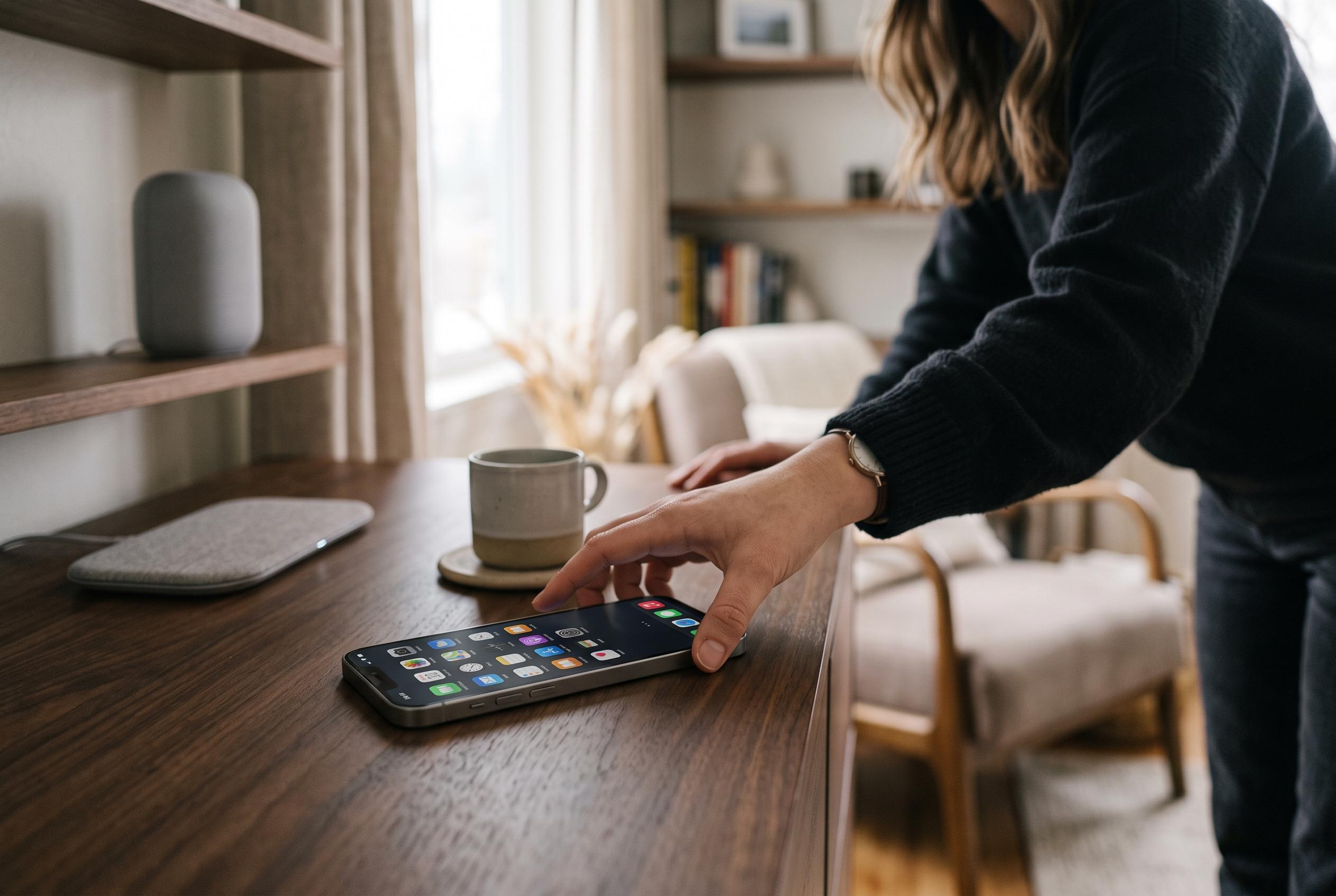

Apple’s latest Pro iPhone delivers a major performance and battery boost, but its variable-aperture camera and restrained redesign do less to widen the gap with Android rivals.
Apple’s iPhone 18 Pro arrives as a familiar object with a very different brief. On paper, it is the most ambitious Pro model the company has shipped in years, with a new A20 Pro chip, a revised thermal design, an improved battery, and a main camera that finally moves to variable aperture. Yet the most striking thing about it is how little the exterior has changed: the design remains closely tied to the previous generation, and the real work has gone into the hardware beneath the surface, according to Presse-citron and Apple’s own specifications.
That matters because this is not a cosmetic upgrade. Apple says the A20 Pro is built on a 2 nm process and pairs six CPU cores with a Neural Engine that has doubled in size, while the company’s technical pages also confirm the device’s dimensions, IP68 resistance and display characteristics. In practical use, Presse-citron’s testing suggests the chip delivers a level of speed that leaves little room for complaint: editing, gaming and on-device AI tasks all run with ease, and the new cooling system appears to do a better job of keeping sustained performance in check than recent Pro models.
The software side is calmer, too. iOS 27 is presented as a refinement rather than a reinvention, with smoother animations, more flexible visual styling and a set of smaller but useful updates across Photos, Safari, Fitness and live sports features. Presse-citron reports that the system feels notably stable in day-to-day use, which will be welcome to users who have occasionally found new iPhone launches rough around the edges. Apple’s own product pages also indicate continued support for Apple Intelligence and Siri AI, although the review notes that some of the company’s most advanced assistant features are not available on iPhone in the European Union.
Battery life is another clear strength. According to the review, the iPhone 18 Pro lasts long enough to rival last year’s larger Pro Max in real-world use, despite the European model carrying a smaller battery than the eSIM-only version sold in the United States. That endurance, coupled with a reduced tendency to heat up under load, makes it easier to recommend for heavy users who shoot a lot of video, play demanding games or work on the phone for long stretches. The trade-off is charging: while the top-end wired and wireless specifications sound impressive, the review says the handset still does not feel especially quick to refill compared with the best Android rivals.
Photography is where the story becomes more complicated. Apple’s new variable-aperture main lens is technically interesting, and it does improve control over light and depth of field, but the review argues that the feature is less transformative in daily use than Apple’s marketing implies. The bigger gain, it says, comes from the brighter main lens and the resulting improvement in low light, where the phone captures cleaner portraits and more natural detail than before. Even so, the piece remains critical of Apple’s camera strategy, pointing to limitations in the telephoto system, a lack of 8K video and a general sense that the company is still behind the best Android phones in some still-image scenarios.
That leaves the iPhone 18 Pro in an unusual position. It is not the most visually exciting phone Apple has made, and it is certainly not the cheapest. But as a complete package, it is described as the company’s best iPhone for 2026, with class-leading performance, strong battery life and video capture that remains among the most capable in the industry. The review’s main reservation is that, outside Apple’s ecosystem, there are Android alternatives that are more versatile for photography, charging and AI at similar or lower prices. For existing iPhone owners, especially those on older Pro models, the upgrade case is strong; for owners of the iPhone 17 Pro, it is much less compelling.
Disclaimer: This content is intended for informational purposes only. Readers are advised to exercise their own judgement, conduct due diligence, or consult a qualified expert before acting on any information provided.



