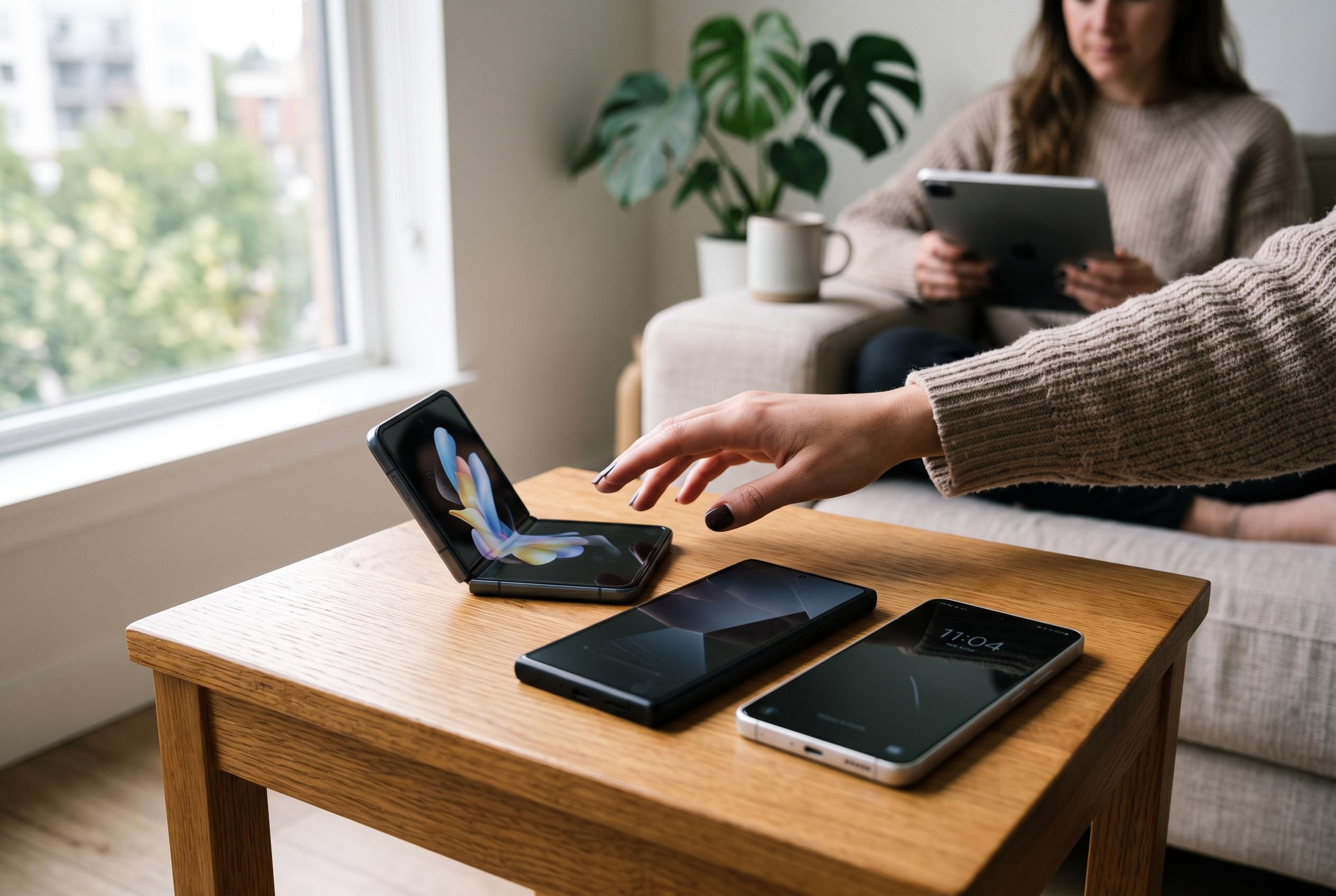

The Pixel 10a, Moto Razr+ 2024 and OnePlus 13s show that smaller Android phones can still deliver modern software, flagship performance and all-day endurance.
Compact Android phones are increasingly rare, but a small group of devices still tries to combine manageable dimensions with strong battery life, modern software and performance that is good enough for everyday use. A round-up of three such models points to the Google Pixel 10a, Moto Razr+ 2024 and OnePlus 13s as the clearest options for buyers who want something less cumbersome than the average large-screen handset.
Among the more conventional slab phones, Google’s Pixel 10a stands out for its balance of size, support policy and software tools. Google’s own specifications list the device at 153.9 x 73.0 x 9.0 mm and 183 g, with a 6.3-inch Actua display running at 120Hz, a Tensor G4 processor, 5,100 mAh battery and storage choices of 128 GB or 256 GB. The phone also carries an IP68 rating for dust and water resistance. Android Central reported that the Pixel 10a launched on 18 February 2026 and arrived with Android 16, recycled materials in its construction and Google’s seven-year update commitment. Tom’s Guide said the handset is not a dramatic hardware leap over the Pixel 9a, but praised its battery life, AI features such as Camera Coach and Add Me, and the long support window that should matter more to many buyers than small design changes.
The Moto Razr+ 2024 takes a different approach by making the foldable format more affordable. According to the summary, the 256 GB model with 12 GB of RAM is priced at $549.99, which places it in the middle of the market rather than at the top end of foldable pricing. Its 4-inch outer display supports a 165Hz refresh rate, and the phone’s compact folded shape makes it unusually pocketable for a modern smartphone. The Snapdragon 8s Gen 3 gives it stronger performance than its predecessor, while a 4,000 mAh battery and 45W wired charging should be enough for a full day and more. The trade-off is software longevity: the device ships with Android 14 and comes with a shorter update promise than the Pixel or OnePlus alternatives.
OnePlus targets a more performance-focused buyer with the 13s. The handset measures 151 x 72 x 8 mm and uses a 6.32-inch AMOLED panel with a 1.5K resolution and 120Hz refresh rate, giving it a compact body without cutting too far into screen size. Its Snapdragon 8 Elite chip delivers flagship-class speed, and the camera set includes 50-megapixel main and telephoto sensors plus a 32-megapixel front camera. What makes the 13s especially notable is endurance: it carries a 5,850 mAh battery and supports 80W charging, which the summary says is the largest battery and fastest charging of the three phones discussed. It also ships with OxygenOS 15 based on Android 15, plus three Android version upgrades and six years of security updates, making it a strong option for users who value both performance and practical longevity.
Taken together, the three models show how the compact-phone category has evolved. Google offers the best long-term software commitment and a polished feature set; Motorola provides the most interesting foldable experience at a comparatively lower price; and OnePlus pushes the hardest on raw power and charging speed. For buyers who want a smaller Android phone without moving to the premium ultra-compact segment, each of the three answers a different need, and the right choice depends less on size alone than on whether support, folding design or speed matters most.
Disclaimer: This content is intended for informational purposes only. Readers are advised to exercise their own judgement, conduct due diligence, or consult a qualified expert before acting on any information provided.