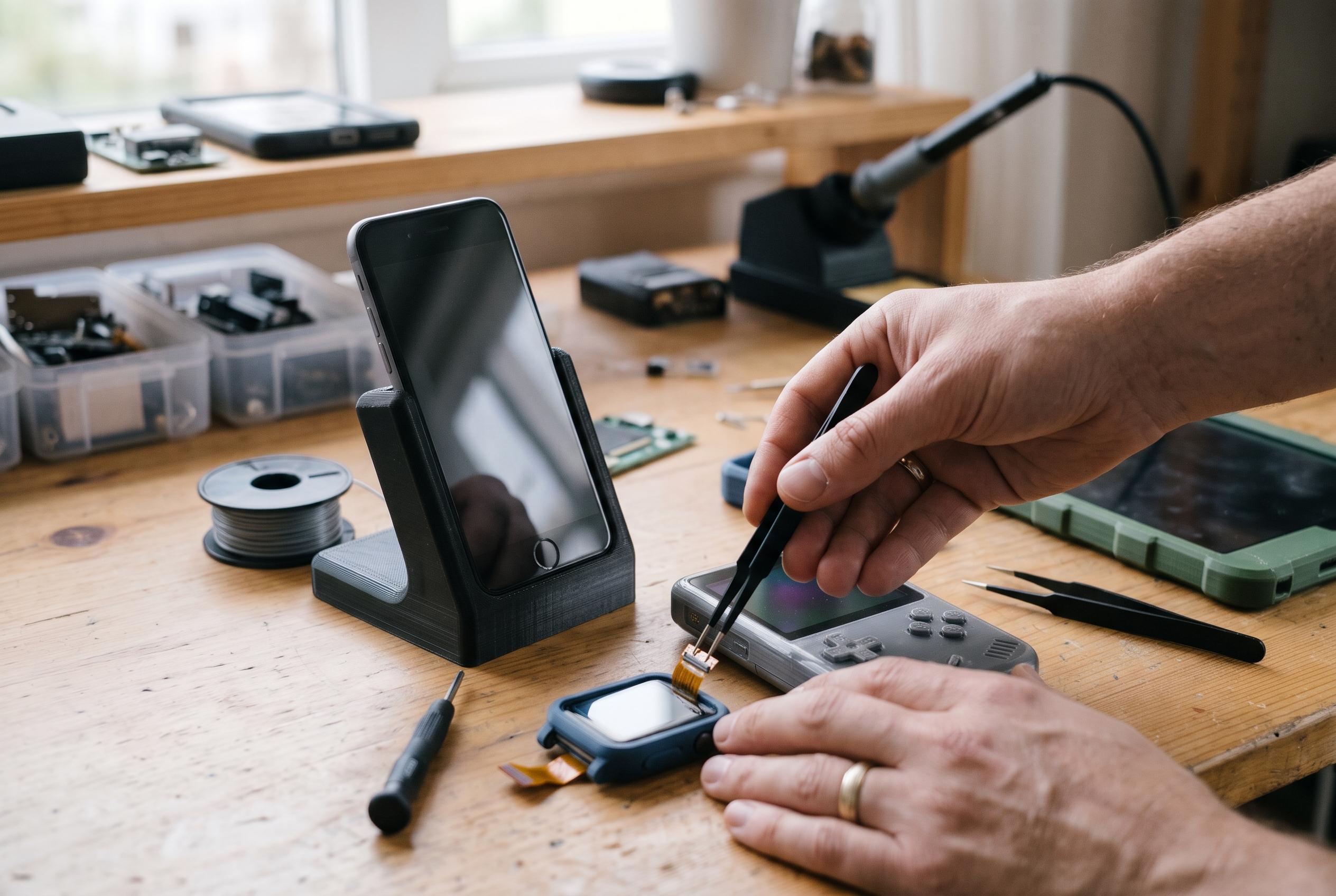

Custom mounts and enclosures turn ageing phones, tablets and wearables into useful gadgets, from an Android Auto display to a Game Boy-style handheld.
A 3D printer is most useful when it does not try to replace a device, but helps an old one do a better job. That is the premise behind a series of practical projects that turn forgotten phones, tablets and wearables into tools with a new purpose. In one case, a worn Android tablet was made into a car display for Android Auto by adapting an existing dashboard arm rather than buying a fresh unit. The same approach was used to make old hardware feel current again, with the emphasis on fit, mounting and reuse rather than on printing a complete product from scratch.
The car setup is especially instructive because it shows how modest the hardware needs can be. A tablet can serve as the screen while the phone handles the Android Auto experience, provided the receiving device has the right software and connections. Guides to that method describe both wired and wireless configurations, usually involving a receiver app such as Headunit Reloaded or Open Headunit. The practical barriers are familiar: power delivery, cable management, compatibility and safe placement in the cabin. Even so, the approach offers a workable way to revive a spare tablet that would otherwise sit unused in a drawer.
The same logic applies to a neglected phone. A Unihertz Titan 2 Elite, which might be awkward for anyone who does not enjoy a physical keyboard, was turned into a retro gaming handheld with a Game Boy-inspired printed shell. The accessory, known as Titan Boy, uses the handset’s existing keys as controls and can be printed in different button layouts, with configuration files supplied for RetroArch. The result is not merely decorative. It changes the way the device is held and used, giving the phone a clear new role as a dedicated emulator machine.
A smartwatch can be repurposed in a similar way. In that project, a Pixel Watch was enclosed in a printed body that makes it feel more like a compact phone, complete with a working scroll wheel and buttons. That same willingness to rethink form factor also underpins a separate kitchen setup that combines an old smartphone with a Google Home Mini inside a vintage-style radio shell. According to the account, the speaker still handles voice commands while the phone provides the display, and an automation reconnects Bluetooth whenever an audio app opens. The broader point is simple: with a little design work, old hardware can remain genuinely useful, even when its original purpose has faded.
Disclaimer: This content is intended for informational purposes only. Readers are advised to exercise their own judgement, conduct due diligence, or consult a qualified expert before acting on any information provided.