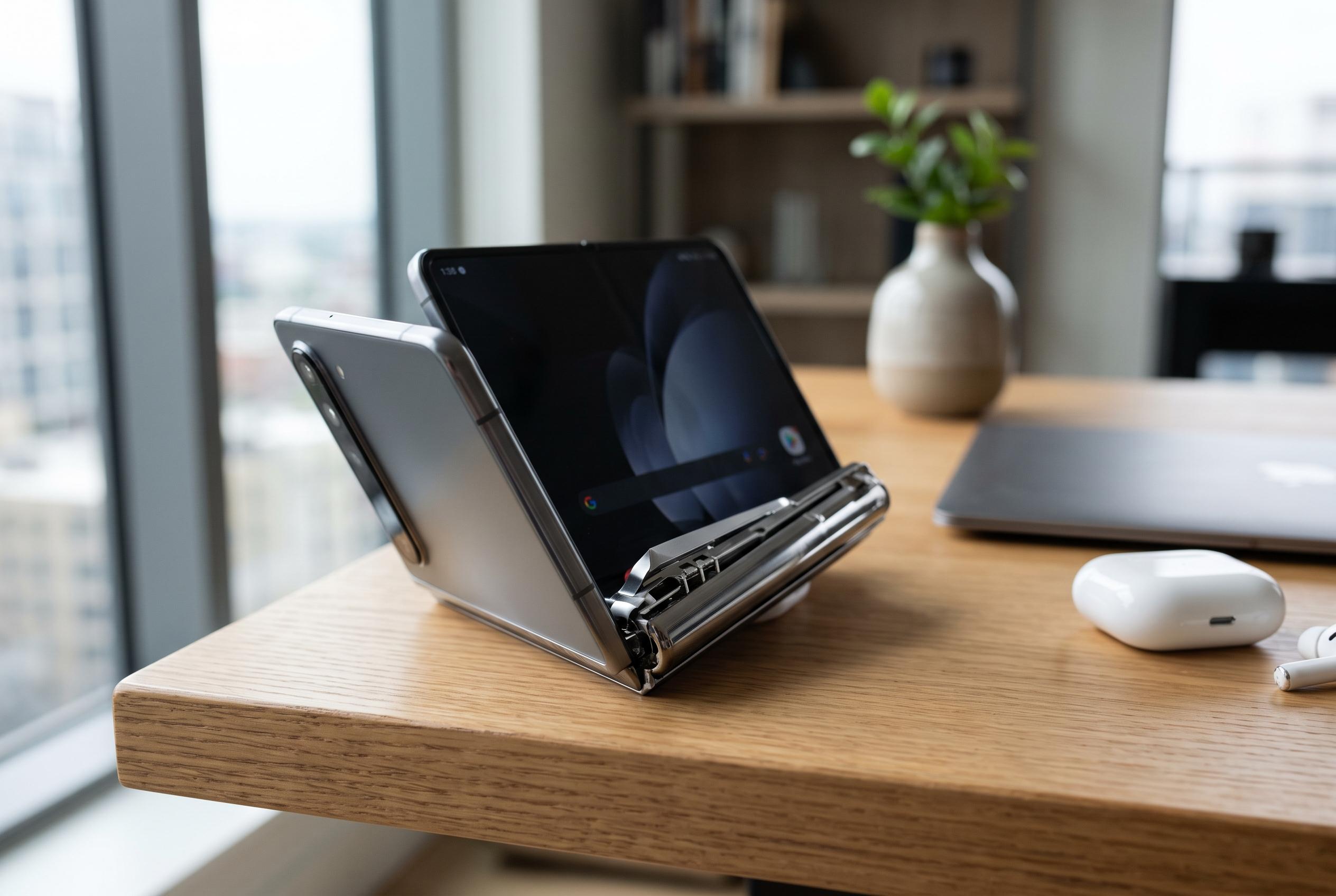

Apple’s first foldable offers striking versatility and strong early demand, but its weight, awkward ergonomics and adhesive-only cases expose the compromises of a first-generation device.
Apple’s first foldable, the iPhone Duo, asks a great deal of buyers: in Japan, the 256GB model costs 364,800 yen, while the 2TB version reaches 574,800 yen. After a week of everyday use, the device appears to justify much of that outlay through sheer versatility. It can behave like a phone, a small tablet and, in some situations, a compact laptop substitute. Yet it also arrives with compromises that are hard to ignore, particularly for anyone expecting a seamless one-handed smartphone experience.
When folded, the handset measures 5.4 inches and slips neatly into a shirt pocket, even sitting smaller than a passport. That portability is one of its most obvious strengths. But the ergonomics are less forgiving once the device is in use. Unlocking relies on Touch ID embedded in the right-hand side button rather than Face ID, and the placement feels noticeably more natural for right-handed users. The body is also broad at 84.1mm, making one-handed use awkward, while the 254g weight becomes increasingly apparent over time. As the reviewer notes, what feels manageable on day one can become tiring after several days of daily carry.
According to Tom’s Guide, Apple has built six distinct operating modes into the foldable design, including closed, horizontal and vertical open positions, plus book, tabletop and tent-style use. The key point is that the hinge angle is not just a mechanical detail but part of the interface itself, allowing the device to adapt to reading, streaming, typing and video calls without extra accessories. That flexibility is likely to be the main reason many buyers tolerate the size and weight. It is also what makes the iPhone Duo feel less like an unusual iPhone and more like a hybrid device with its own operating logic.
Demand, however, appears to have been immediate and intense. TechRadar reported that shipping estimates slipped into January 2027 soon after pre-orders opened, with availability constrained despite Apple offering the phone in Star White and Night Sky and with storage options up to 2TB. Digital Camera World likewise said the handset was sold out almost immediately in some markets, with systems briefly struggling to keep up. Creative Bloq questioned whether the shortage reflects genuine supply limits or a more deliberate scarcity strategy, although Apple has described the demand as extraordinary without disclosing production numbers.
Accessories have also drawn scrutiny. T3 reported that Apple’s cases attach with adhesive strips, a detail that has frustrated some buyers because it was not made clear on the company’s website. The concern is not merely cosmetic: adhesive mounting raises questions about residue, dust accumulation and long-term durability. Yet the design choice is understandable in context, because foldable phones leave less room around the cover display for traditional clip-on accessories. Taken together, the iPhone Duo looks like a first-generation product in the truest sense: ambitious, expensive and unusually capable, but still carrying the rough edges that come with being first.
Disclaimer: This content is intended for informational purposes only. Readers are advised to exercise their own judgement, conduct due diligence, or consult a qualified expert before acting on any information provided.