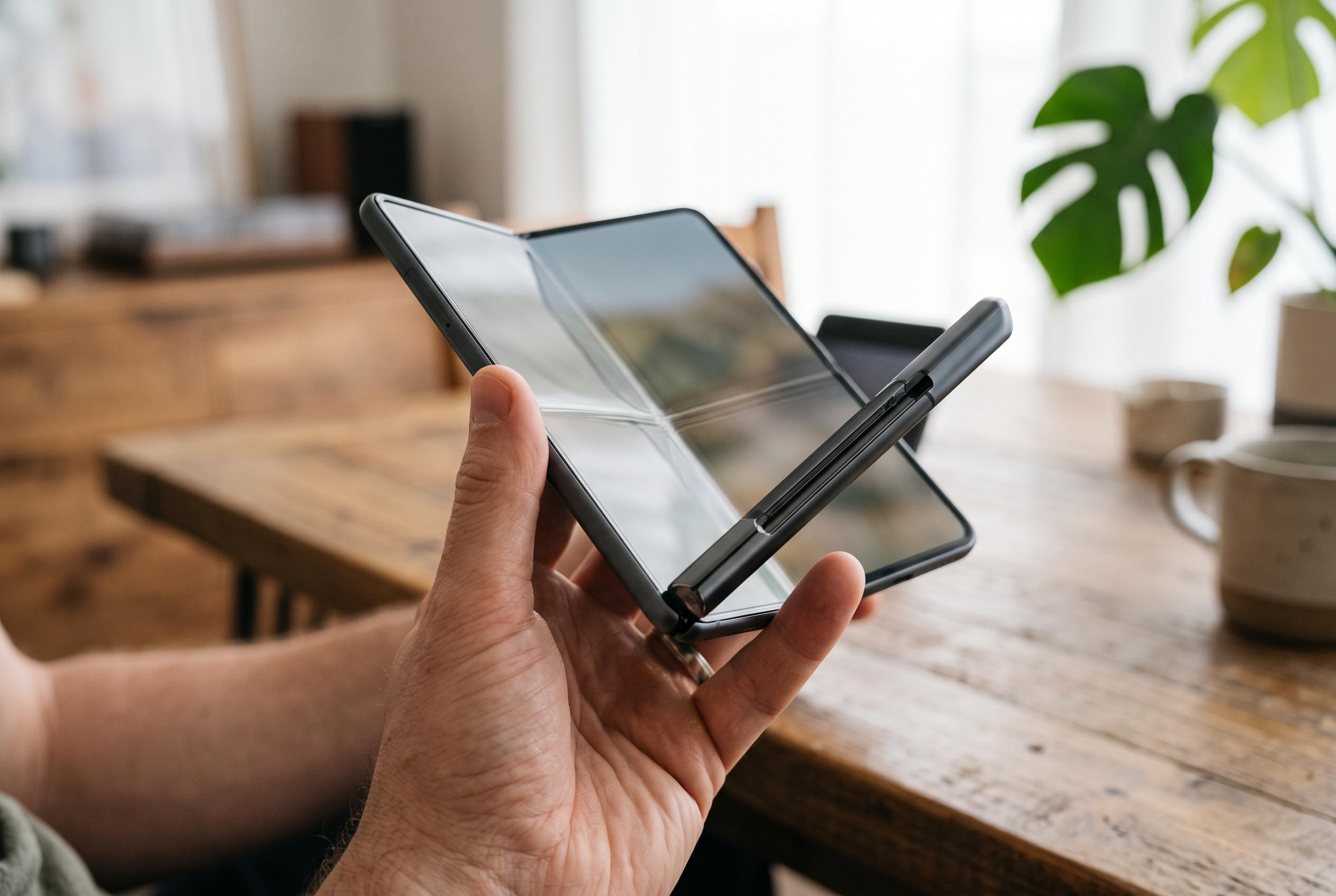

Stress tests suggest Apple’s foldable hinge remains smooth after thousands of cycles, while the inner display’s crease becomes markedly deeper with use.
Apple’s first foldable, the iPhone Duo, is already prompting a familiar question for the category: what lasts longer, the hinge or the screen? Two Chinese test sites, HTX Studio and Media Storm, have put the device through extended stress tests and reached a nuanced conclusion. The hinge appears to remain mechanically sound after thousands of cycles, while the inner display’s crease deepens over time. That distinction matters, because in foldables the visible wear that users notice most often is not always the part most at risk of failure.
The hinge has long been the most sensitive component in foldable phones. Early devices often struggled with dust ingress, uneven wear and display damage along the fold line. Apple, which spent years refining the component before launch, appears to have approached the problem with unusual rigour. According to accounts from the assembly line, however, production was not straightforward: some reports suggested that as many as four in ten units failed initial checks, largely because of issues tied to the display, hinge and final assembly.
HTX Studio used computed tomography to inspect the mechanism without dismantling the handset, then built a digital reconstruction of how it works. The system is divided into six functional sections, with some parts guiding the rotation of the two halves, another providing a route for flexible cables, and a gear train keeping both sides in sync. Springs and cams appear to create the resistance needed to hold the device at a chosen angle, while magnets take over near the end of the closing motion to pull the two halves together. In practical use, HTX found the phone could stay open at roughly 15 to 165 degrees, enabling tabletop and tent-style positions.
The same testing also suggested that the inner display folds into a teardrop shape when closed. HTX measured that curvature at about 3.85 millimetres at its widest point, which is broadly in line with modern foldables. The relative subtlety of the crease, the site argued, is not explained by hinge geometry alone. Surface treatment also seems to matter: Apple’s nanotexture finish diffuses reflections and makes the central deformation less obvious to the eye, particularly when the display is active.
Where the screen and hinge diverge most clearly is over time. HTX measured a new iPhone Duo at only 48 microns of difference between the peak and valley of the crease, but after 3,000 cycles that figure had risen to 167 microns. Media Storm pushed the handset further, carrying out 10,000 openings and closings at room temperature and then another 1,000 at about minus 20C. It reported that the hinge still moved with the same fluidity and assistance as before, with no obvious mechanical failure. The display, by contrast, showed a more pronounced crease after the test.
That picture is consistent with early hands-on impressions. Gizmochina reported that the inner panel feels unusually soft around the hinge and that the crease becomes more visible with use, raising questions about long-term durability. The Mac Observer noted that Apple has not published an official fold-cycle rating for the hinge, leaving outside observers without a benchmark for comparison. Meanwhile, a separate durability assessment said protective cases can affect hinge clearance and that outer shell resistance does not automatically predict every real-world impact scenario.
The iPhone Duo’s protective measures are substantial. Apple uses a titanium structure, and Media Storm found the frame remained stiff under accidental drops and attempts to bend it backwards. HTX also noted that the edge of the hinge lacks the raised end sections used by many rival foldables to spread impact forces, a choice it linked to the titanium reinforcement. The handset carries an IP68 rating, but the tests suggest that dust protection is not absolute: fine debris and even hair can still reach parts of the mechanism at certain angles.
The software side is also tightly tied to the hardware. iOS continuously tracks the hinge angle to decide which display should be active and how the interface should adapt, and Media Storm showed that third-party apps can respond to those readings as well. Yet when the hinge is moved very slowly through the transition, glitches can appear, including wallpaper jumps, incorrect orientation, brief black screens or awkward switching between modes. Those faults were much harder to reproduce during normal use.
Taken together, the early evidence points to a hinge that is better engineered than it is flashy. It seems rigid, precise and capable of retaining its feel after thousands of folds. The display, however, is the part that shows the more visible effects of wear, with the crease deepening as the device ages. For Apple’s first foldable, that may prove to be the more important long-term test.
Disclaimer: This content is intended for informational purposes only. Readers are advised to exercise their own judgement, conduct due diligence, or consult a qualified expert before acting on any information provided.