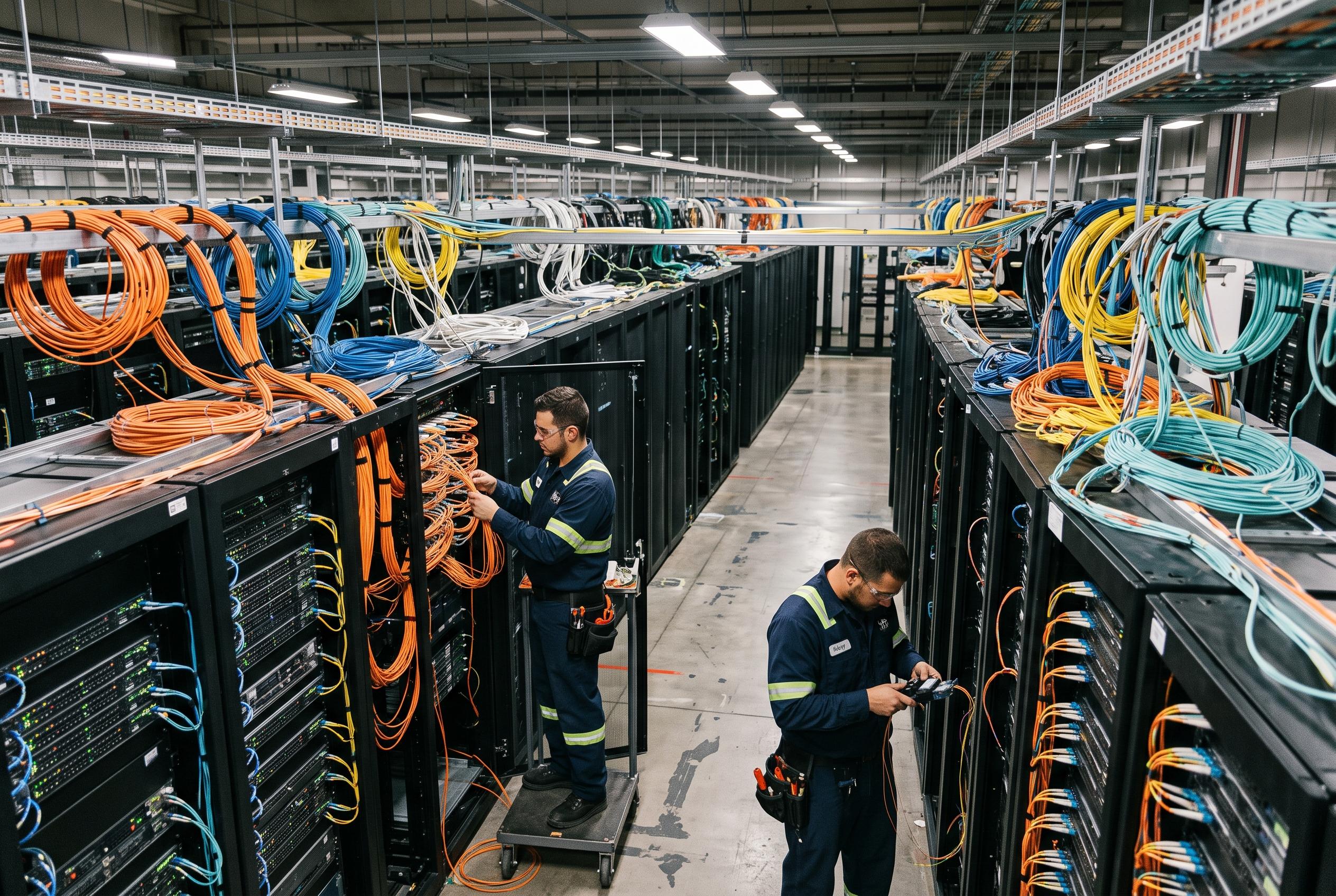

Optical fibre production is nearing full capacity as AI infrastructure pushes demand beyond supply in 2026, with prices forecast to rise by up to fivefold and operators securing long-term capacity.
TrendForce said the global optical fibre market is heading into a pronounced supply squeeze in 2026, with demand from AI data centres, inter-data centre links and high-capacity backbone networks pushing the industry into a shortfall of about 180 million fibre-kilometres. The research firm said that tightness is already feeding through to pricing, with spot prices for finished fibre products expected to rise by between 2.8 and 5 times from 2025 levels.
The pressure reflects a market that is close to full utilisation. According to TrendForce, global fibre production capacity is running at 92%, inventories have fallen from around four months in 2024 to roughly one month, and some major suppliers are already booked into the first quarter of 2027. It also said new capacity cannot be brought on quickly, because expanding optical fibre production requires deposition equipment and process build-out that typically take 18 to 24 months.
Demand is rising fastest around data centre infrastructure. TrendForce estimated that data centre construction will account for about 18% to 20% of global fibre demand in 2026, with that share likely to climb to 30% to 35% in 2027. The firm said the build-out is being driven not only by hyperscale cloud providers expanding AI facilities, but also by chipmakers and telecom operators investing in the interconnects and backbone networks needed to support them.
As supply tightens, telecom operators are moving towards longer-term procurement to secure capacity in advance. TrendForce cited Verizon’s September agreement with Corning as an example, under which the US carrier plans to secure more than 129 million fibre-kilometres, or about 80 million miles, of high-density fibre and connectivity solutions between 2027 and 2032. The arrangement is intended to support broadband deployment as well as high-capacity networks linking AI data centres, underscoring how the current cycle differs from earlier telecom-led build-outs and is being shaped instead by the infrastructure demands of artificial intelligence.
Disclaimer: This content is intended for informational purposes only. Readers are advised to exercise their own judgement, conduct due diligence, or consult a qualified expert before acting on any information provided.