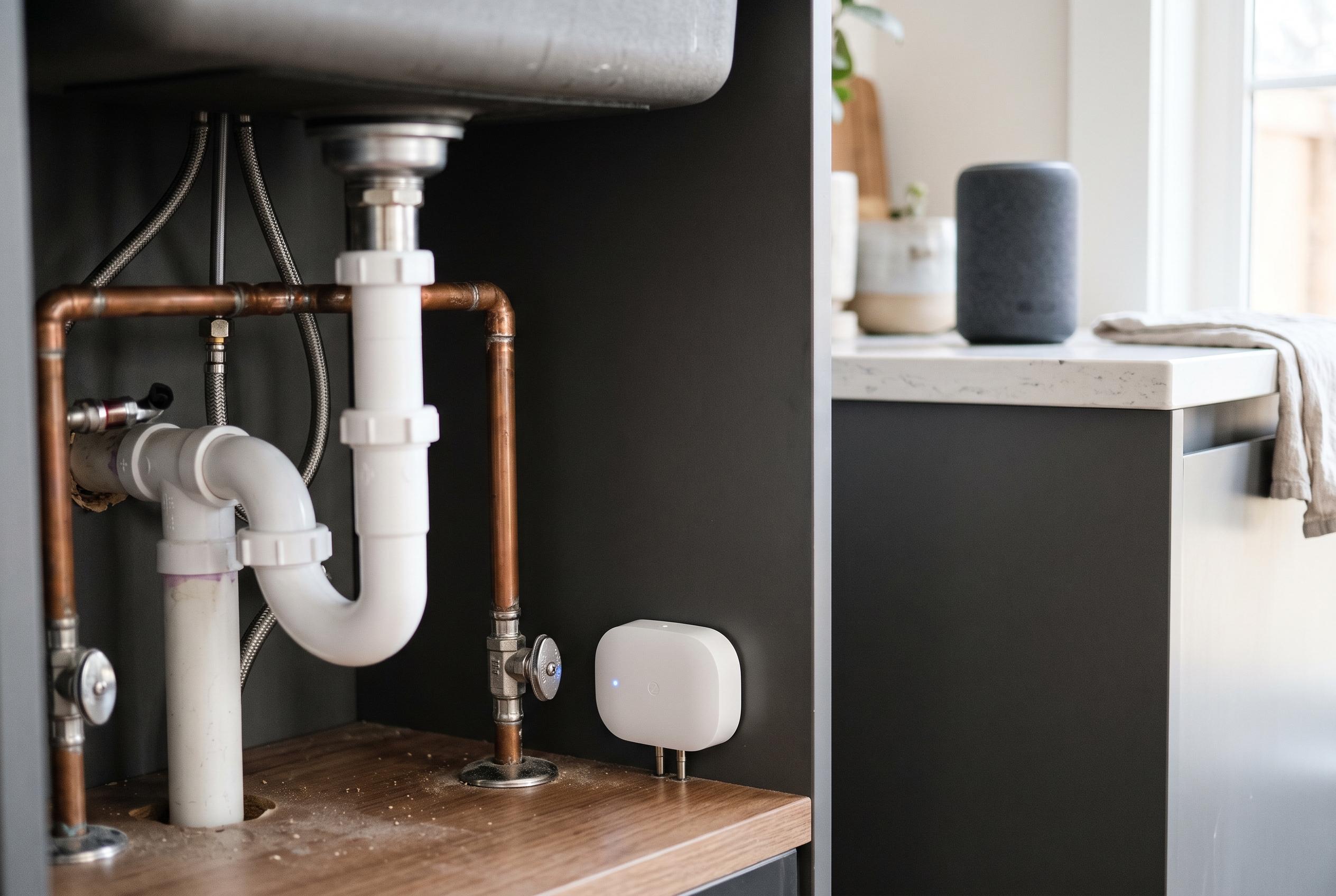

From Aeotec’s established ecosystem support to THIRDREALITY’s 120dB alarm and SONOFF’s cable-enabled coverage, the best Zigbee leak sensor depends on where it will sit and how quickly you need to hear it.
Zigbee water leak sensors remain one of the most practical forms of home automation protection because they are small, inexpensive and designed to sit unnoticed until water is where it should not be. The best models can do more than send a phone alert: some include a loud onboard alarm, others add temperature monitoring to warn of freezing conditions, and a few extend detection with a drip probe or cable for wider coverage. According to the reviewed listings and related product notes, the strongest choices depend less on raw smart-home branding than on how much space they must cover, whether a hub is already in place, and whether audible alerts matter more than extra sensors or app features.
The most established all-round option is the Aeotec SmartThings Water Leak Sensor. It is widely presented as the most proven Zigbee choice for SmartThings users, with broad compatibility across SmartThings, Hubitat and Home Assistant, plus temperature sensing for early freeze warnings. Its appeal is straightforward: it is compact, battery-powered and suited to locations such as under sinks, beside washing machines and near water heaters. The trade-off is that it does not have its own siren, so it relies on the hub for alerts or automations. Independent product notes also highlight its silent operation and CR2 battery, which may be less convenient to replace than AAA cells. Taken together, that makes it best for users who want a well-supported sensor rather than a self-contained alarm.
For households that want broader protection at lower cost per room, THIRDREALITY’s Zigbee leak sensors stand out. The company’s own product information says the sensor uses two AAA batteries, includes a 120dB alarm and ships with a drip-sensor attachment for slow leaks. A separate review from Smart Home Compared describes the device as compact, quick to pair with Home Assistant and Hubitat, and strong on audible warning, while also noting that shallow-water detection can be less reliable without the accessory or spacers. That combination makes the original THIRDREALITY model especially attractive for kitchens, basements and laundry rooms, while the newer WL2 variant is best viewed as an updated single-sensor alternative for buyers who want the latest design rather than the longest track record.
SONOFF’s SNZB-05P is the compact specialist. It is the smallest of the more prominent options discussed here and is best suited to tight spaces where a bulkier unit may not fit, such as narrow voids under sinks or behind dishwashers. The version sold with a detection cable stretches that advantage further by covering a longer run, which makes it more appropriate for a water heater, appliance line or sump area than a single point sensor. The important limitation is that, like many Zigbee detectors, it does not contain its own siren, so it depends on a hub or separate alarm device for immediate audible warning. For users who value flexibility in placement more than built-in sound, it is one of the most sensible choices.
Shelly’s Gen4 flood sensor is the most unusual device in the group because it spans Zigbee, Wi-Fi, Bluetooth and Matter. That makes it useful for buyers who may change platforms later, or for seasonal properties where hub-based monitoring is not always practical. The downside is that such flexibility usually comes with more setup decisions, and using Wi-Fi can shorten battery life compared with Zigbee. In other words, it is not the simplest option, but it is the most adaptable. Frient’s water leak detector takes a different approach again: it emphasises a loud built-in siren and expansion with an external probe, making it a practical choice where audible alerts and extended reach matter more than a low-profile footprint.
At the budget end, the market becomes more variable. An unbranded three-pack marketed for Home Assistant and Zigbee2MQTT users offers IP66 protection and broad value if someone wants to blanket a home on a budget, though the mixed ratings suggest it is more of a tinkerer’s pick than a polished mainstream product. Another generic Zigbee water sensor adds an audible alarm and IP55 protection, but its very small review base means it should be treated as a backup option rather than a first recommendation. In practical terms, the main decision is whether to prioritise proven ecosystem support, built-in sound, or extended coverage. For most buyers, the safest path is still to choose a well-reviewed sensor from a recognised brand, then place it where water would collect first and pair it with a hub automation or shut-off valve if stopping a leak quickly matters more than receiving a notification.
Disclaimer: This content is intended for informational purposes only. Readers are advised to exercise their own judgement, conduct due diligence, or consult a qualified expert before acting on any information provided.