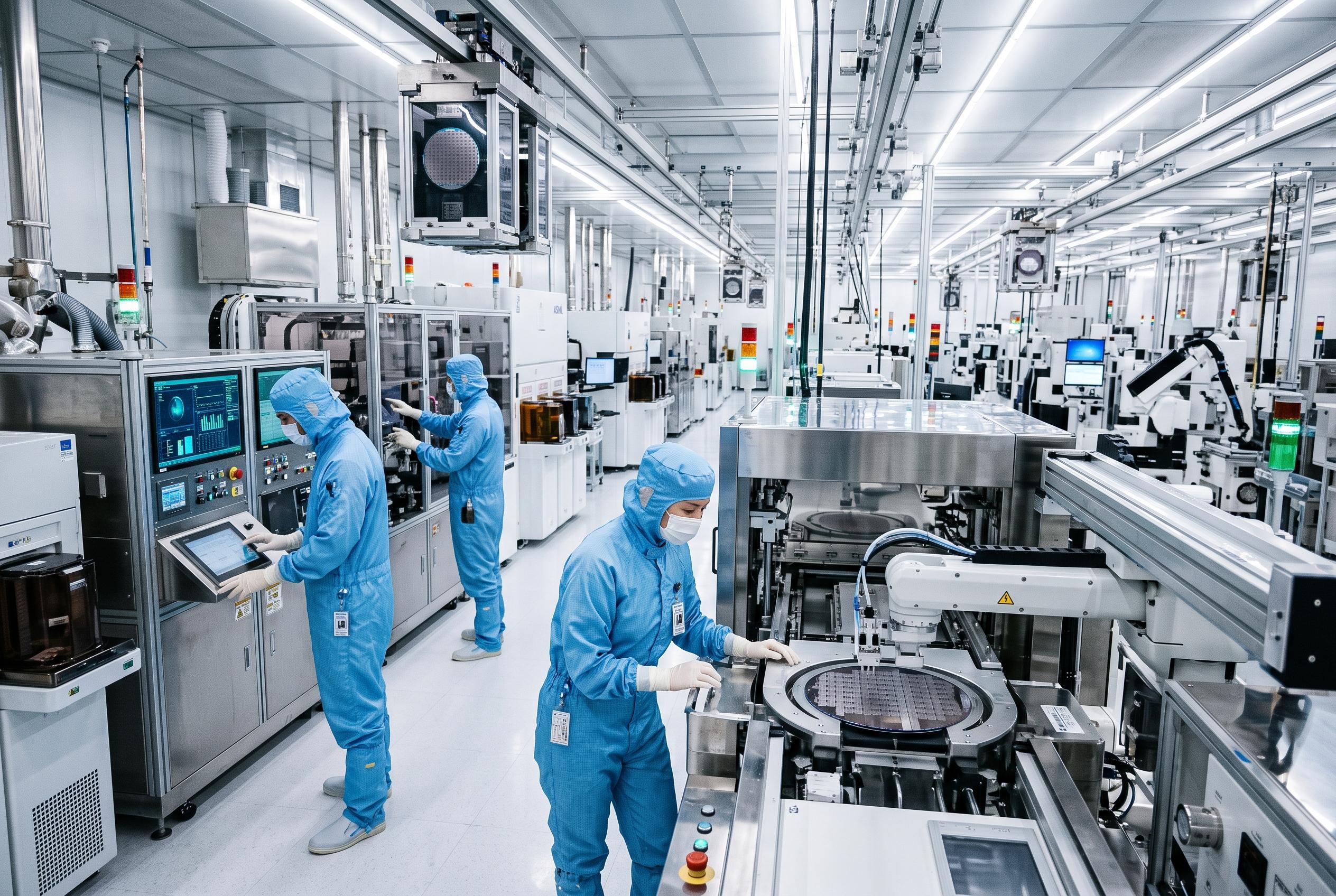

Nvidia is securing billions of dollars in manufacturing capacity and funding expansions across Asia and the US as shortages in substrates, advanced packaging and testing threaten to constrain the AI infrastructure boom.
Nvidia is moving to secure more manufacturing capacity across its supply chain as demand for AI infrastructure continues to rise, according to a company announcement. The chipmaker said it is working with six partners: Samsung Electro-Mechanics, Ibiden, Amkor Technology, King Yuan Electronics, Siliconware Precision Industries and Unimicron. Chief executive Jensen Huang said the market is in the middle of “the largest infrastructure buildout in human history”, adding that demand is outstripping available capacity.
The agreements focus on the parts of the production chain that are often hardest to expand quickly, including package substrates, advanced packaging, semiconductor testing and optical engines for co-packaged optics. Nvidia said it is aiming to lift substrate capacity by 2.5 times over the next three years through expanded arrangements with Ibiden, Samsung Electro-Mechanics and Unimicron. These substrates form the electrical pathways between chips and the main board, and are essential in high-performance AI servers. Reuters reported that Nvidia has also made advance payments to reserve capacity, reflecting the pressure on suppliers as AI systems grow more complex.
In Japan, Nvidia has reserved several billion dollars’ worth of output at Ibiden and is helping to fund an expansion of the company’s Ono plant, which is expected to begin full-scale production in the first quarter of 2028. In South Korea, Samsung Electro-Mechanics is expected to start supplying next-generation substrates from its domestic plants in 2026, with Nvidia supporting equipment upgrades at its Sejong and Busan facilities, as well as a new factory. Unimicron’s KF plant in Taiwan is also set for expansion, with capacity due to start rising in the second quarter of 2027 and reach full utilisation by mid-2028.
Nvidia is also broadening capacity in advanced packaging and testing, areas that have become strategic bottlenecks in AI hardware production. The company said Amkor will expand interposer wafer output in Gwangju by more than 300% by the end of 2028, while KYEC will receive $1.1 billion in advance payments to help finance testing capacity in Taiwan, the United States and Singapore. That expansion is intended to double total testing capacity in 2027 from the 2026 level, with a new US facility due to begin mass production in April 2027 and additional lines in Singapore scheduled for February 2027. Separately, SPIL is planning a sharp increase in optical engine output for co-packaged optics, with capacity set to rise 15-fold by mid-2027 and then double again by the end of 2028.
Disclaimer: This content is intended for informational purposes only. Readers are advised to exercise their own judgement, conduct due diligence, or consult a qualified expert before acting on any information provided.