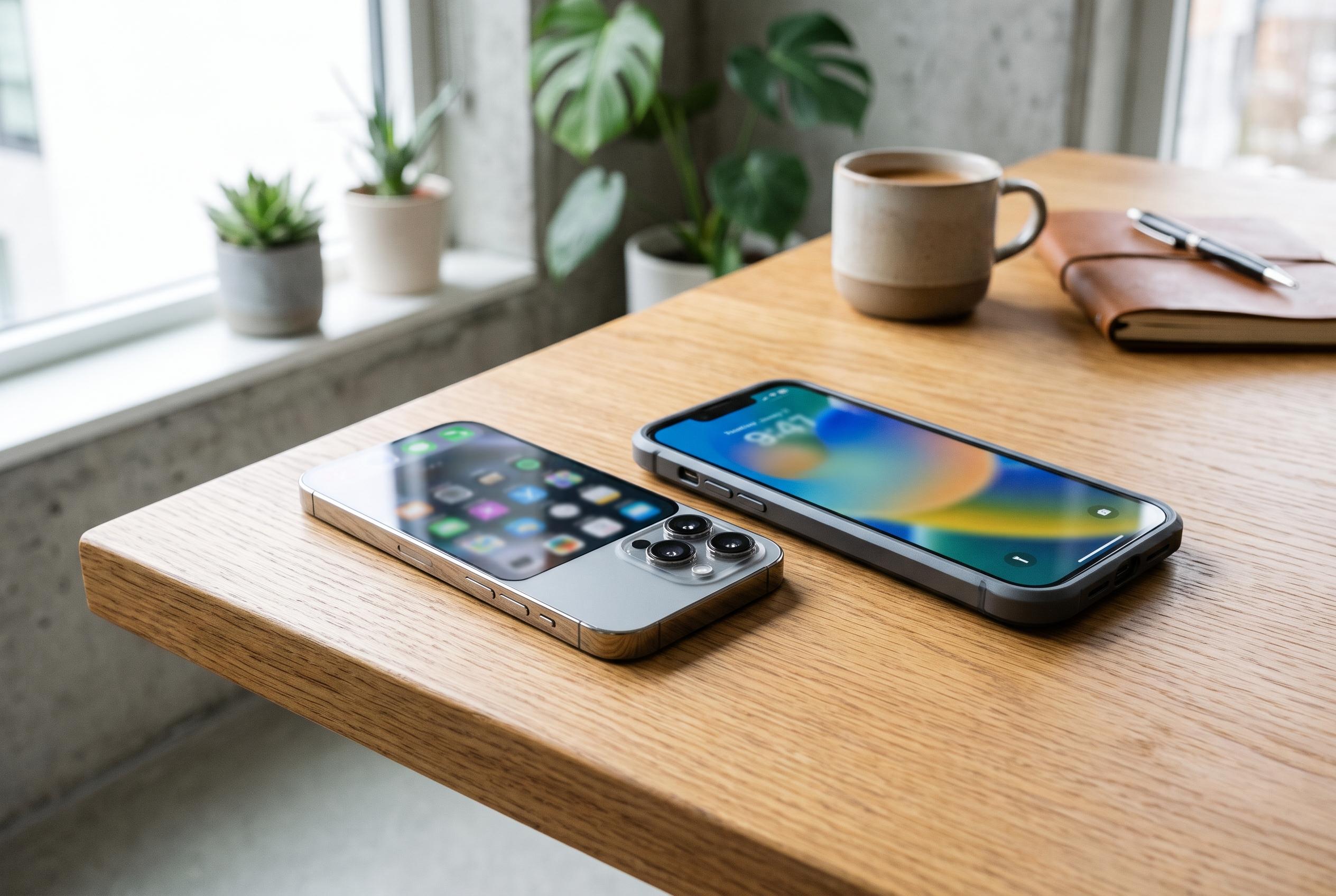

Apple’s newer iPhone 18 Pro brings a faster chip and variable-aperture camera, but the older iPhone 17 Pro Max offers a larger display and longer rated battery life.
Apple’s iPhone 17 Pro Max and iPhone 18 Pro are close on paper, but they are aimed at slightly different buyers. According to Apple’s specifications, both phones use Super Retina XDR OLED panels with ProMotion up to 120Hz, always-on display support and peak outdoor brightness of 3,000 nits. The key difference is size: the iPhone 17 Pro Max has a 6.9-inch screen, while the iPhone 18 Pro uses a 6.3-inch panel. That gap matters if you read, watch video or edit photos on the phone, because the larger model offers more room with less zooming and scrolling. The trade-off is portability, with the Pro Max weighing more and feeling less manageable in one hand.
Performance is another area where the newer model has the advantage, though perhaps not a dramatic one in daily use. Apple says the iPhone 17 Pro Max runs on the A19 Pro chip, while the iPhone 18 Pro uses the A20 Pro. Both are high-end processors with a 6-core CPU, 7-core GPU and dual 16-core Neural Engine, and both support up to 2TB of storage. Reviews suggest the A20 Pro is the stronger chip, especially for graphics-heavy workloads, AI features and demanding creative apps, but the day-to-day difference over the A19 Pro is likely to be modest for messaging, streaming and web use.
The camera comparison is more nuanced. Apple equips both models with triple 48MP rear cameras, so the basic hardware platform is very capable in either case. The iPhone 18 Pro’s main camera, however, adds a variable aperture system ranging from f/1.48 to f/4.0, which gives photographers more control over light capture and depth of field. TechRadar says that is a meaningful refinement for serious users, but it does not automatically guarantee better-looking photographs in every situation. Image processing, colour handling and personal taste still matter, and Tom’s Guide found the iPhone 17 Pro Max already delivers excellent results, with strong photography and a highly capable front camera.
Battery life is where the older Pro Max still makes a strong case for itself. Apple rates the U.S. eSIM-only iPhone 17 Pro Max for up to 39 hours of video playback, compared with up to 36 hours for the iPhone 18 Pro. Apple also rates the newer model for faster charging, with up to 50% in around 15 minutes using a compatible 60W USB-C adapter, versus around 20 minutes for the iPhone 17 Pro Max. In practice, those are controlled test figures rather than real-world mixed-use results, but they do point to the larger phone having the better endurance. Tom’s Guide’s review of the 17 Pro Max also praised its stamina, describing battery life as excellent in early testing.
For buyers choosing between them, the decision comes down to priorities rather than a simple generational win. The iPhone 18 Pro is the more advanced device, with a newer chip and more flexible camera controls, while the iPhone 17 Pro Max offers the bigger screen and the stronger published battery life. MacRumors has reported that Apple is expected to keep these display sizes in the next Pro line, which underlines how central that size difference remains to the choice. For someone upgrading from an older phone and planning to keep the new device for years, the best value may still depend less on raw specifications than on contract pricing, storage needs and how much the larger display and extra battery matter in daily use.
Disclaimer: This content is intended for informational purposes only. Readers are advised to exercise their own judgement, conduct due diligence, or consult a qualified expert before acting on any information provided.