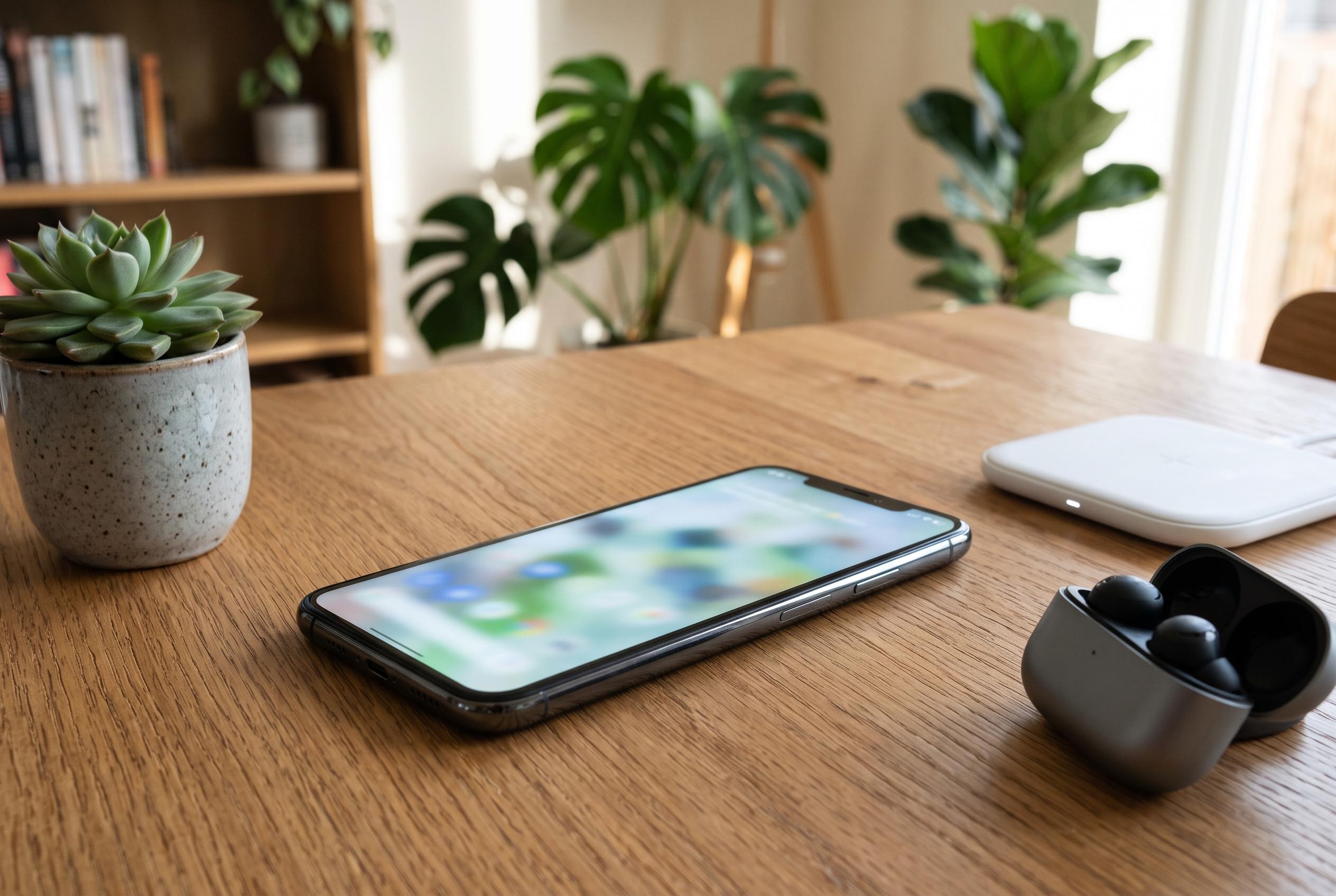

The Edge 2026 is slimmer, brighter and better protected, but Motorola’s latest mid-range phone drops the telephoto camera, halves storage and trims battery capacity compared with the Edge 2025.
Motorola’s latest Edge for the US market is not the automatic winner many shoppers may expect. According to the company’s specification sheet and early reviews, the Edge 2026 is a more compact and better protected handset, with a brighter display, newer chip and faster memory. Yet the older Edge 2025 still has the more practical hardware mix for many buyers, chiefly because it keeps a 3x telephoto camera, offers double the storage and carries a larger battery. In other words, this is not a simple year-on-year upgrade; it is a trade-off.
The most obvious change is size. Motorola has trimmed the Edge 2026 down to a 6.3-inch display, compared with the Edge 2025’s 6.7-inch panel. The newer model also pushes peak brightness higher, with Motorola citing up to 5,200 nits and a Gorilla Glass 7i cover, while the older handset tops out at 4,500 nits. In everyday use, that should make the 2026 easier to read outdoors and more comfortable for one-handed use. The 2025, however, remains the better choice for video, reading and anyone who prefers a larger canvas.
Performance gains are more modest. The Edge 2026 moves to the MediaTek Dimensity 7450 with LPDDR5x memory, while the Edge 2025 uses the Dimensity 7400 Ultra with LPDDR4x RAM. That should give the newer phone a slight edge in responsiveness, but it is still a mid-range platform rather than a dramatic leap. For routine tasks such as messaging, browsing and streaming, both should feel broadly similar. The more meaningful difference is that Motorola has paired the 2026 with only 128GB of storage, whereas the 2025 offers 256GB and no microSD expansion on either model. For buyers who keep a phone for several years, that reduction is hard to ignore.
Camera hardware is where the older model pulls ahead most clearly. The Edge 2025 includes a main camera, an ultrawide camera and a dedicated 10MP telephoto lens with 3x optical zoom. The Edge 2026 replaces that zoom camera with a second 50MP ultrawide unit that doubles as a macro shooter. That may suit some close-up photography, but it cannot match true optical reach. Motorola’s processing style also remains a consideration: reviews of the 2026 from Android Central note attractive colour and dynamic range, but also some oversharpening and unreliable macro behaviour. For anyone who regularly photographs people, signage or distant subjects, the loss of the telephoto lens is a major downgrade.
Battery life and charging are close, but the 2025 still holds a slight advantage. Motorola gives the Edge 2025 a 5,200mAh battery, while the 2026 steps down to 5,000mAh. Both support 15W wireless charging, and Motorola lists fast wired charging on the newer device, with PhoneArena reporting 60W for the US model. The 2026 is also lighter and thinner at 160.5g and 7.2mm, compared with the 2025 at 181g and 8mm. That makes the latest phone feel more refined in the hand, and Motorola backs it with IP68/IP69 resistance and military-grade protection. The 2025 is also rated for strong durability, but the 2026 is the easier phone to carry and use daily.
Software support slightly favours the new model as well. The Edge 2026 launches with Android 16, while the Edge 2025 arrived with Android 15 and has already moved to Android 16, with Android 17 likely to be its final major update under Motorola’s stated policy of two Android upgrades and three years of security patches. Motorola’s interface remains clean and free of much bloatware, according to reviewers, which helps both devices. Even so, the decision largely comes down to priorities. The Edge 2026 is the slimmer, brighter and slightly fresher phone. The Edge 2025 is the more complete package, because it keeps the zoom camera, doubles the storage and offers more battery headroom. For many buyers, that makes it the better long-term choice.
Disclaimer: This content is intended for informational purposes only. Readers are advised to exercise their own judgement, conduct due diligence, or consult a qualified expert before acting on any information provided.