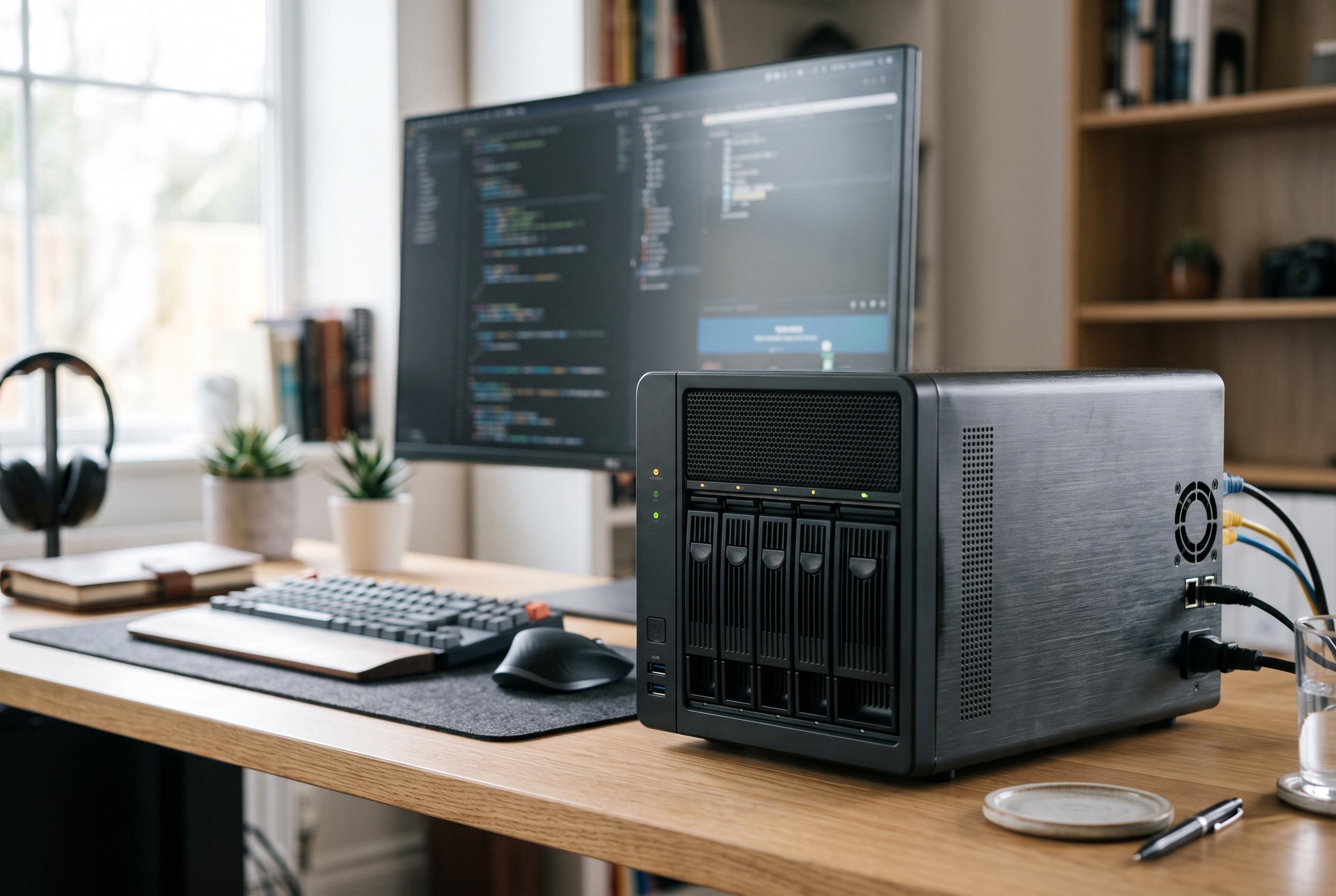

Ugreen’s eight-bay DXP8800 Ultra brings a faster Intel processor, expandable DDR5 memory and folder-level encryption to its high-end NAS range, although the Plus model remains the sharper-value choice for most buyers.
Ugreen’s NASync DXP8800 Ultra is a clear step up in the company’s 8-bay range, but not by changing the basic formula. As ComputerBase’s test shows, the new model keeps the same broad chassis concept as the DXP8800 Plus while swapping in a newer Intel Core 7 150U processor, stronger ceiling for memory expansion and the same dense mix of modern connectivity. It is still pitched as a high-end storage appliance, but one that now has more room to cope with heavier multi-user workloads, virtualisation and encryption tasks.
The most obvious hardware change is the move from Intel’s older Core i5-1235U to the Core 7 150U. Both chips have 10 cores and 12 threads, but the newer part has higher boost clocks and belongs to a later Raptor Lake generation. ComputerBase notes that this is unlikely to make single-file transfers feel dramatically faster, because the earlier model was already quick enough for that. The benefit should be more visible when several services are running at once, or when the NAS is handling encrypted folders, Docker containers and other background jobs at the same time. TechRadar and other reviews of the same system reached a similar conclusion, describing the Ultra as powerful, but only modestly faster in practice than the less expensive Plus variant.
Ugreen has also added native folder encryption in UGOS Pro, the operating system that runs the NAS. According to ComputerBase, this feature arrived with UGOS Pro 1.18.0 in August 2026 and closes one of the more obvious gaps in Ugreen’s software stack. The encryption works at folder level rather than across an entire volume, which makes it more flexible for mixed-use systems where only some shares need protection. It also supports existing folders, and once a folder is mounted, the data can be used normally by system apps and services. If it is unmounted, access stops immediately, including for applications such as Photos, Music or Docker containers. That makes the feature more practical than the company’s earlier vault-style approach, which was more isolated and less convenient for shared workflows.
In terms of storage and expansion, the DXP8800 Ultra remains firmly aimed at users who need both capacity and speed. It has eight 3.5-inch drive bays, support for 2.5-inch drives, two M.2 slots for NVMe SSDs and RAID options covering JBOD, Basic, RAID 0, RAID 1, RAID 5, RAID 6 and RAID 10. ComputerBase says the unit can reach up to 272TB with eight drives installed. The platform ships with 8GB of DDR5 memory, but Ugreen has kept the SO-DIMM layout modular, so users can replace and expand it rather than being forced to live with soldered RAM. Officially, the machine supports up to 96GB, which is more than the DXP8800 Plus can accept on paper. Like the rest of the Intel platform, however, it does not support ECC memory.
Connectivity remains one of the DXP8800 Ultra’s strongest points. The NAS offers dual 10GbE ports, dual Thunderbolt 4 connections, HDMI, SD card support, USB-A and USB-C ports, and an internal PCIe Gen4 x4 slot. Ugreen also supports both link aggregation and SMB multichannel, which matters in larger homes or small offices where several clients may hit the device at once. ComputerBase also highlights the hardware design: a metal enclosure, two 92mm fans, a 250W internal power supply and a tidy mainboard layout that is accessible, though not effortless, once the case is opened. The result is a system that looks more like a compact server than a simple network drive. That impression is reinforced by the software ecosystem, which now includes surveillance tools, Docker-based applications and cloud-sync functions, even if UGOS Pro still trails Synology’s DSM in depth and maturity. For buyers weighing value against headroom, the wider market view is much the same: the Ultra is the more capable machine, but most users are still likely to find better value in the Plus unless they know they will use the extra memory ceiling, CPU headroom and software headroom the Ultra provides.
Disclaimer: This content is intended for informational purposes only. Readers are advised to exercise their own judgement, conduct due diligence, or consult a qualified expert before acting on any information provided.