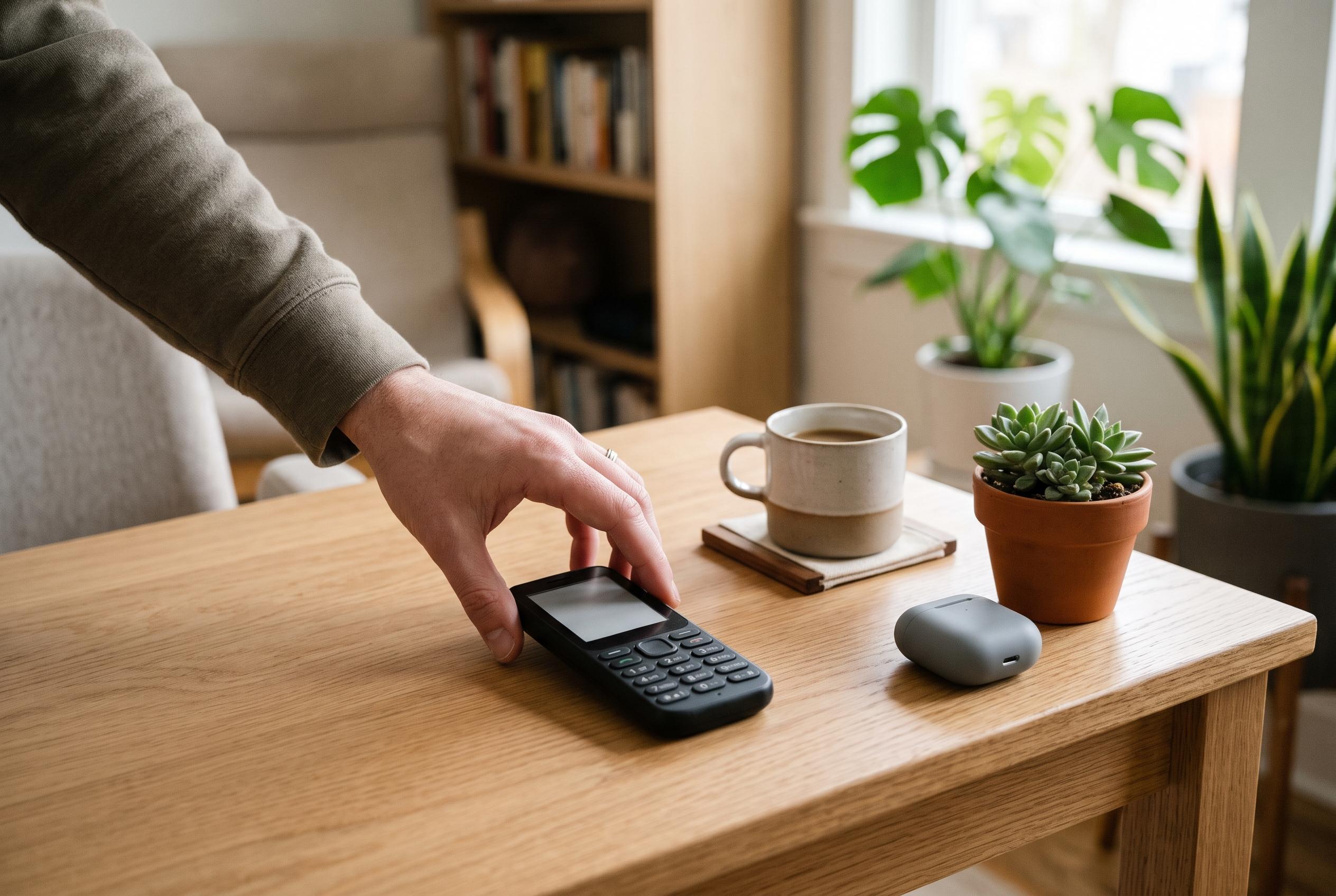

From stripped-back Nokia handsets to privacy-focused models that still run selected apps, the latest dumb phones offer more nuanced ways to cut distraction and data collection.
The appeal of the dumb phone is no longer just nostalgia. These devices, also called feature phones or minimalist phones, are being bought by people who want fewer distractions, fewer apps and, in many cases, less exposure to data collection. Proton VPN’s guide argues that the modern market now spans everything from near-barebones handsets to stripped-down devices that still support a handful of key services, giving buyers a wider set of trade-offs than the term “dumb phone” suggests.
At the upper end of that spectrum sit devices such as the Mudita Kompakt, Sidephone SP-01 and Light Phone III. Proton VPN describes the Mudita Kompakt as the least abrupt route away from a smartphone, because it keeps essentials such as maps, music and a camera, while also offering a physical privacy switch that disables cellular, microphone, Wi-Fi, Bluetooth and camera functions. The Sidephone takes a different approach, with a curated app library that includes WhatsApp, Signal, Proton Mail and Proton VPN, plus the option to sideload more software. The Light Phone III is more restrictive still, with no browser, email or social media, and a design intended to prevent endless scrolling rather than to imitate a conventional smartphone.
For buyers who want a cheaper or less demanding switch, the market also includes the TCL Flip 4 5G and Nokia 225 4G. Proton VPN presents the TCL model as a low-cost trial option because it still includes built-in access to Google Maps, YouTube, email and a browser, but the trade-off is heavier reliance on Google services and weaker privacy protections. The Nokia 225 4G goes further in the opposite direction: it focuses on calls and texts, with only very limited web access. That simplicity makes it useful as a backup handset, a travel phone or an entry-level device for an older relative or child. Digital Camera World’s recent buying guides make a similar point about basic handsets, noting that 4G compatibility matters because 2G and 3G networks are being phased out in several markets.
The child-phone question is where the category becomes most practical. Proton VPN says parents should consider three issues before buying a first phone: whether the device can be restricted online, whether installation can be controlled, and whether losing it would be costly. Its guide argues that a simple model such as the Nokia 225 4G is often the easiest compromise, because it supports calls and texts without offering an app ecosystem that competes for attention. Where more control is needed, some child-focused brands add filters or monitoring tools, although that raises its own privacy questions because scanning activity can mean reading messages as well.
The broader revival of dumb phones is tied to the digital minimalism movement. Shift’s guide to digital minimalism says the aim is to reduce digital clutter deliberately, not merely to cut screen time. That idea helps explain why some users move beyond app blockers and notification controls: if the most absorbing tools remain in the pocket, restraint becomes difficult. A dumb phone removes that temptation by design. Proton VPN also links the trend to privacy concerns, arguing that every smartphone app creates another path for location, usage and behavioural data to leave the device.
That does not make a dumb phone a complete privacy solution. Proton VPN notes that many feature phones still rely on regular SMS, which is not end-to-end encrypted, and some models cannot run a VPN at all. Security support is another weak point, particularly on cheaper devices or phones from smaller manufacturers, where software updates may be limited or irregular. The article therefore treats the basic phone as a reduction in exposure rather than a guarantee of safety. In some contexts, though, that reduction matters a great deal: it is useful for journalists, finance workers, government staff and older relatives who need a simpler handset with fewer data risks. For readers weighing the category, the main question is not whether a dumb phone can replace a smartphone entirely, but whether it can remove enough temptation and tracking to make daily use more intentional.
Disclaimer: This content is intended for informational purposes only. Readers are advised to exercise their own judgement, conduct due diligence, or consult a qualified expert before acting on any information provided.