
Video analytics are turning domestic security cameras from passive recording devices into systems that can identify people, vehicles and meaningful activity while filtering out false alarms.
Home video analytics are changing the way domestic security cameras are used. Instead of simply recording everything that moves, the software is designed to interpret what the camera sees and decide which events are worth flagging. A delivery driver on the path, a car entering the drive, or a package left at the door can be treated differently from a cat, a swaying branch or passing traffic. The result, according to Fluent Home’s guide, is a system that is less noisy, more useful and better suited to everyday life.
At its simplest, the technology turns raw camera footage into structured information. Industry explainers from AvidBeam, Flowlinks AI and the Multisensor Project describe video analytics as a combination of computer vision and machine learning that can detect objects, recognise patterns and convert video into data that can be acted on in real time. In practical terms, that means a homeowner is not forced to sift through hours of footage after the event. The camera can instead send a more selective alert when something meaningful happens.
Several features stand out as particularly valuable in a residential setting. Person detection helps separate human movement from ordinary background motion, while vehicle detection can identify arrivals in a driveway or activity near parked cars. Activity zones allow the user to define where the camera should focus, which is especially important near roads, neighbouring gardens or busy pavements. Fluent Home says these settings are central to reducing false alarms and making notifications more relevant.
Smart alerts and event clips are most effective when they are combined. A notification alone is only a prompt; a short clip gives the context needed to decide whether the event is routine or suspicious. Advanced systems can go further, with AI-enhanced deterrence using lights, sound or other responses to make a property less attractive to an intruder. As Fluent Home notes, this is a different proposition from passive recording: it is intended to support faster intervention, particularly when monitoring is linked to professional response.
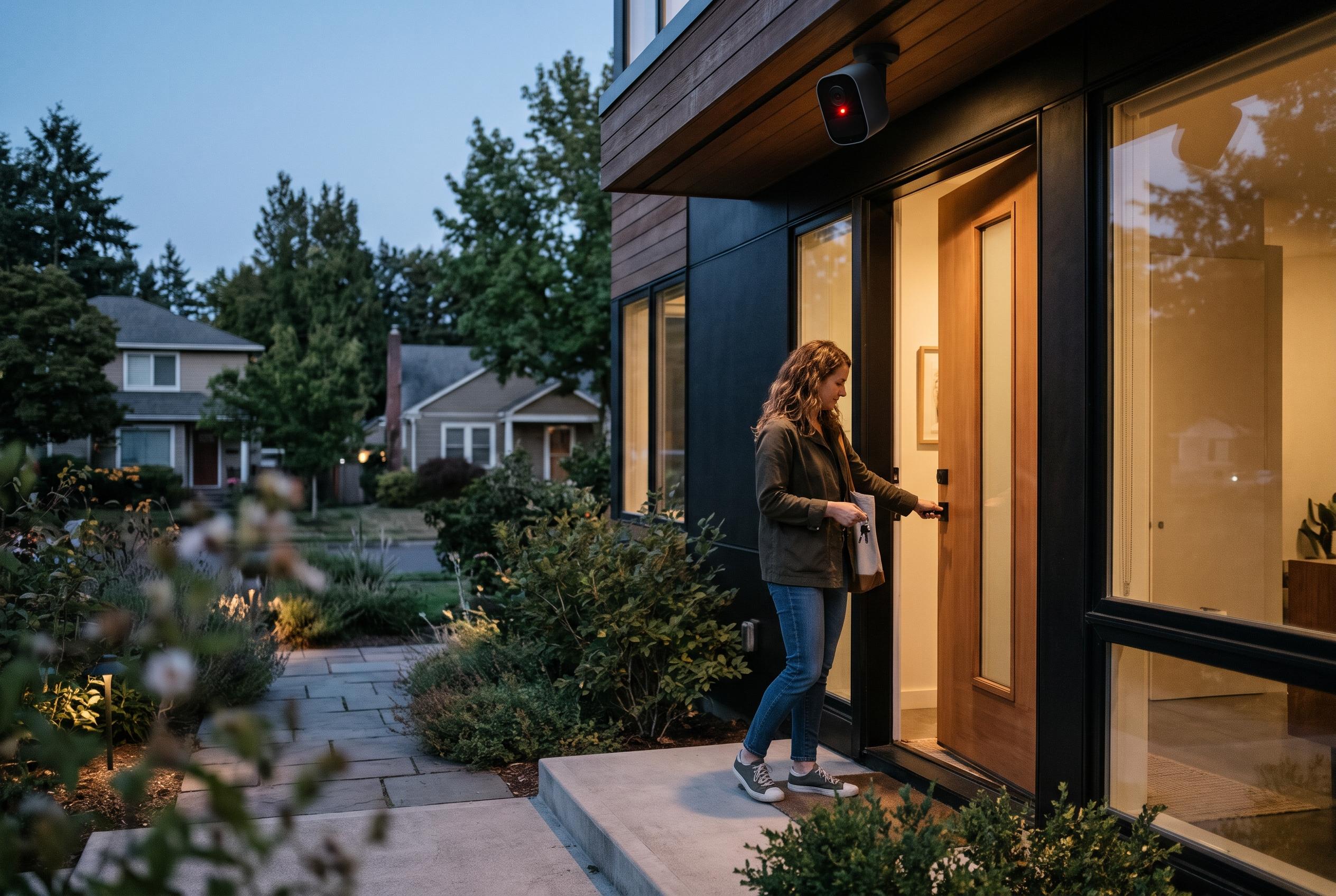
The places where these tools matter most are predictable. Front doors are a priority because they capture visitors and parcels. Driveways are useful for tracking vehicles and movements towards garages. Side yards, back gardens and other less visible areas can also be important, especially where gates, patio doors or detached buildings create alternative access routes. For small businesses, the equivalent priorities are external entrances, loading points, storage areas and controlled access doors.
Installation still determines how well the analytics perform. A camera with strong software will still struggle if it is placed too high, angled badly or blocked by landscaping. Lighting matters too, as backlighting and poor night visibility can obscure faces, parcels and other details. Fluent Home’s guide stresses that professional installation helps ensure cameras are aimed at the right areas and connected in a way that supports reliable monitoring. That point is echoed by wider industry guidance, which notes that analytics are only as useful as the quality of the image they are asked to interpret.
There is also a privacy element that cannot be ignored. Fewer pointless alerts are only part of the benefit; a well-managed system should also protect access to the account itself and respect the boundaries of neighbouring property. The most effective home security set-up is one that is configured deliberately, reviewed after installation and adjusted as routines change. In that sense, video analytics are not merely about better cameras. They are about turning surveillance into a more precise, more responsive and less intrusive security tool.
Disclaimer: This content is intended for informational purposes only. Readers are advised to exercise their own judgement, conduct due diligence, or consult a qualified expert before acting on any information provided.