

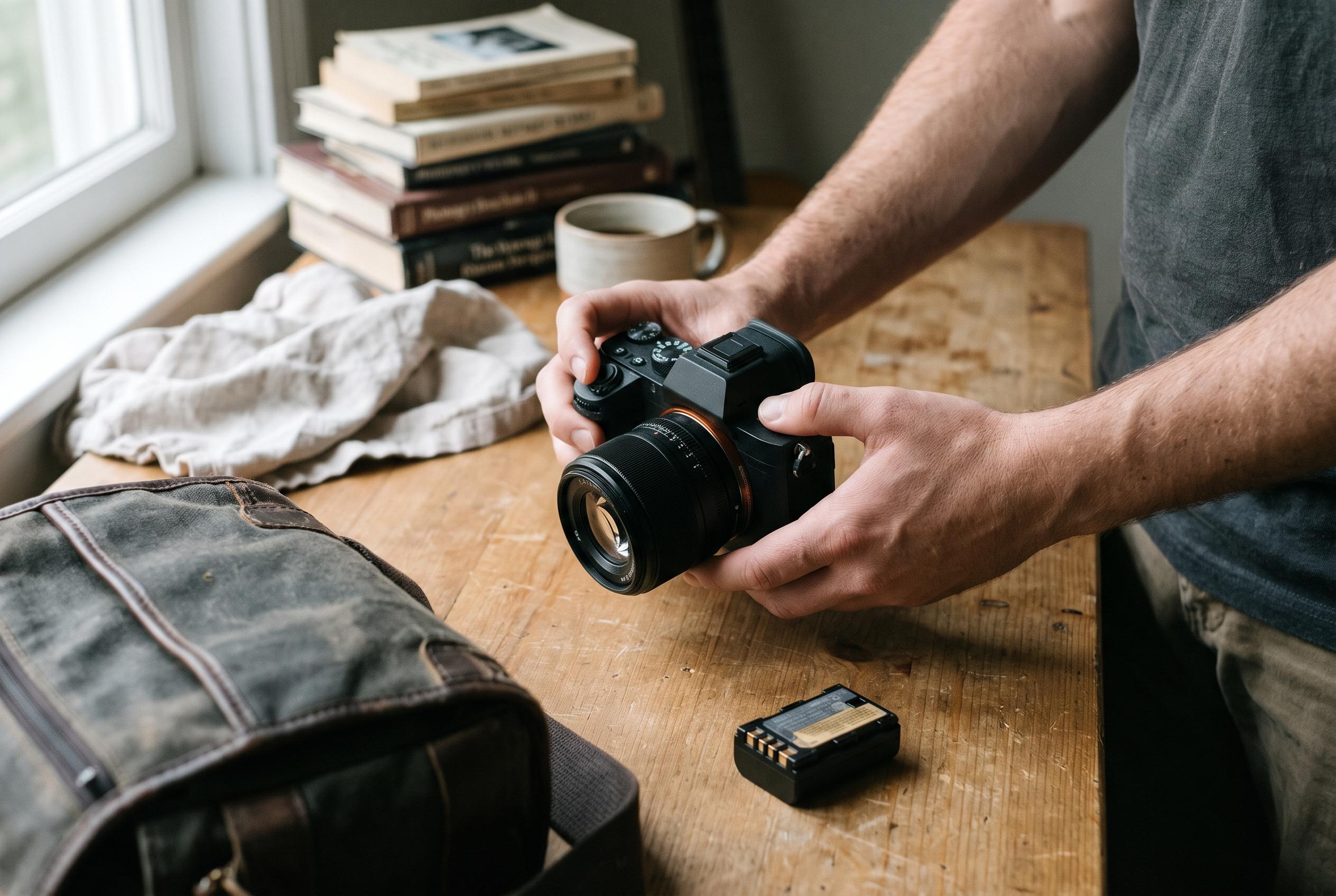

The $1,899 camera gains in-body stabilisation, improved controls and new video tools, but unchanged battery life leaves buyers balancing portability against endurance.
Canon’s EOS R8 Mark II arrives at $1,899, placing it awkwardly between the original R8 and the larger EOS R6 Mark II. According to Canon’s launch announcement and independent hands-on testing, that pricing leaves buyers weighing a small body against a meaningful list of new features, rather than simply choosing the cheapest full-frame option. The question is no longer whether the R8 line is capable, but which compromises matter most in practice.
The clearest upgrade is in-body image stabilisation. In Josh Sattin’s comparison for Fstoppers, handheld street footage from the Mark II remained steady without electronic or post-production correction, with lens stabilisation and the camera’s sensor-shift system working together on an RF 24-70mm f/2.8L IS USM. The sensor itself has not changed: Canon still uses a 24.2-megapixel full-frame chip, also found in the original R8 and the R6 Mark II, and the camera continues to oversample 6K capture for 4K recording at up to 60 frames per second. That means image character remains familiar, but the stabilisation is now far more useful for run-and-gun shooting.
In video work, the Mark II keeps the same compact-camera appeal while adding practical tools that Canon has pushed into newer bodies. According to Canon’s specifications and Sattin’s test, the camera now offers Slow and Fast mode for in-camera speed changes, custom LUT loading, false colour, and recording options including XF-HEVC S and XF-AVC S in Long GOP formats. The body also gains a longer stated recording limit of six hours, up from two hours on the original R8. Sattin found that neither camera overheated in a controlled 4K 24p studio test, although he noted that the Mark II can still overheat during longer indoor sessions.
Battery life remains the main limitation of the compact design. Both R8 models use Canon’s LP-E17 battery, and Sattin measured almost identical endurance in a side-by-side test, with the Mark II lasting one hour and five minutes and the original R8 lasting one hour and seven minutes. By contrast, the larger R6 Mark II, with its bigger battery, ran for two hours and 17 minutes in his earlier testing. That difference underlines the central trade-off in Canon’s compact full-frame range: the smaller body is easier to carry, but it cannot match the stamina of a larger camera.
Handling has improved in ways that matter more than the spec sheet suggests. The Mark II adopts a more angular body shape, adds a rear joystick and tally light, and relocates the card slot so it remains accessible even when a tripod plate is fitted. Canon has also shifted the stills and video selector onto the power switch, making it easier to change modes with the right hand while the left supports a long lens. Burst shooting remains at 40 frames per second, but the buffer has grown to 73 raw files and 190 JPEGs, according to Canon’s own specifications. The camera still relies on micro HDMI and offers only two control dials, so it remains firmly in the entry-level part of the market.
That makes the R8 Mark II less of a clean replacement and more of a targeted refinement. TechRadar and DPReview both place it in the same broad category: a compact full-frame camera that borrows much of its imaging core from more expensive models, while retaining the compromises that keep it small and relatively affordable. The comparison with Sony’s compact full-frame line is instructive. Sony has long used the same basic sensor and processor pairs in smaller bodies such as the a7C II, while leaving differences to controls, viewfinder size and card slots. Canon is now following a similar logic, but with a smaller battery and a stronger emphasis on handling changes and video tools. For buyers, the decision comes down to what they use most often: stabilisation, battery endurance, dual-slot redundancy, or simply the camera that is most likely to travel with them.
Disclaimer: This content is intended for informational purposes only. Readers are advised to exercise their own judgement, conduct due diligence, or consult a qualified expert before acting on any information provided.



