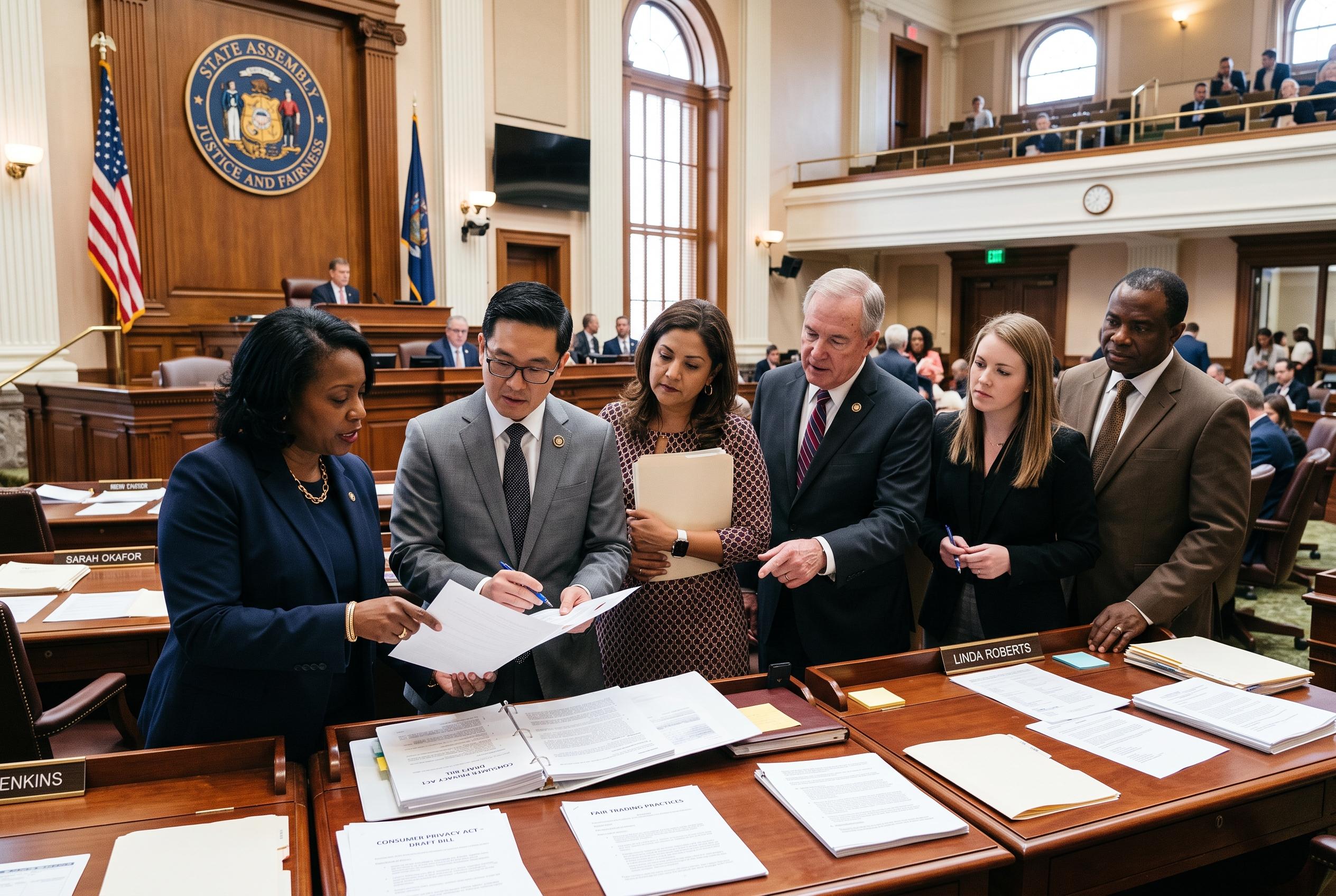

Maryland, New Jersey and Connecticut pioneer legislation to curb the use of personal data in determining retail prices, amid wider debates on privacy and fair trading practices in the US.
Maryland, New Jersey and Connecticut have become the first states to put formal limits on a practice consumer advocates call surveillance pricing, as lawmakers move to curb the use of shopping data, browsing behaviour and other personal information to set different prices for different people.
The laws take different forms. Maryland’s measure, which took effect on October 1, is aimed at large grocery stores and third-party food delivery services. According to the International Council of Shopping Centres, the law bars those businesses from using personal data to charge a specific shopper more for most groceries, while still allowing loyalty schemes, subscription pricing and price changes tied to supply, location or operating costs.
New Jersey’s law, signed in July, is narrower in one respect and broader in another. The statute prohibits retailers from using personal data to individualise grocery prices and also imposes a one-year pause on new electronic shelf labels while the state studies their impact. Existing digital labels may remain in place. In a statement reported by The Guardian, Governor Mikie Sherrill said families were already under pressure from higher costs and should not be charged more for the same product because of hidden data use.
Connecticut’s law, signed in June, goes further by broadly banning retailers and third-party delivery services from using surveillance pricing, while still carving out exceptions for discounts and price differences unrelated to a shopper’s personal data. Consumer groups say the practice is hard to spot because shoppers usually cannot see what someone else is paying. Retail and technology groups, by contrast, argue the new rules could sweep too widely and make it harder for businesses to run discounts, rewards schemes and other pricing programmes. Lawmakers in at least 11 states considered similar bills this year, showing how quickly the issue has spread.
Disclaimer: This content is intended for informational purposes only. Readers are advised to exercise their own judgement, conduct due diligence, or consult a qualified expert before acting on any information provided.