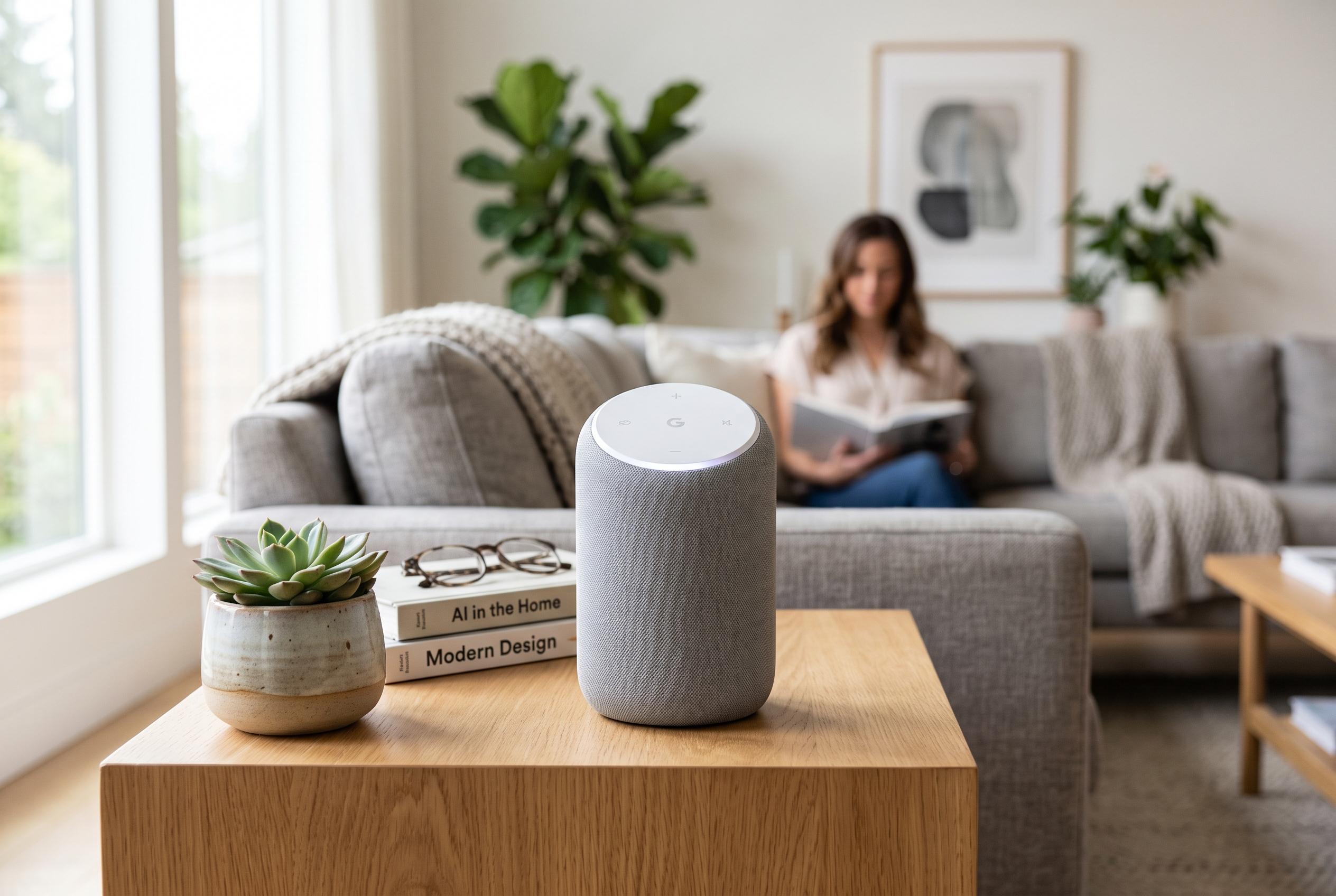

Google’s latest Home Speaker doubles as a gateway to its new Gemini AI platform, with advanced conversational features behind a paywall, transforming the smart speaker into a hub for paid AI-powered home automation.
Google’s new Home Speaker is not just another $99 smart audio device; it is the clearest sign yet that the company wants Gemini, not Google Assistant, to sit at the centre of the connected home. Google has designed the speaker as an entry point into its new Gemini for Home platform, with support for natural back-and-forth conversations, multi-step commands and tighter links to Android, Nest and other connected devices. The company says the software is rolling out across eligible devices once users opt in, including the new speaker.
The hardware is built to support that shift. Google says the device includes a 58mm full-range driver for 360-degree sound, three far-field microphones, Wi-Fi 6, Bluetooth 5.4, Thread 1.3 support and a quad-core Cortex-A55-class processor with a dedicated NPU. The speaker also has a physical microphone mute switch, touch controls on top and a light ring that gives visual feedback while it is listening or processing a request. Google says the shell is made using 39% recycled materials and finished in fabric.
The bigger change is that the most useful AI features are not bundled into the purchase price. Google Home Premium starts at $10 a month for the Standard plan and rises to $20 a month for Advanced, which adds features such as 24/7 video history and more descriptive notifications. Google says Home Premium replaces Nest Aware and unlocks Gemini Live, Ask Home, home automation tools and richer camera features on compatible devices. That means the real cost of the speaker will depend on how much of Google’s new assistant layer users want to keep after the six-month trial ends.
That subscription-first model also helps explain why the Home Speaker matters beyond its modest launch price. The company is turning the device into a hub for Matter-compatible smart homes, with Thread border router support, stereo pairing and multi-room audio grouped across Google and Cast devices. Reviewers at T3 said the refreshed design and conversational voice assistant make it feel more modern than earlier Nest speakers, though they also noted some early reliability issues, including delayed responses and timer errors. Even so, Google’s direction is clear: the speaker is less a one-off gadget than a gateway to a paid AI home platform.
Disclaimer: This content is intended for informational purposes only. Readers are advised to exercise their own judgement, conduct due diligence, or consult a qualified expert before acting on any information provided.