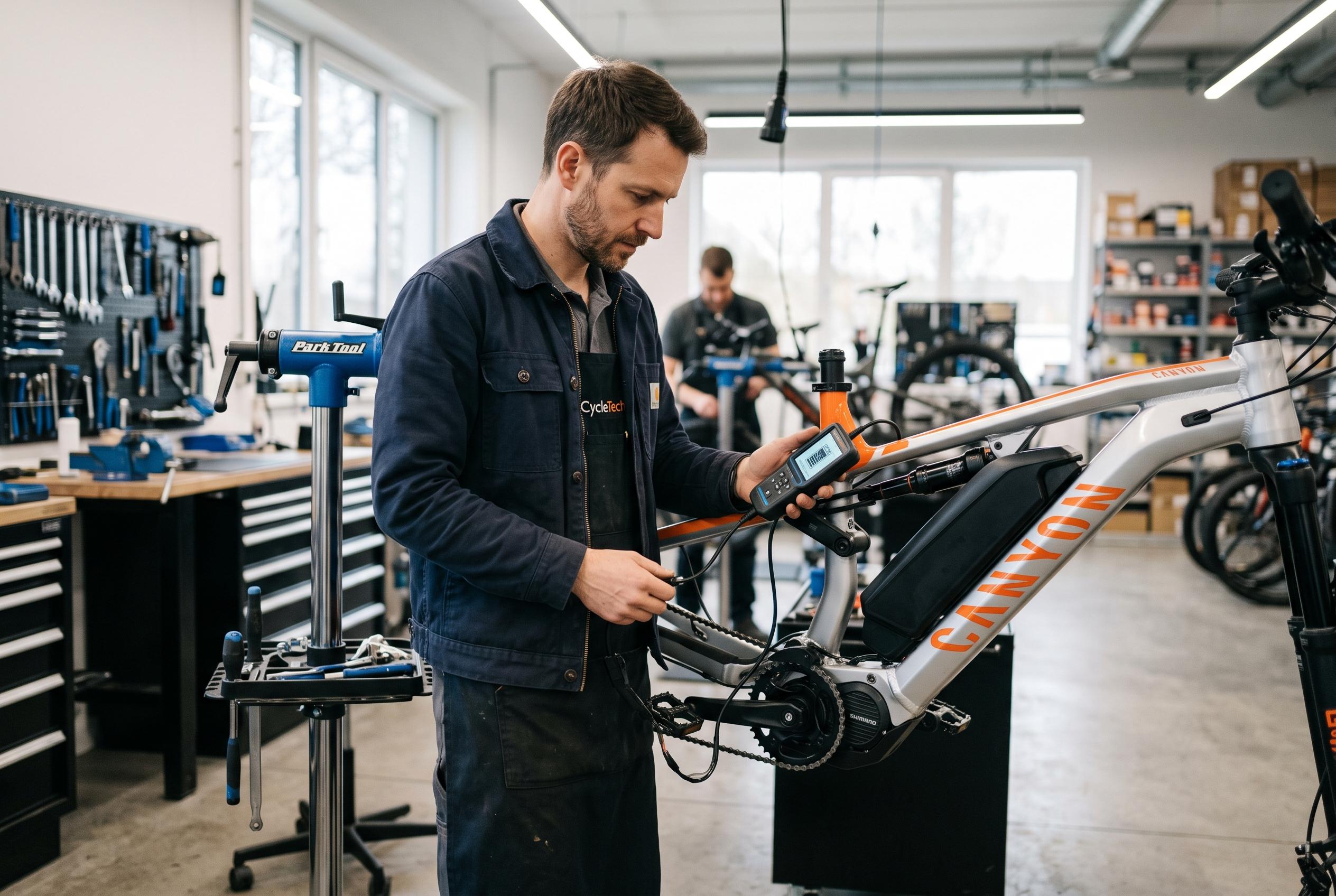

E-bike riders experiencing mid-ride motor cut-outs can often identify causes by examining the battery, sensors, and heat, with many repairs being straightforward and avoiding full system replacement.
An e-bike motor that cuts out mid-ride is usually signalling a problem with power delivery, sensor input or a built-in safety shut-off rather than a total failure. In many cases, the fault is simple: a battery that is not seated properly, a brake sensor that is falsely engaged, a speed sensor that has drifted out of alignment or a connection that has worked loose over rough ground. Guides from Himiway, Macfox, Estar Bikes and other manufacturers all point to the same basic pattern: the bike often gives clues before the motor stops, and those clues can narrow the fault quickly.
The first place to look is the battery. Voltage can sag under hard acceleration, steep climbs or heavy loads, which may trigger low-voltage protection even when the display still shows charge remaining. Cold weather, older cells and batteries that have been stressed repeatedly are more likely to behave this way. A loose battery cradle or dirty terminal pins can produce a similar result, briefly interrupting power whenever the bike hits a bump or flexes under load. Several repair guides also note that the battery management system may shut things down if it detects overheating, overcurrent or cell imbalance.
Sensors are the next common weak point. A brake cut-off switch that sticks, a magnet that has slipped out of position or a pedal-assist sensor that cannot read cadence correctly can make the controller think the rider is braking or that assistance should stop. Speed sensors can cause similar trouble if the wheel magnet is too far from the sensor or covered in mud. The same applies to throttles, torque sensors and wiring looms: if the motor cuts out only in one mode, that usually points to the part that controls that mode rather than to the whole drive system.
Heat is another frequent trigger. E-bike controllers and motors are designed to protect themselves, so long climbs, towing, stop-start riding and hot weather can push them into thermal cutback or a temporary shutdown. Qiolor and Macfox both note that controller heat, especially in the MOSFETs that regulate power, can produce intermittent failures under load. If the bike recovers after a cooling-off period, that is a strong hint that overheating is involved. If the shutdown is accompanied by burning smells, grinding noises or a locked wheel, the damage may be more serious.
At that point, repair or replacement becomes a practical question. A motor with worn bearings, a failing hall sensor or damaged internal gears may be repairable, but burnt windings, cracked casings, water intrusion or shredded magnets often make replacement the better option. A common rule of thumb is the 50% test: if the repair bill is more than half the cost of a new motor, replacement usually makes more sense. That is especially true on older units, where a new motor may run cooler, work more efficiently and come with a fresh warranty. The broader lesson is that e-bike cut-outs are often diagnosable, and many can be fixed without replacing the entire system.
Disclaimer: This content is intended for informational purposes only. Readers are advised to exercise their own judgement, conduct due diligence, or consult a qualified expert before acting on any information provided.