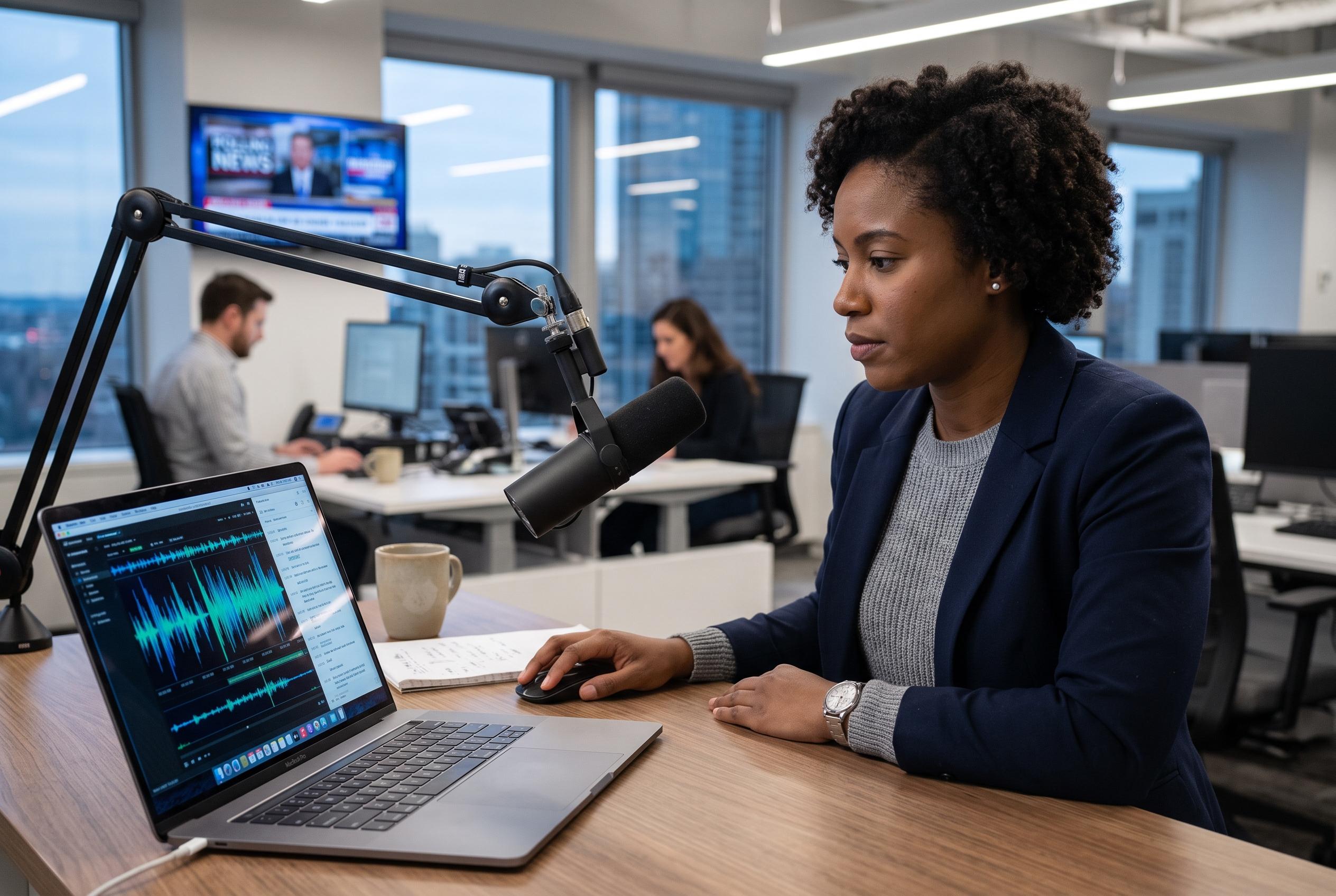

Summary AI launches a new AI transcription feature aimed at boosting accuracy and efficiency in professional settings, amid ongoing debates over privacy and oversight as automated transcription becomes more prevalent in newsrooms and workplaces.
Summary AI has introduced a new AI transcription feature aimed at helping newsrooms and other workplaces turn spoken conversations into searchable text more quickly, a move that reflects the growing role of automated transcription in professional documentation. According to the company’s announcement, the feature is intended to improve accuracy, accountability and workflow efficiency for interviews, meetings and calls.
The launch comes as more organisations rely on transcription software to capture discussions that once depended on handwritten notes or memory. Sonix says its newsroom-focused tools can transcribe interviews and press conferences in minutes, while QuillHub says about 79% of newsrooms now use AI transcription to handle interviews, field recordings and press events. Together, those figures point to a wider shift in how editorial and corporate teams manage spoken information.
Supporters of the technology say its main value is speed. DadaScribe says AI tools can produce a transcript of a 45-minute interview in under 2 minutes, compared with several hours for manual transcription. Sonix says its service can cut the time needed to transcribe audio dramatically while also offering collaborative editing and secure storage, features that matter in fast-moving newsrooms and other sensitive settings.
But the expansion of AI transcription has also sharpened concerns about accuracy and context. Sonix says its systems can reach 99% accuracy in newsroom use cases, though it also acknowledges that clear audio performs better than poor recordings. Industry commentary from Transcription Wing says human review remains essential, particularly where accents, technical terms or overlapping speakers can affect the quality of the first draft.
That tension between efficiency and oversight is central to Summary AI’s pitch. The company frames transcription not as a replacement for editorial or managerial judgement, but as a tool that can strengthen accountability by producing a record that can be checked against the original audio. That approach fits a broader industry trend: Microsoft has suggested better transcription could reduce the need for some meetings altogether, as workers catch up through reliable written records instead.
The challenge for organisations is to use the technology without creating unnecessary surveillance or weakening trust. Clear recording policies, visible consent practices, access controls and retention limits are becoming more important as AI transcription spreads. Summary AI’s launch enters that debate at a moment when many workplaces want faster documentation, but still expect human judgment to decide what is accurate, what is confidential and what should be shared.
Disclaimer: This content is intended for informational purposes only. Readers are advised to exercise their own judgement, conduct due diligence, or consult a qualified expert before acting on any information provided.