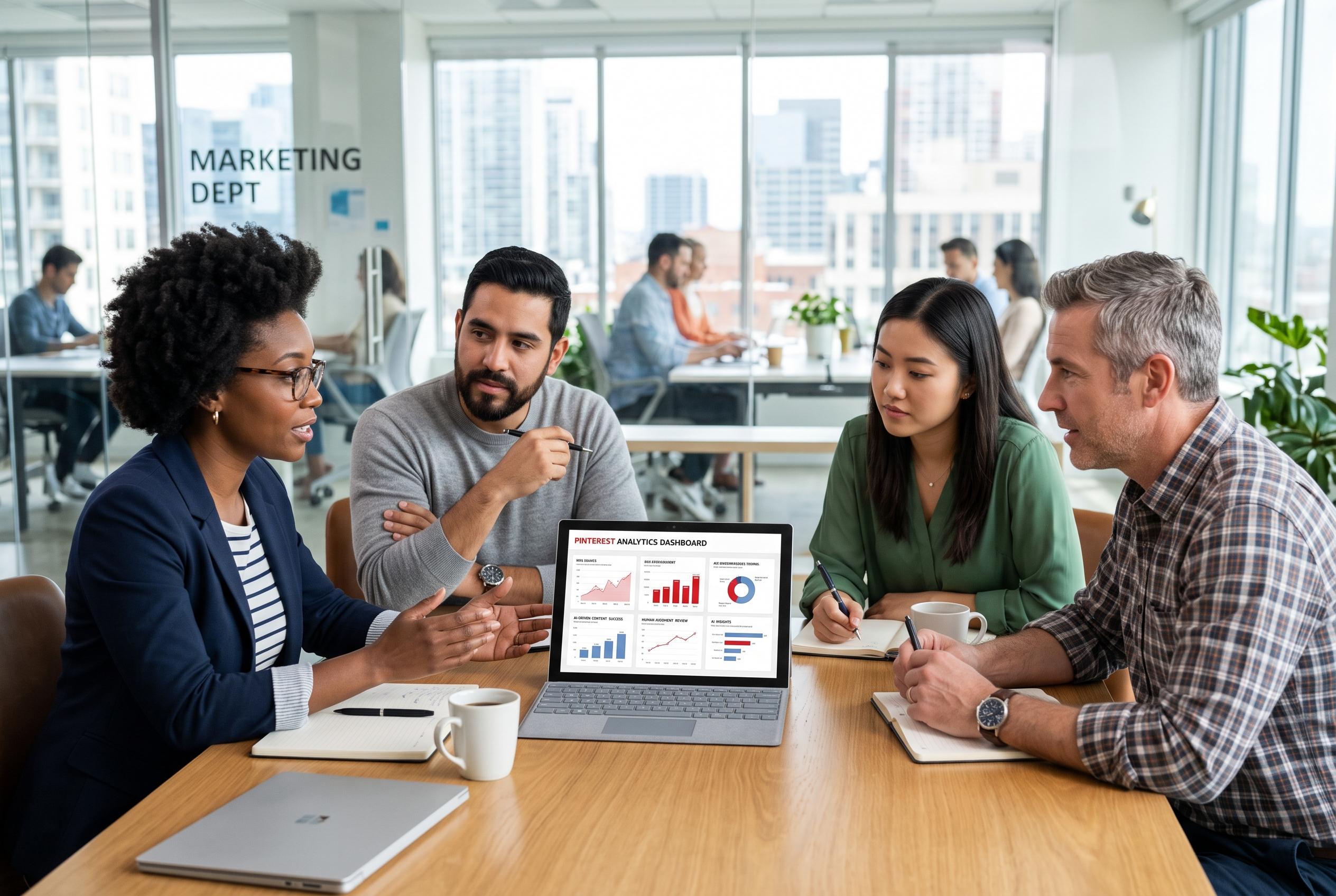

Pinterest is integrating AI to assist content creation and workflow automation, but human insight remains essential for effective marketing on the platform, as the company aims to balance innovation with authentic discovery.
Pinterest is moving further into artificial intelligence at the same time that marketers are using it to remove repetitive work. According to Axios, the company appointed David Brinker as global head of content in August 2026, with responsibility for content experiences spanning visual search, discovery and shopping. That hire reflects a wider push by chief executive Bill Ready to turn Pinterest into a more AI-driven commerce platform while still presenting it as a calmer alternative to conventional social media.
That broader shift helps explain why the question of whether AI can replace manual Pinterest marketing has become so relevant. In practical terms, the answer is no. AI can now assist with topic research, keyword suggestions, Pin copy, image generation and scheduling, but it still cannot understand an audience, judge tone or decide whether a recommendation is genuinely useful. The core value in Pinterest marketing remains human judgment.
The most effective use of AI is as a production aid. Pinterest-focused tools now cover search optimisation, hashtag discovery, audience analysis and click-focused Pin creation, according to RankMyPin. Other services reviewed by Aitoolsort in 2026 focus on different parts of the workflow, including Canva for design, Tailwind for SEO and bulk scheduling, Buffer for simpler publishing, Later for team collaboration and Ideogram for image-led graphics. Pinterest itself has also been adding AI features, including Business Assistant, Pinterest Model Context Protocol and enhanced Performance+ creative tools, alongside a limited-access “Ask Pinterest” app for AI-powered shopping experiments, according to the company’s newsroom.
Even so, the strongest accounts of Pinterest growth still come back to consistency and original value. AI can speed up drafting and repurposing, but it does not replace clear titles, useful descriptions, organised boards or trustworthy content. It also cannot read search intent the way a creator can. That matters on a platform built around discovery rather than conversation, where users typically arrive looking for ideas, instructions or purchase guidance.
The more realistic strategy for 2026 is to combine automation with editorial discipline. Use AI for brainstorming, outlines, image concepts and scheduling, then edit manually, tighten the messaging and keep the brand voice consistent. Measure outcomes beyond traffic alone, including saves, click-through rates and returning visitors. The marketers most likely to benefit from Pinterest’s AI era will not be the ones automating everything, but the ones using software to clear the busywork while keeping the work itself genuinely helpful.
Disclaimer: This content is intended for informational purposes only. Readers are advised to exercise their own judgement, conduct due diligence, or consult a qualified expert before acting on any information provided.