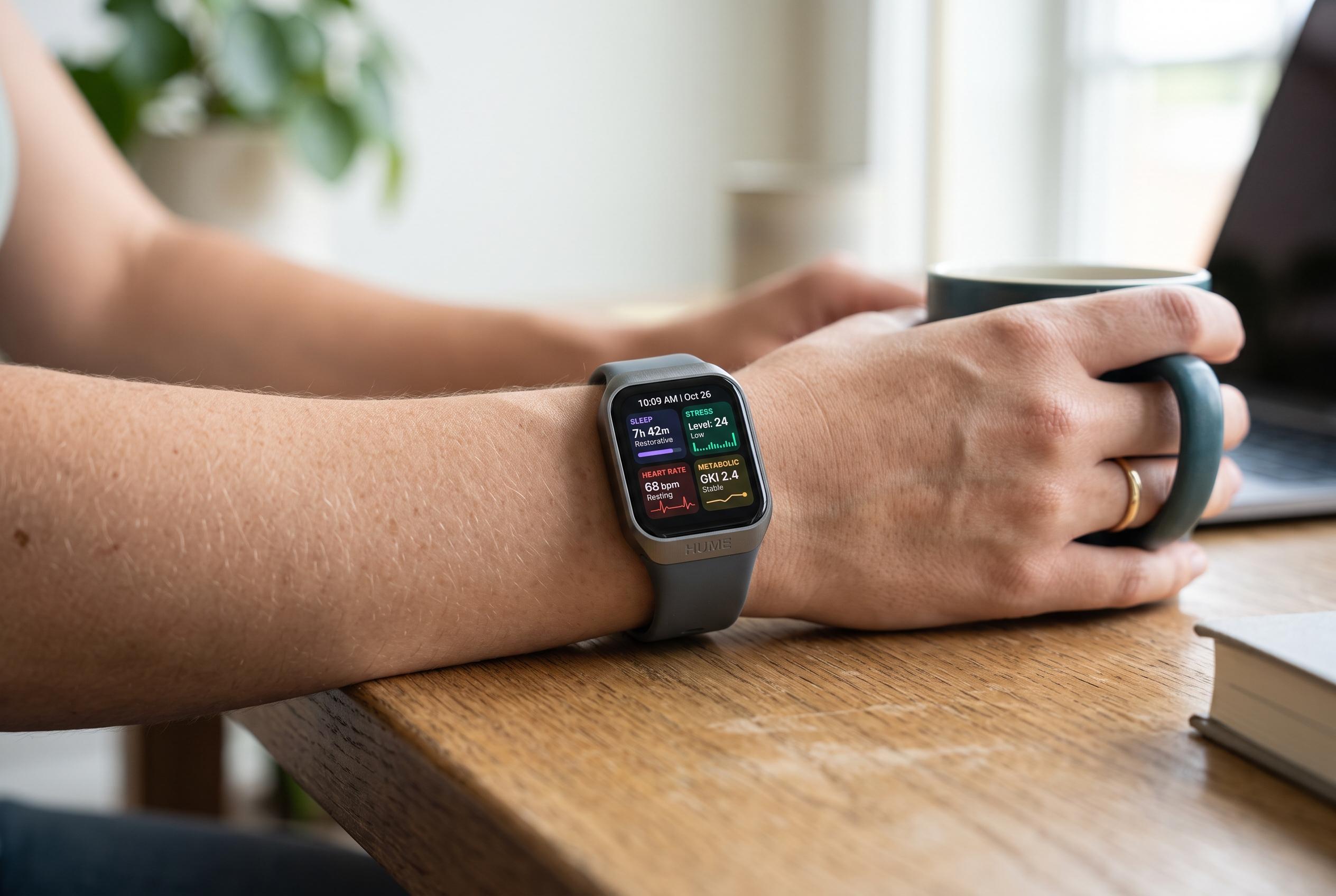

Hume Health’s new Hume Band 2.0 distinguishes itself by combining sleep, stress, heart rate, and metabolic data into a unified picture, promising a more comprehensive approach to personal health and recovery.
A growing number of wearable devices promise to tell users how they slept, how hard they trained and how stressed they are. Hume Health says the Hume Band 2.0 is built to do something different: combine those measures into one picture rather than leaving them as separate figures. The company describes it as a screenless wellness tracker that follows sleep, recovery, strain, heart rate patterns, stress and activity, with the aim of showing how one part of the day affects another.
That approach matters because isolated numbers can be misleading. A normal resting heart rate or a decent total sleep time does not necessarily mean the body has recovered well. Hume Health says the band uses a metabolic framework built around capacity, strain and recovery, then folds in signals such as heart rate variability, blood oxygen saturation and sleep stages to estimate whether the body is adapting or accumulating load. In practical terms, the device is designed to flag when a person may need to reduce effort rather than simply chase more activity.
The band also goes beyond the basics often found on mainstream fitness wearables. Hume Health says it tracks SpO2, skin temperature, respiratory rate and blood pressure trends, and presents the results through higher-level scores such as Metabolic Capacity and Metabolic Momentum. The company also says it offers a biological-age estimate, which is intended to help users judge long-term trends rather than day-to-day readings alone.
That broader pitch is aimed at users who want context, not just counts. Hume Health says the device can reveal patterns such as elevated stress before bed, poor recovery after heavy exertion or signs that heart-rate variability is drifting away from a user’s normal rhythm. Independent review sites describe similar features, including heart resilience, sleep-stage analysis and circadian HRV tracking, although those claims should be treated as vendor-led marketing unless verified in clinical testing. As with any wellness product, the company says the band is not intended to diagnose or treat disease.
Disclaimer: This content is intended for informational purposes only. Readers are advised to exercise their own judgement, conduct due diligence, or consult a qualified expert before acting on any information provided.