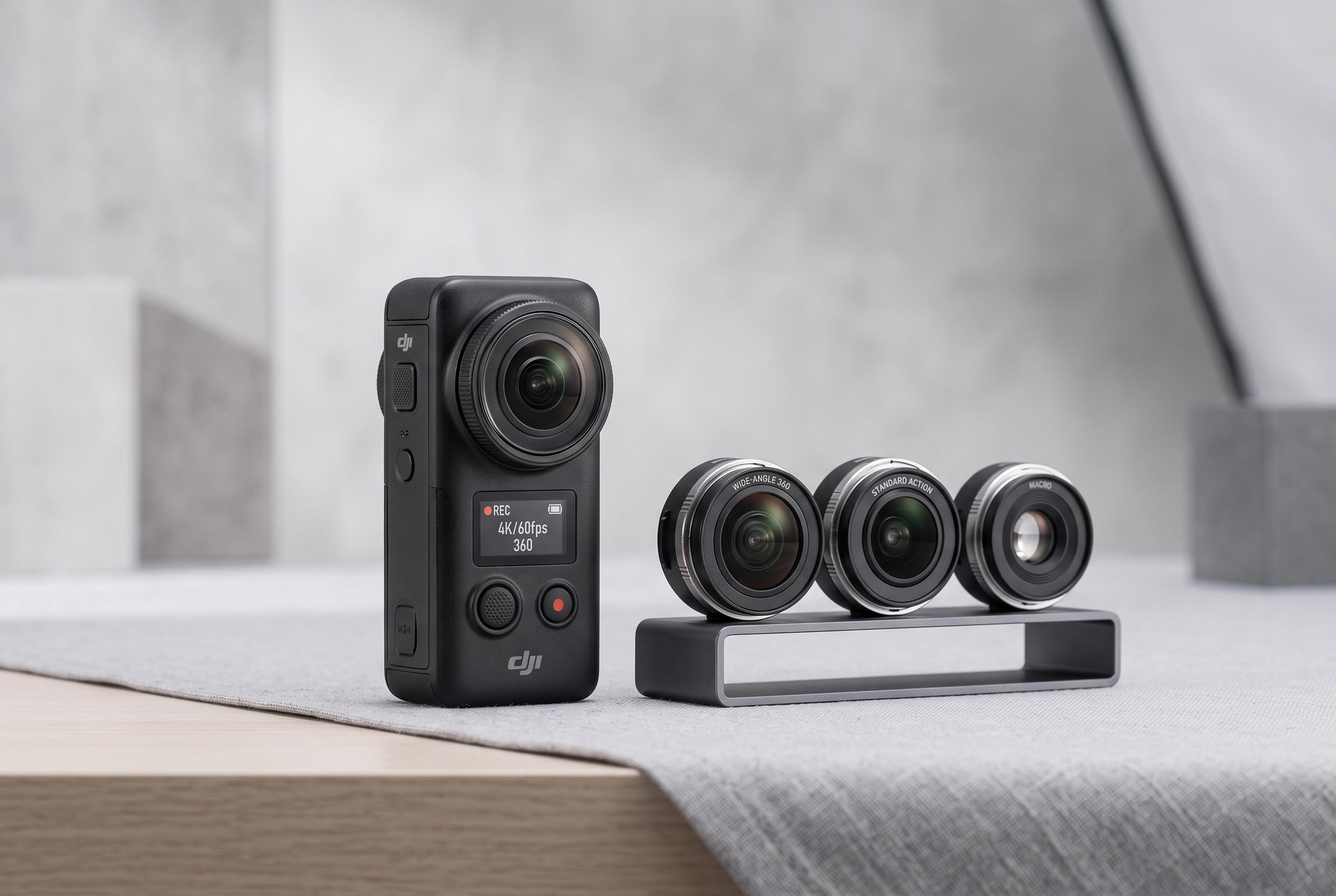

DJI opens reservations for the new Osmo 360 II in China, promising significant upgrades including replaceable lenses, 8K/60fps video, and enhanced connectivity features, with a launch date set for August 13 amid a complex global regulatory backdrop.
DJI has opened reservations in China for the Osmo 360 II and set August 13 as the camera’s launch date, putting a firm timetable on the company’s next 360-degree model after weeks of speculation. According to the company’s Chinese store page, the reservation system went live on Thursday, August 7, at 8 pm Beijing time, with the launch scheduled for 8 pm local time on August 13. The move suggests DJI is again taking a China-first approach, while leaving buyers elsewhere without pricing or availability details for now.
The first signs point to a camera that keeps the same basic square-sensor design as the original Osmo 360, but with one of the most important complaints from the first generation addressed. Reports from DroneXL and The New Camera indicate that the new model should allow users to replace scratched lenses themselves, a significant change for a product category where exposed optics are part of daily use. For creators mounting a 360 camera on helmets, vehicles or drones, that is likely to matter more than any cosmetic revision.
Leaked specifications also suggest a step up in performance. The expected headline figure is 8K video at 60 frames per second, compared with 8K/50fps on the original Osmo 360, along with a larger 2,150 mAh battery, 27W USB-C charging, Wi-Fi 6 and NFC. That battery increase does not automatically mean longer recording times, however. Higher-resolution capture and faster processing can raise power demands, so real-world endurance will depend on how efficiently DJI balances heat, processing and battery draw once review units are tested.
DJI’s first Osmo 360, launched in 2025, offered native 8K 360-degree video, 120MP stills and up to 100 minutes of 8K/30fps recording, according to the company. Reviews from Tom’s Guide and TechRadar also highlighted the original model’s weak points, particularly its non-replaceable lenses and limited audio flexibility. Those shortcomings appear to have shaped the second generation. The remaining question is whether DJI can pair the hardware update with a smoother workflow, because the wider problem with 360 cameras is often not capture but editing, reframing and teaching users how to turn spherical footage into something usable.
For the US market, the launch lands against a difficult regulatory backdrop. DJI has not said whether the Osmo 360 II will be sold outside China, and recent product launches have shown how uncertain American availability can be. If the company does move ahead globally, August 13 should clarify whether this is just another domestic rollout or the start of a wider release.
Disclaimer: This content is intended for informational purposes only. Readers are advised to exercise their own judgement, conduct due diligence, or consult a qualified expert before acting on any information provided.