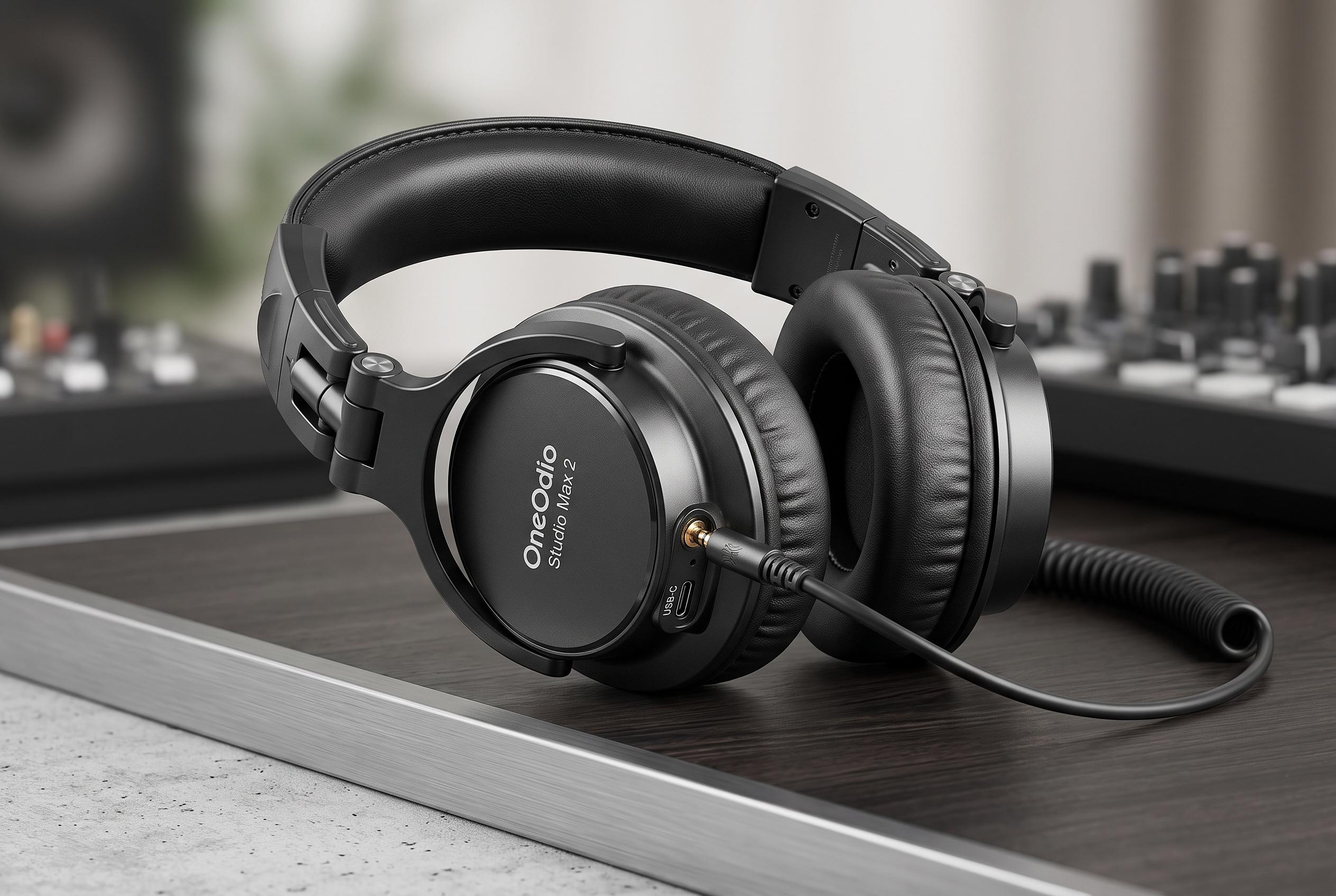

The second-generation OneOdio Studio Max 2 introduces sturdier design and enhanced connectivity features, yet reviews suggest its sonic performance still falls short of expectations for demanding users.
OneOdio’s Studio Max 2 is a refinement of the company’s unusual formula rather than a full rethink. The second-generation model keeps the same oversized, DJ-friendly shape as the original Studio Max, but it arrives in a sturdier moulded EVA hard case and adds a more practical physical switch for moving between Bluetooth and ultra-low-latency mode. Those changes make the package feel more finished, even if the headphones still look and wear much like the first version. Headphonecheck described the original Studio Max 1 as a bulky but practical option with strong passive isolation and a useful cueing focus, and that basic identity remains intact here.
The main upgrades are inside. According to MusicTech, OneOdio’s RapidWill+ Ultra-Low Latency 3.0 system cuts delay to 9ms and raises wireless bitrate to 400kbps, while Bluetooth 6.0 and LDAC support remain part of the specification. The company also keeps dual wired options through 3.5mm and 6.35mm connections, making the Studio Max 2 a flexible tool for DJ monitoring, instrument practice and other real-time audio tasks. Creative Bloq noted that the headphones are positioned as a serious DJ product, with KSHMR tuning on some versions and an emphasis on feature density over minimalism.
In use, though, the sound appears to be more contentious. New Atlas said the Max 2 sounds muddier than the original Studio Max 1, with weaker treble extension and less of the neutral presentation that had made the first model feel closer to a studio monitor. Tom’s Guide reached a similar conclusion, reporting muddiness and pitch issues that limit its appeal for more demanding audio work. Creative Bloq was more positive about the balance, but still said the headphones fall short of the refinement expected at their price.
Where the Studio Max 2 clearly wins is convenience. Reviewers consistently pointed to the long battery life, with claims of up to 120 hours of playback in Bluetooth mode, and the low-latency wireless dongle remains the feature that separates this model from ordinary wireless headphones. MusicTech said the low-latency mode is easy to activate and largely free from hiss, while the large case and bundled cables make the system easy to carry and set up. OneOdio has also improved the buttons and the overall ergonomics slightly, although the design remains large and far from discreet.
That leaves the Studio Max 2 in a familiar but narrow position. It is not trying to compete with compact, travel-friendly noise-cancelling headphones, and it does not sound like a premium audiophile set. Instead, it targets users who value low latency, broad connectivity and long endurance more than sonic finesse. For that audience, the package is more polished than the first Studio Max, but the consensus from recent reviews is that the improvements in functionality have not been matched by a comparable advance in sound quality.
Disclaimer: This content is intended for informational purposes only. Readers are advised to exercise their own judgement, conduct due diligence, or consult a qualified expert before acting on any information provided.