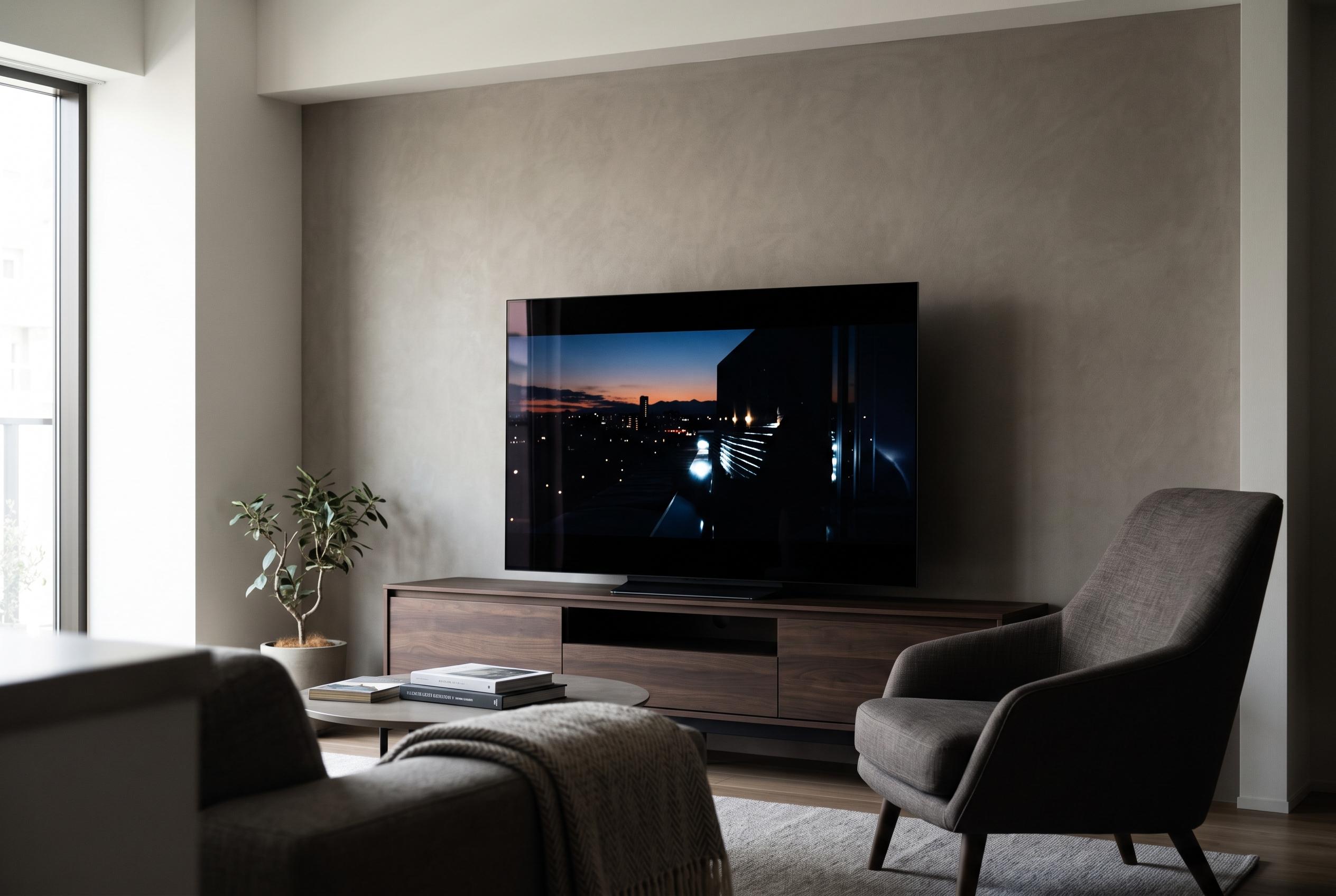

Global television shipments experienced a slight decline in Q2 2026, but OLED sets continued their growth trajectory, with innovative cost-reduction efforts positioning them to challenge mainstream prices and reshape the competitive landscape.
Global television shipments weakened in the second quarter of 2026, but OLED sets continued to outperform the wider market. Counterpoint Research said global TV volumes fell 4% year on year in June, leaving the full quarter down 0.4% from the same period a year earlier, a result that points to a market that is broadly flat rather than collapsing.
The June drop may also overstate the softness in demand. Counterpoint said early promotional activity around the 2026 World Cup pulled some buying into April, which likely reduced later shipments. That makes the quarter look more stable than the monthly figure alone would suggest.
Within that subdued market, OLED remained the clear growth pocket. Shipments of OLED televisions rose 20% in the second quarter and were up 12% in June alone, according to Counterpoint. LG Electronics kept its lead by controlling more than half of the global OLED TV market in both June and the quarter as a whole.
LG’s grip on the segment is long-standing. The company said it led the global OLED TV market for 13 straight years and held a 49.7% share in 2025, with about 3.22 million units shipped. LG also said it topped OLED sales in Europe, North America and Asia-Oceania, underlining how concentrated the high-end market remains.
Yet OLED is facing more serious competition than it did a few years ago. MiniLED LCD sets have improved sharply, offering strong brightness, high contrast and large screen sizes at prices that can undercut OLED, especially in 75-inch and larger models. For many households, screen size and price still matter as much as image quality.
That pressure is pushing suppliers to focus less on headline picture-quality gains and more on cost reduction. Counterpoint said LG Display’s work on cheaper WOLED panels could prove more important than further refinements to premium performance. The company has already introduced WOLED SE, which removes the polariser from the panel design, and is also developing a two-stack tandem structure aimed at simplifying the panel while preserving or improving performance.
If those efforts lower manufacturing costs, OLED televisions could become competitive in more mainstream price bands. That would matter because OLED already has a strong reputation among buyers who prioritise contrast, black levels and viewing angles. What it lacks is not prestige but affordability at larger sizes.
The broader LCD market is also becoming more competitive at the top end. Counterpoint said Samsung and TCL were almost level in global LCD TV shipments in June, with Samsung at 13.7% and TCL at 13.8%. Samsung is extending its RGB backlight technology beyond flagship models, while TCL is using SQD MiniLED at the premium end and RGB MiniLED on large-screen sets.
For now, the message from the second quarter is clear: the television market is mature, but premium demand has not disappeared. OLED is still growing, yet much of the next battle will be fought on value rather than pure picture quality. If makers can bring down WOLED costs, the real competition may shift from which technology looks best to which one gives buyers the most screen for the money.
Disclaimer: This content is intended for informational purposes only. Readers are advised to exercise their own judgement, conduct due diligence, or consult a qualified expert before acting on any information provided.