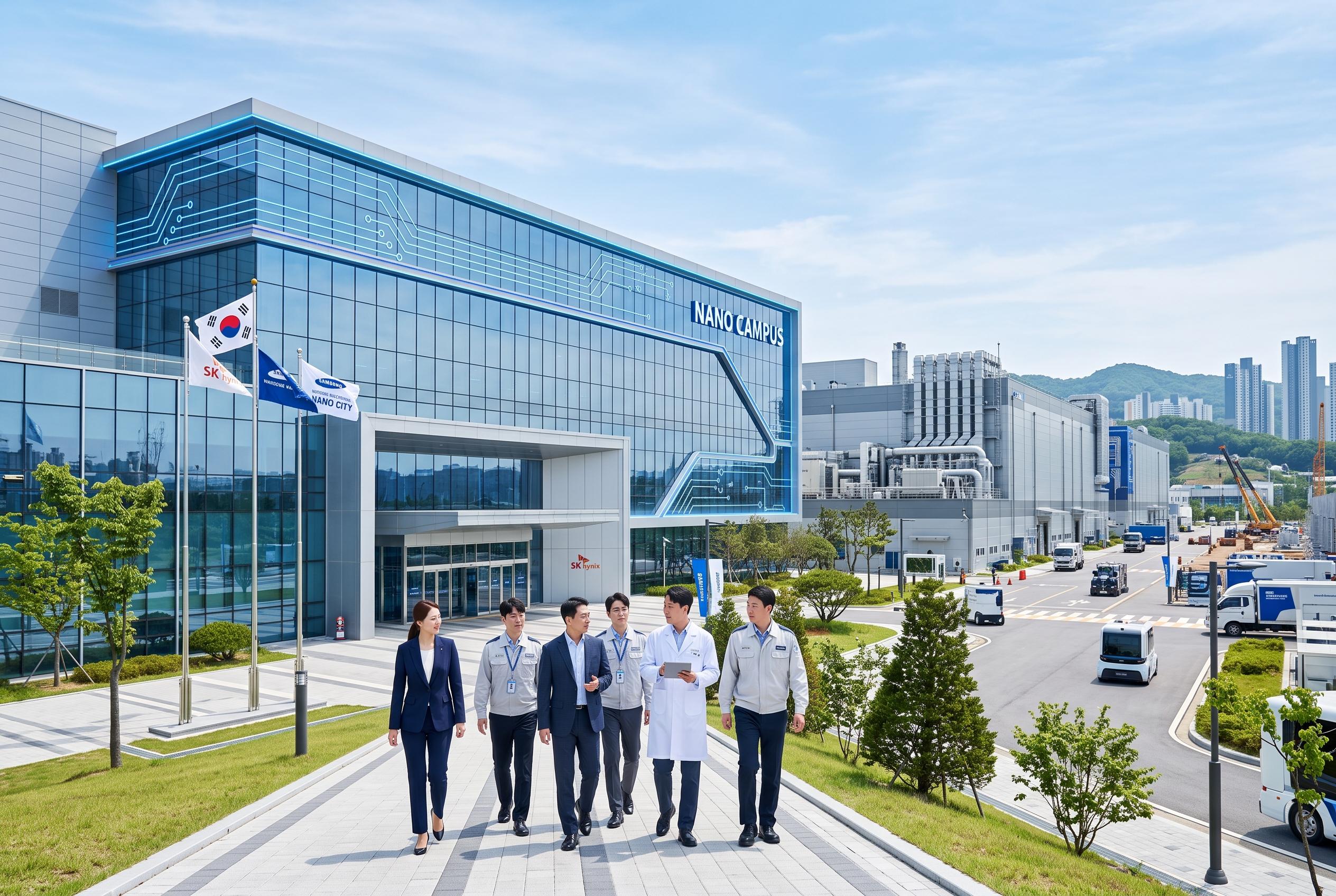

The rapid expansion of South Korea’s semiconductor industry, propelled by AI growth, is reshaping residential patterns, elevating job prestige, and fueling a crypto-like frenzy in local investment, signalling a seismic shift in the country’s economic landscape.
In Dongtan, a planned city south of Seoul, real estate agent Mark Yoon says conversations that begin with school districts or commute times often end with one subject: semiconductors. That pattern reflects a wider economic shift in South Korea, where the global boom in artificial intelligence is now reshaping housing demand, wages and even social status. South Korea is said to produce about 80% of the world’s high-bandwidth memory chips, the specialised components that help run AI systems, placing Samsung Electronics and SK Hynix at the centre of the country’s current growth story.
The semiconductor build-out has turned Dongtan into a residential base for engineers working at the two chipmakers’ campuses in Hwaseong and Giheung. According to reports from Korean property outlets, the area has benefited from expectations of chip-sector expansion and the opening of the GTX-A rail line, which has improved access to Seoul. Local coverage has also described rising apartment prices, more housing transactions and a “proximity effect” in nearby districts such as Byeongjeom, where workers want to live close to the plants.
The AI cycle is also changing what counts as a top-tier job. South Korean media have reported that factory workers at advanced chip facilities are receiving bonuses worth more than $400,000, a level that rivals the earnings of doctors and lawyers. That matters in a country where those professions have long carried the greatest social prestige. As a result, a production-line role in semiconductors is increasingly seen as a route to exceptional income rather than merely stable employment.
The money flowing into chips has spilled into the stock market as well. Investors have been described as chasing semiconductor names with casino-like enthusiasm, reflecting the dominance of AI-linked themes in local trading. The enthusiasm has been reinforced by heavy corporate investment: CNBC reported that SK Hynix has committed $38 billion to new memory chip plants, while TechCrunch said Samsung Electronics and SK Hynix together have pledged more than $550 billion for new fabrication capacity and AI-related infrastructure. Yet Korea JoongAng Daily has noted that the AI boom is also changing competition inside the industry, with some previously overlooked companies gaining ground as the market adjusts to new demand patterns.
Disclaimer: This content is intended for informational purposes only. Readers are advised to exercise their own judgement, conduct due diligence, or consult a qualified expert before acting on any information provided.